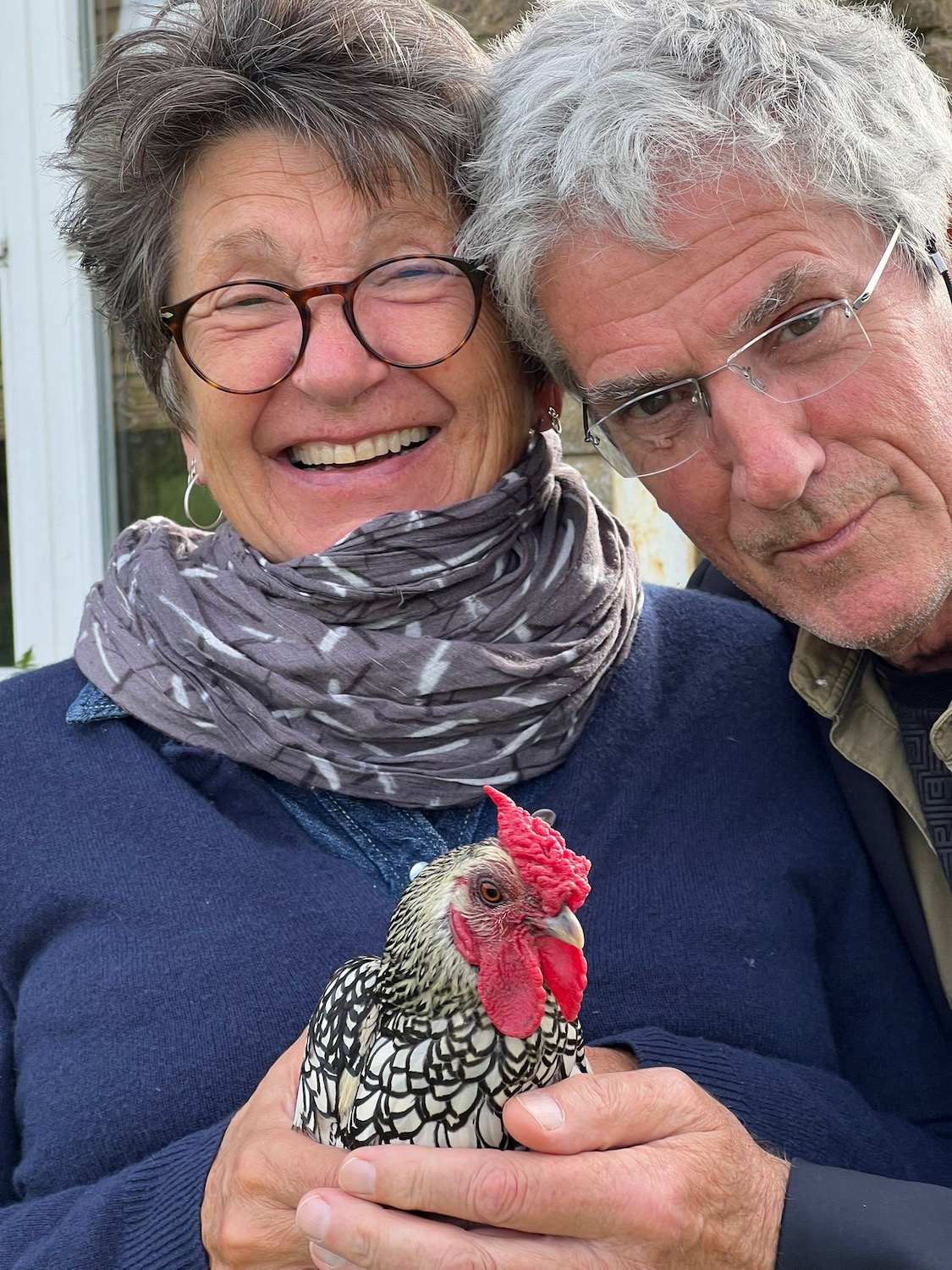
Edinburgh is freezing, overcrowded but beautiful, even in the rain. Why are we here? Well, we’ve come to listen to some music, meet up with old friends from Canada and say hello to Damian’s sister and her chickens. We will then be driving down to North Yorkshire for a few days to join a few dots.
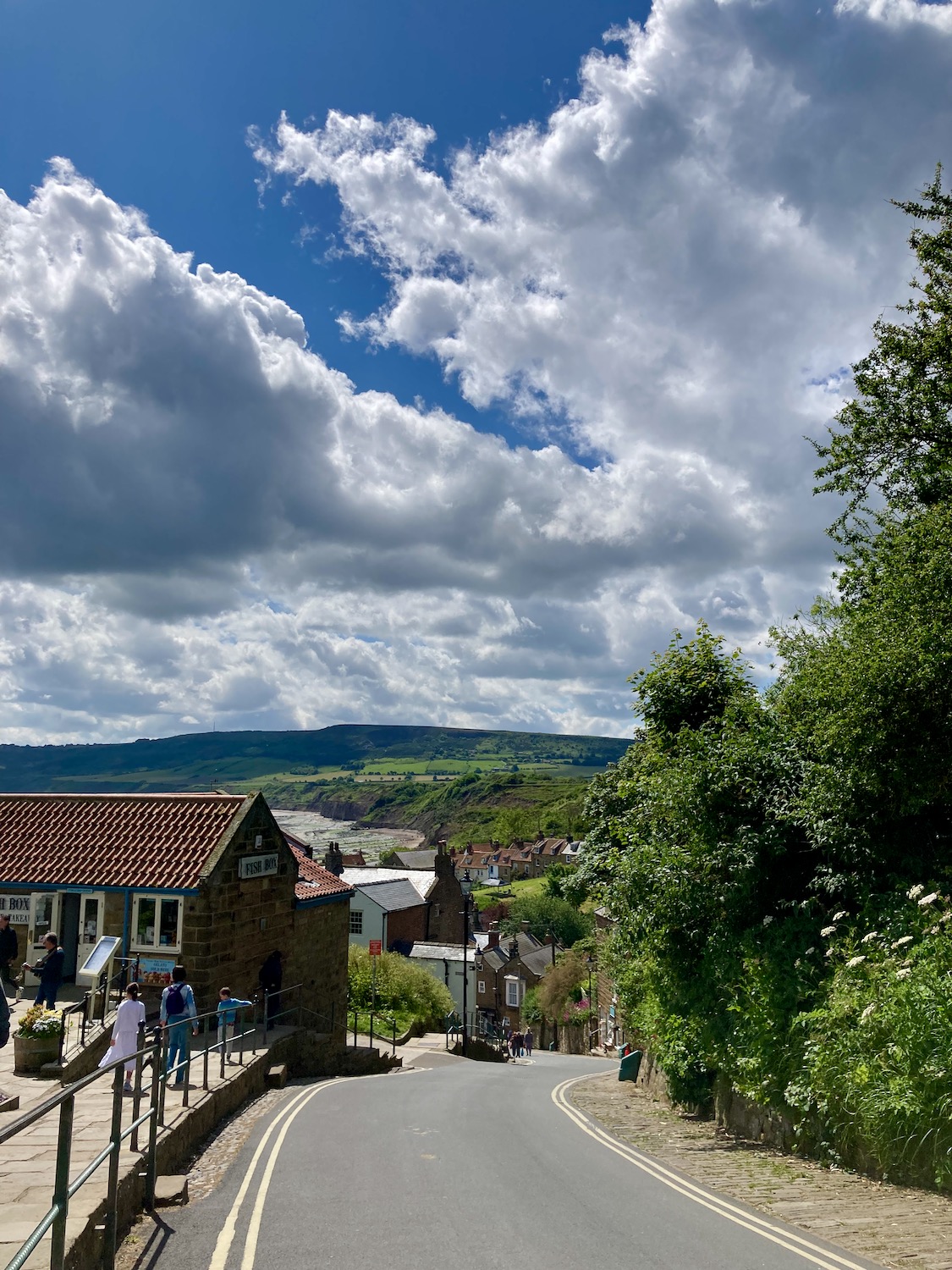
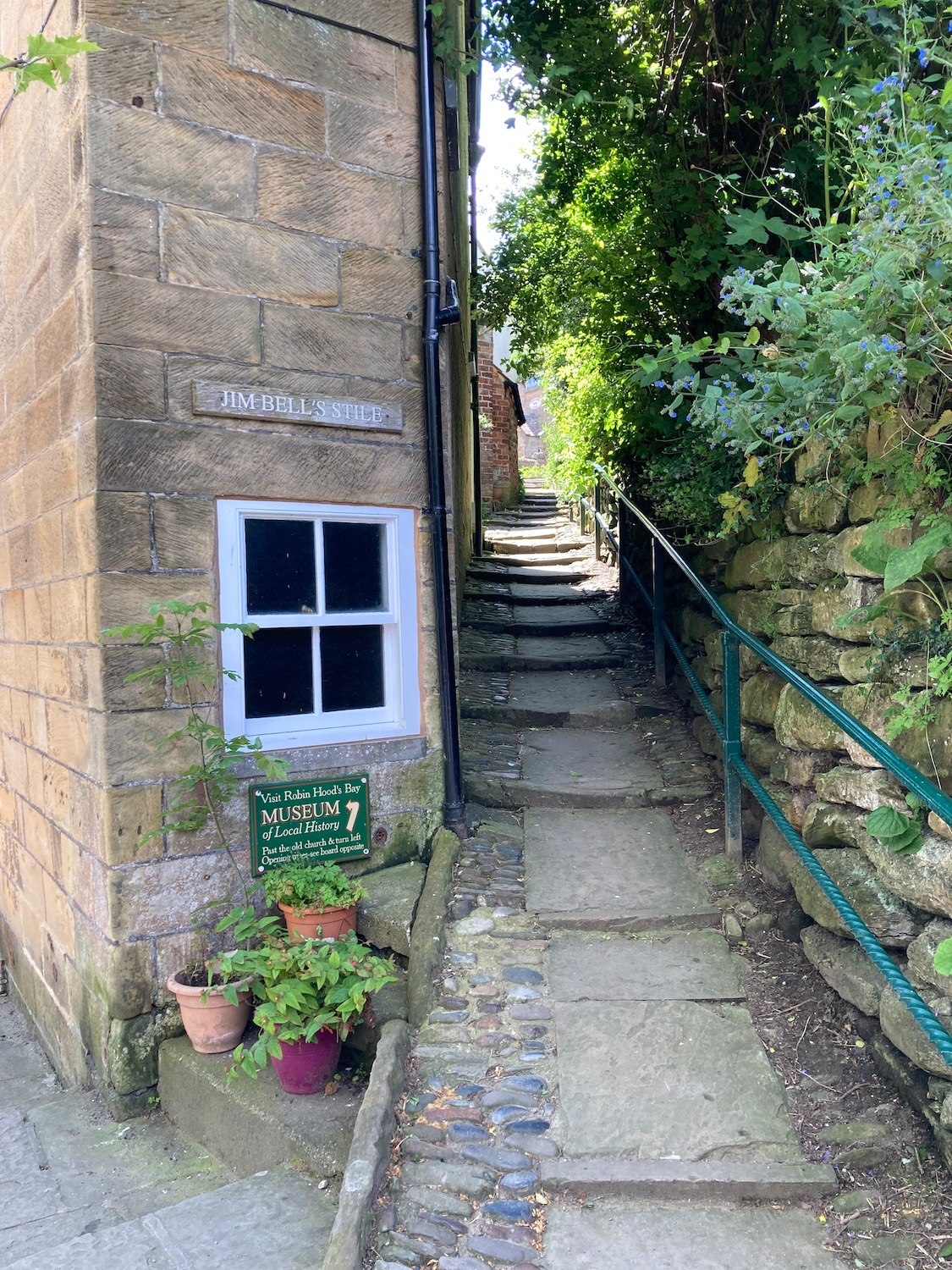
Thankfully we are now back in a county with efficient public transport and the bus from Whitby to Robin Hood’s Bay only takes thirty minutes. Access to the bay is down a very steep narrow road and even though our path leads off the top of the village we decide to walk down to have a look and buy some provisions..
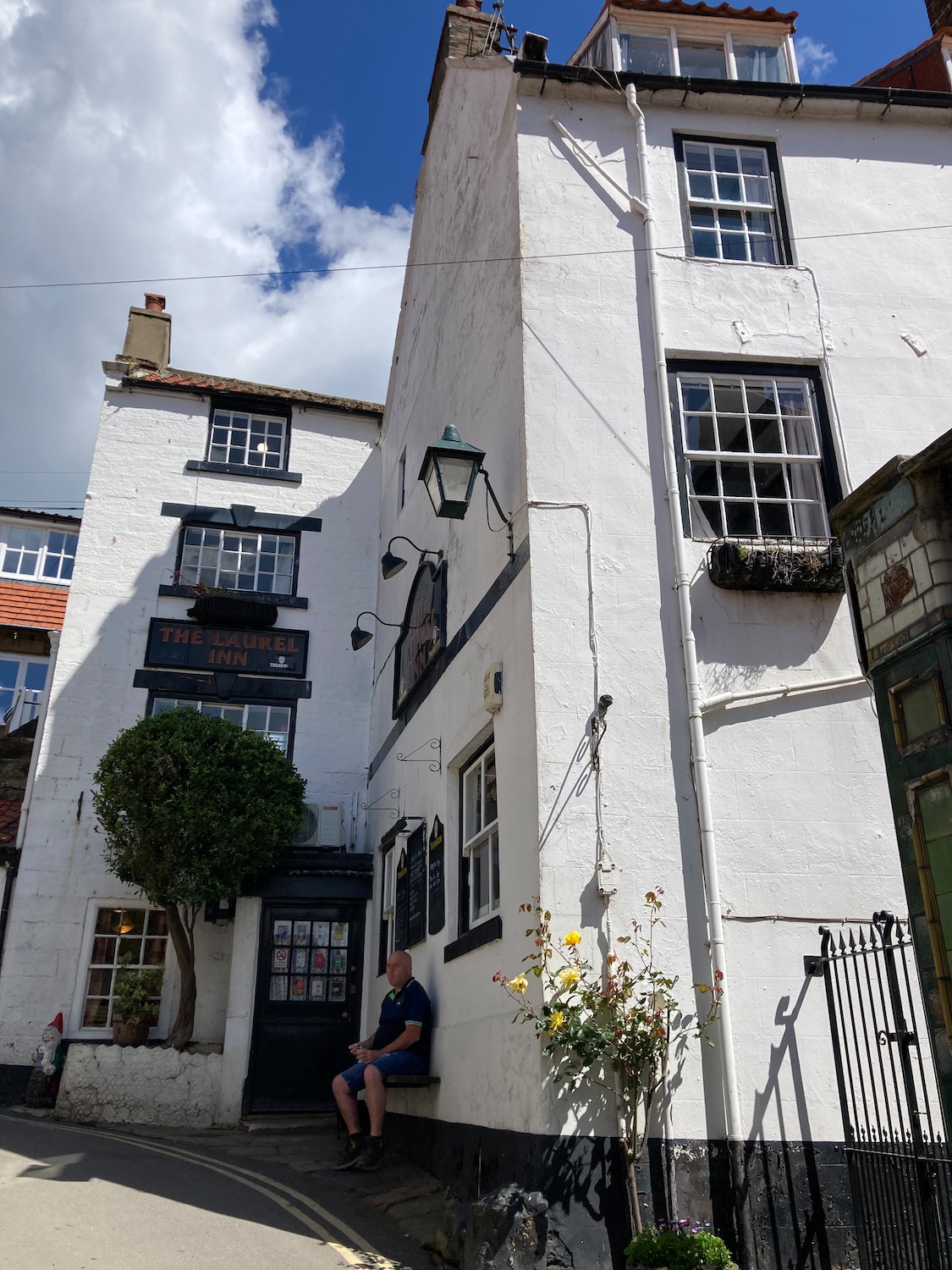
The village is a maze of tiny streets – quaint cottages, dainty shops, cafes, hostelries and buskers line the main street, all geared up for the tourist dollar. It is a little too charming.
Drawn by the sound of music we reach the village square where a troupe of dancers and musicians are putting on a show. They look and sound like Morris dancers but there seems to be a bit of a crossover with the Pearly Queens of London.
But it is now time to start our walk so up we go through the village again until we reach the main road, where we turn right on to the Cleveland Way which forms part of the England Coast Path.
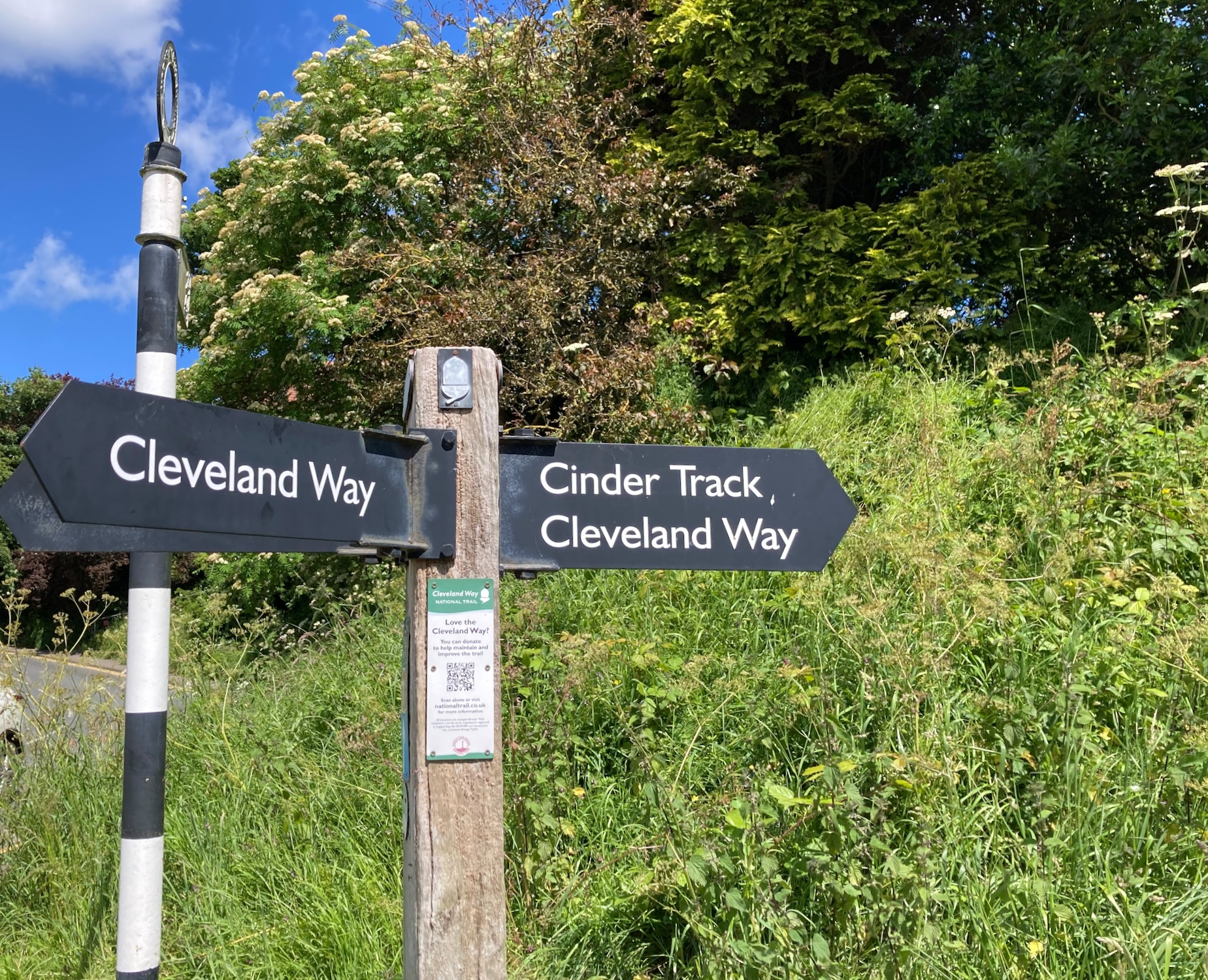
From here we have a clearly marked path across the top of the cliffs. It’s wonderful to be back to real coast walking after the endless marshes of Lincolnshire – and the sun is shining. That calls for a photo!
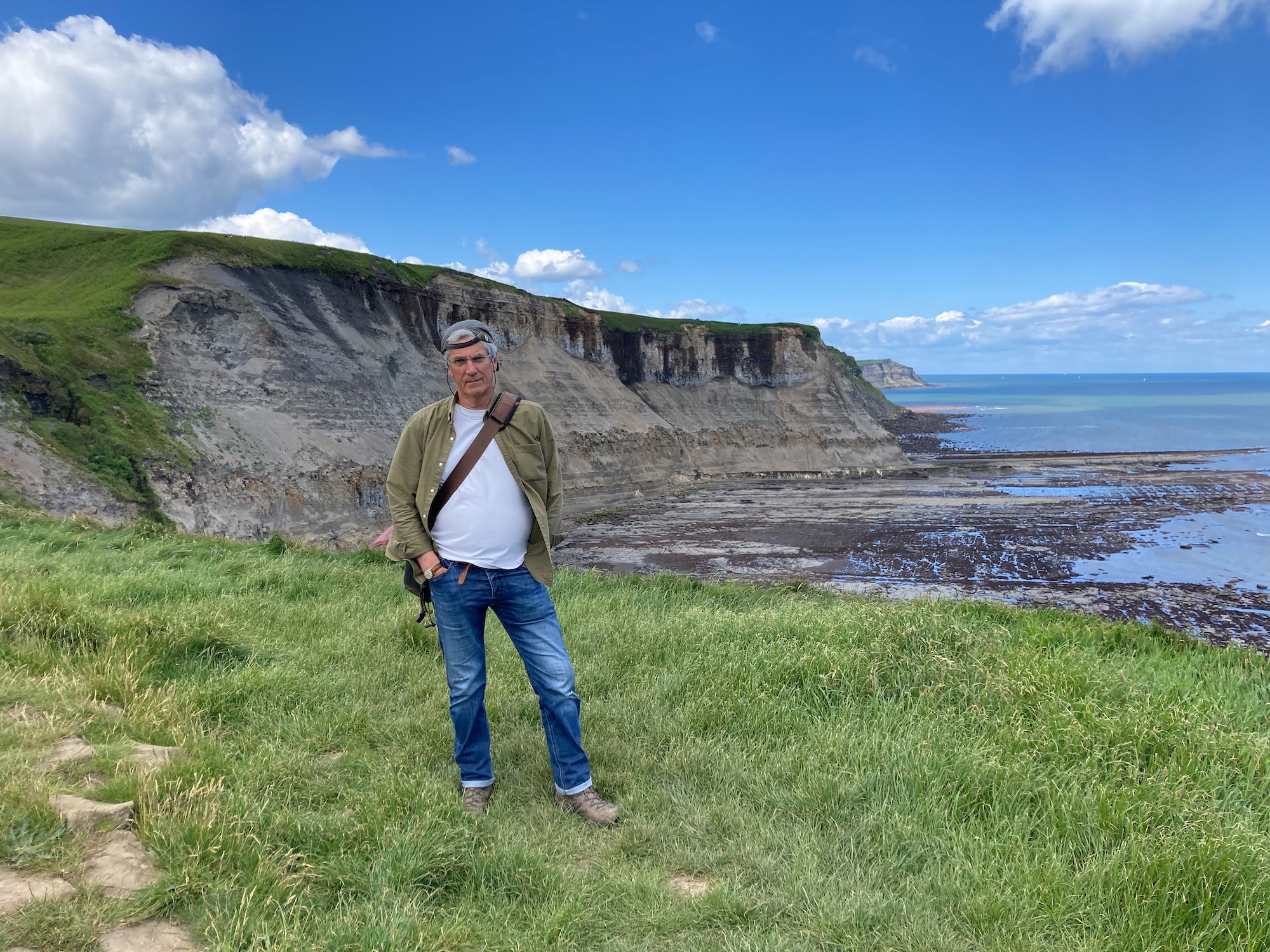
On the map the different cliff formations have strange names – we walk past Castle Chamber, Cow and Calf, Craze Maze and Clock Case Nab – all with their own stories no doubt.
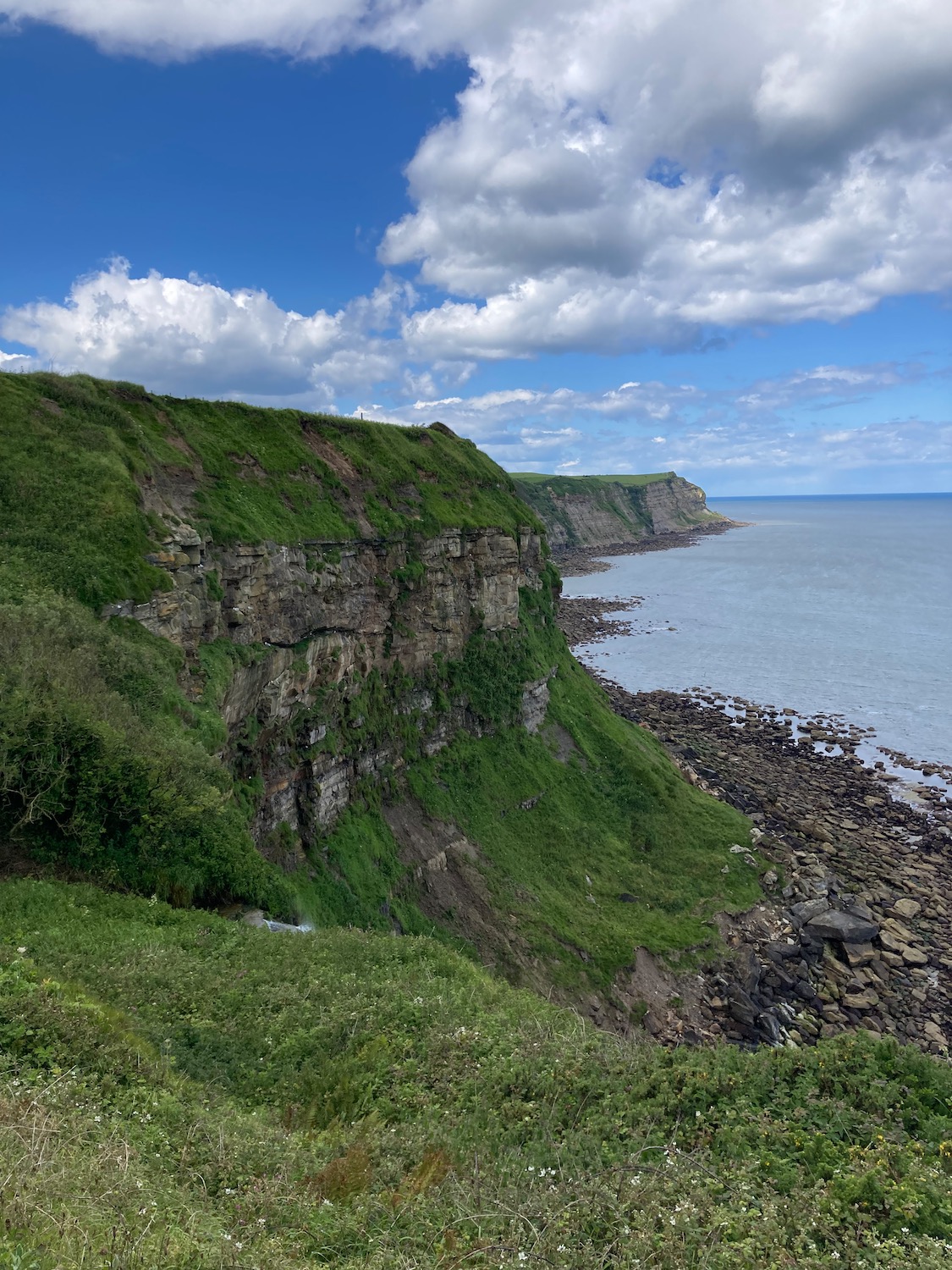
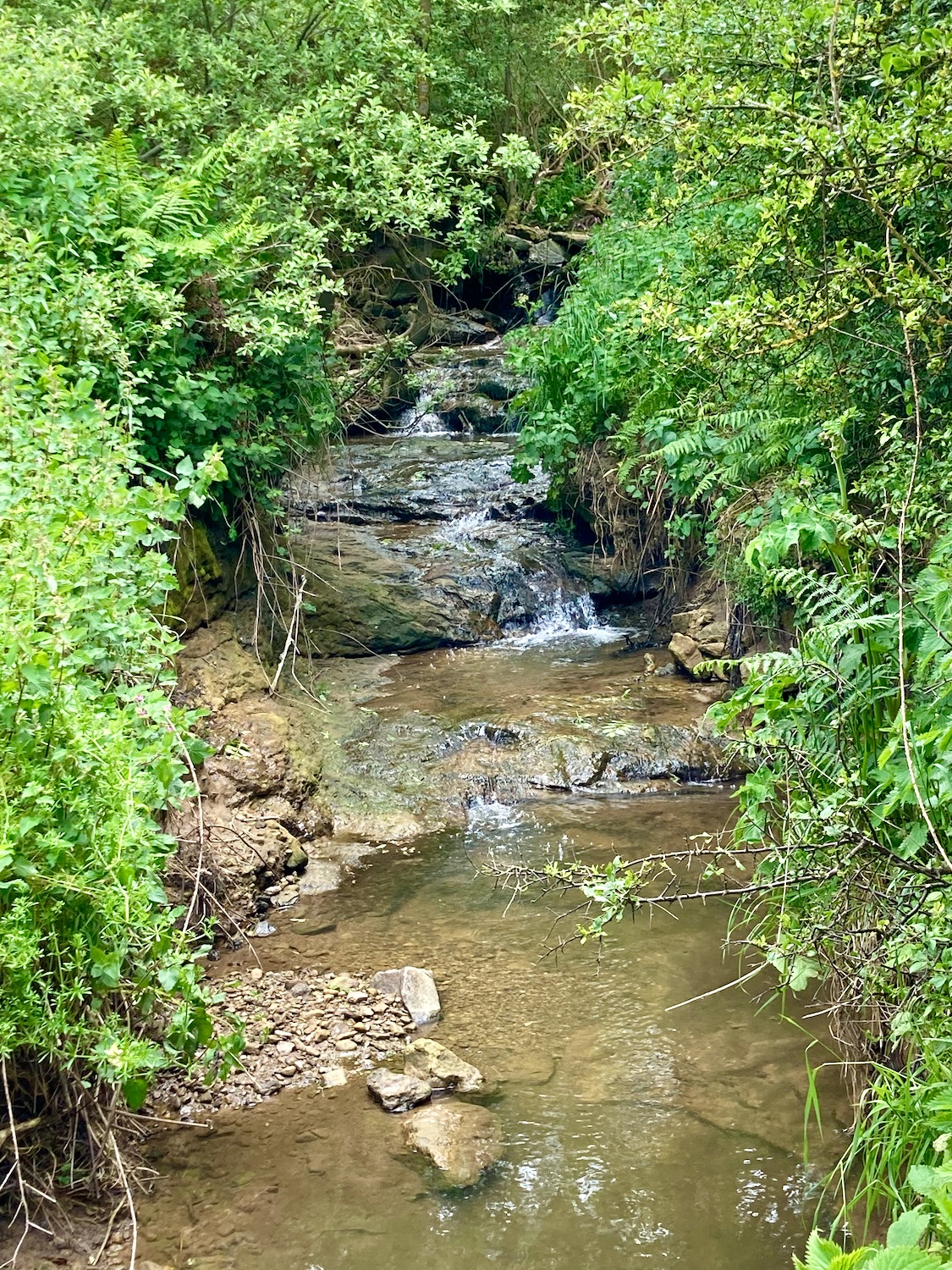
Here’s a pretty waterfall – the stream is called Oakham Beck, yet another clue to the Viking influence on our place names (“bæk” is stream in Danish). Another that comes to mind is Whitby where “by” means town…..not sure about Whit…………. Can’t wait to see what Grimsby looks like since “grim” means ugly………………..
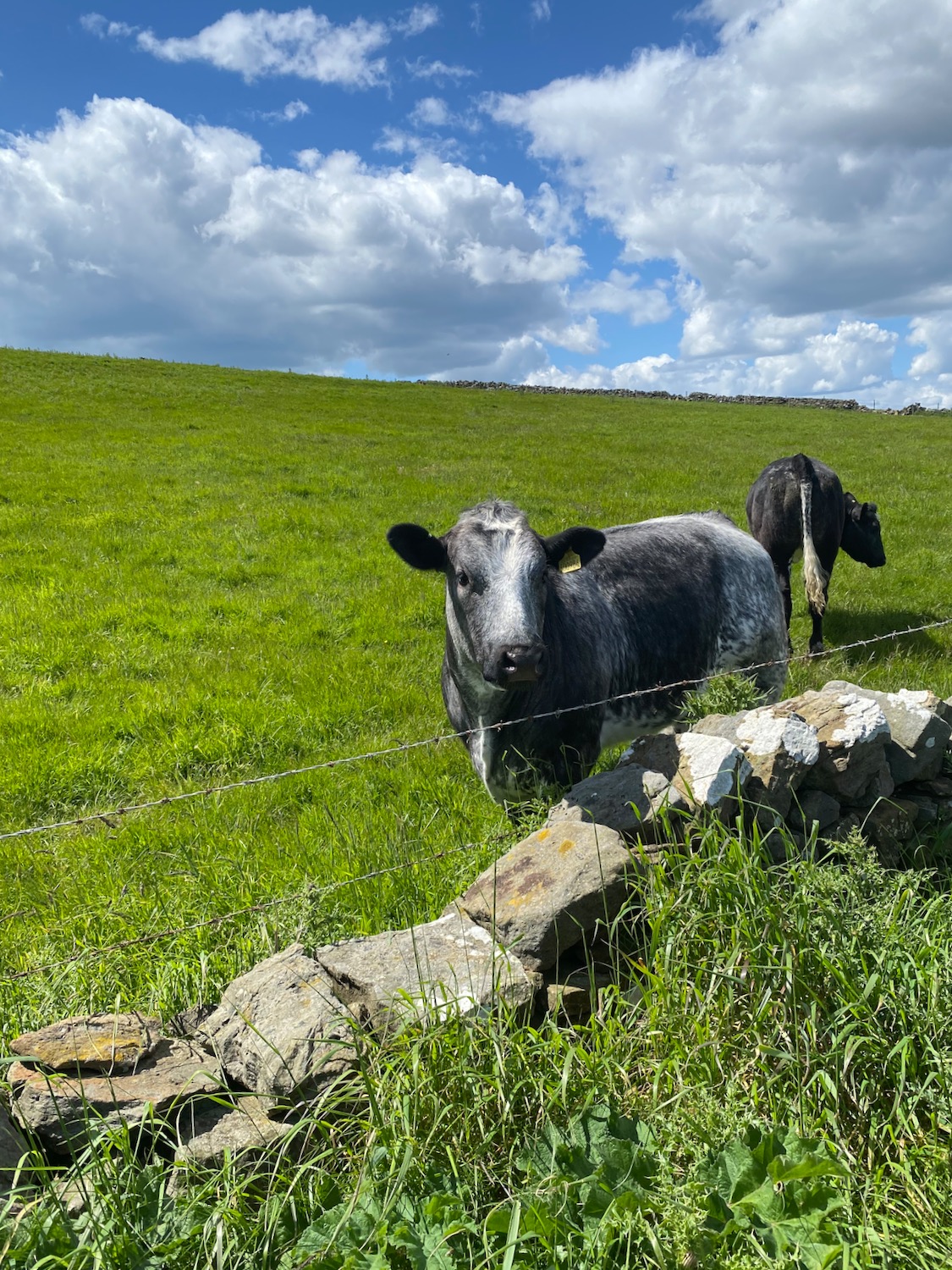
………………………and a curious cow with a shiny black nose.
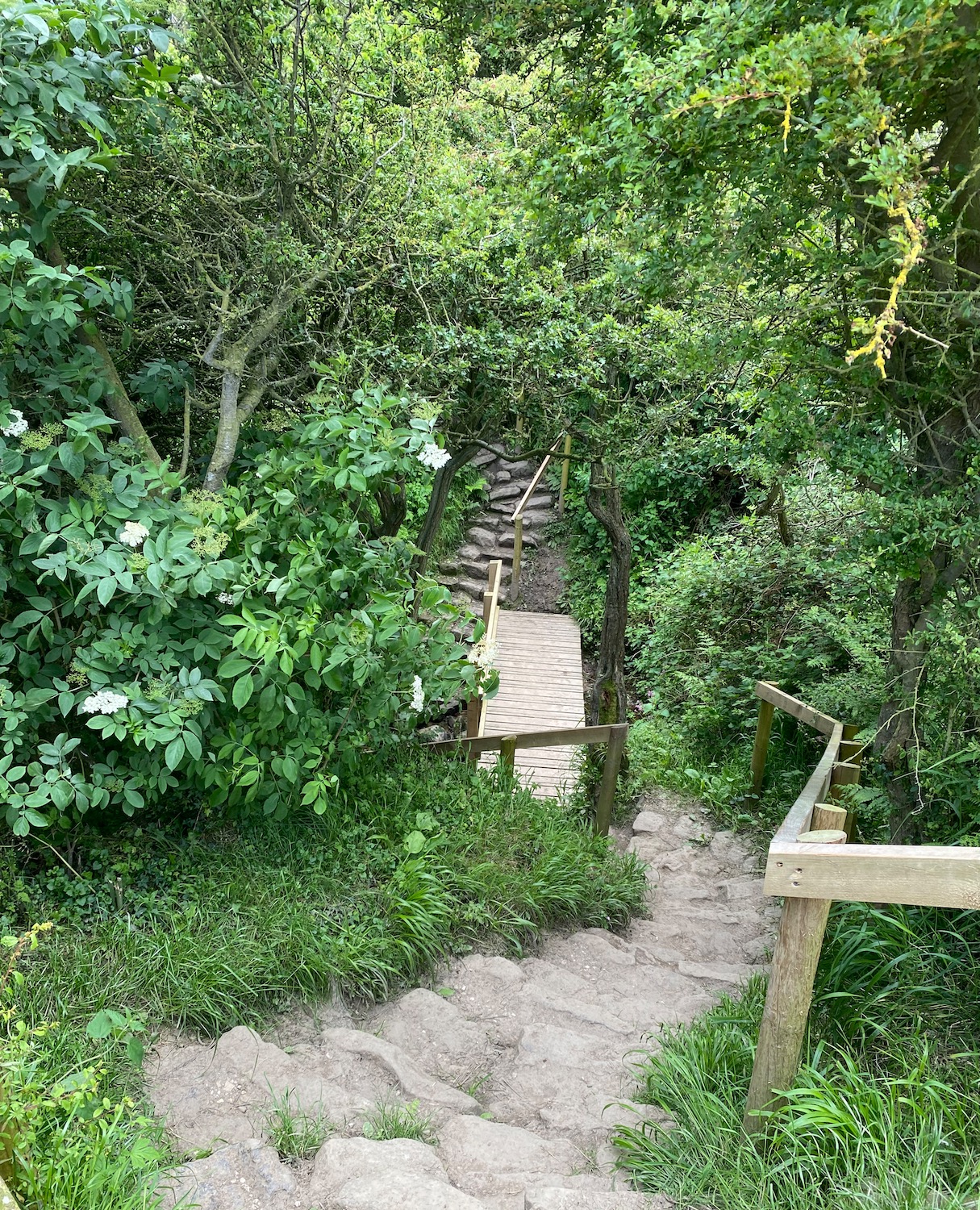
A little later the path leads us through a patch of woodland with a very steep set of steps.
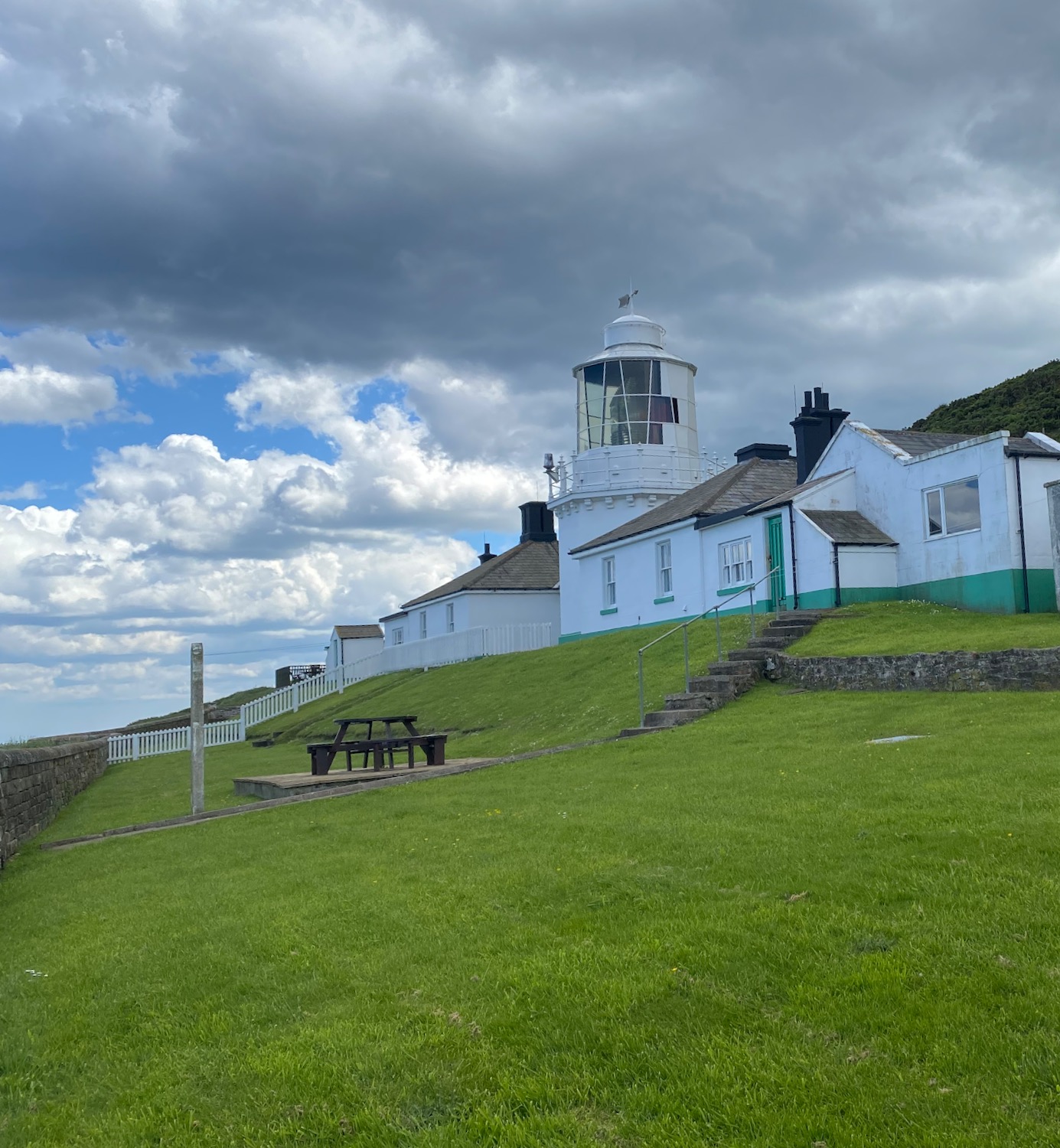
And about a mile and a half up the track is Whitestone Point with its delightful little lighthouse.
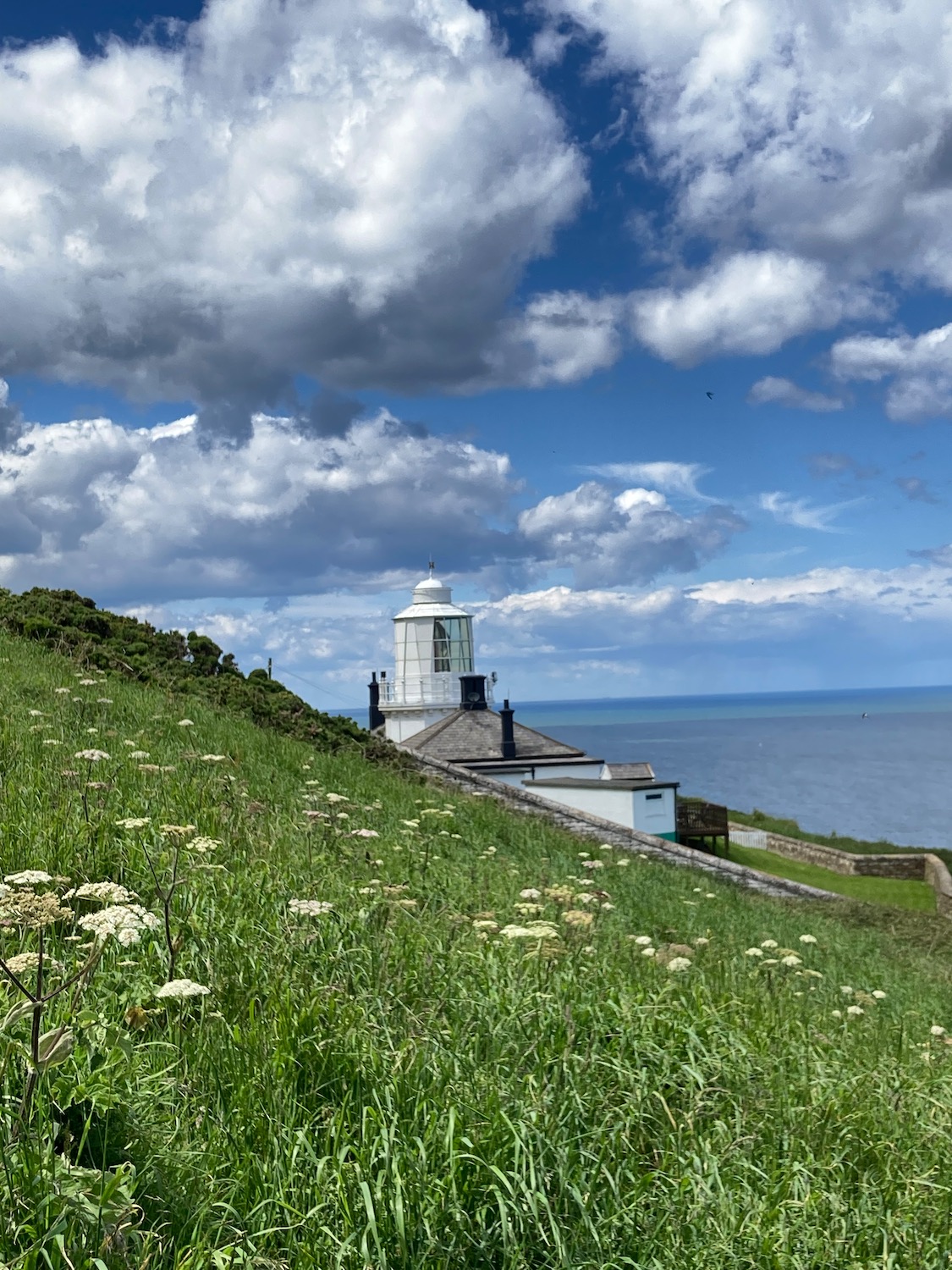
A sign further up tells us that the buildings surrounding the lighthouse are now holiday lets. This is the website in case anyone’s interested.
https://www.ruralretreats.co.uk/england/yorkshire-holiday-cottages/galatea_yo029
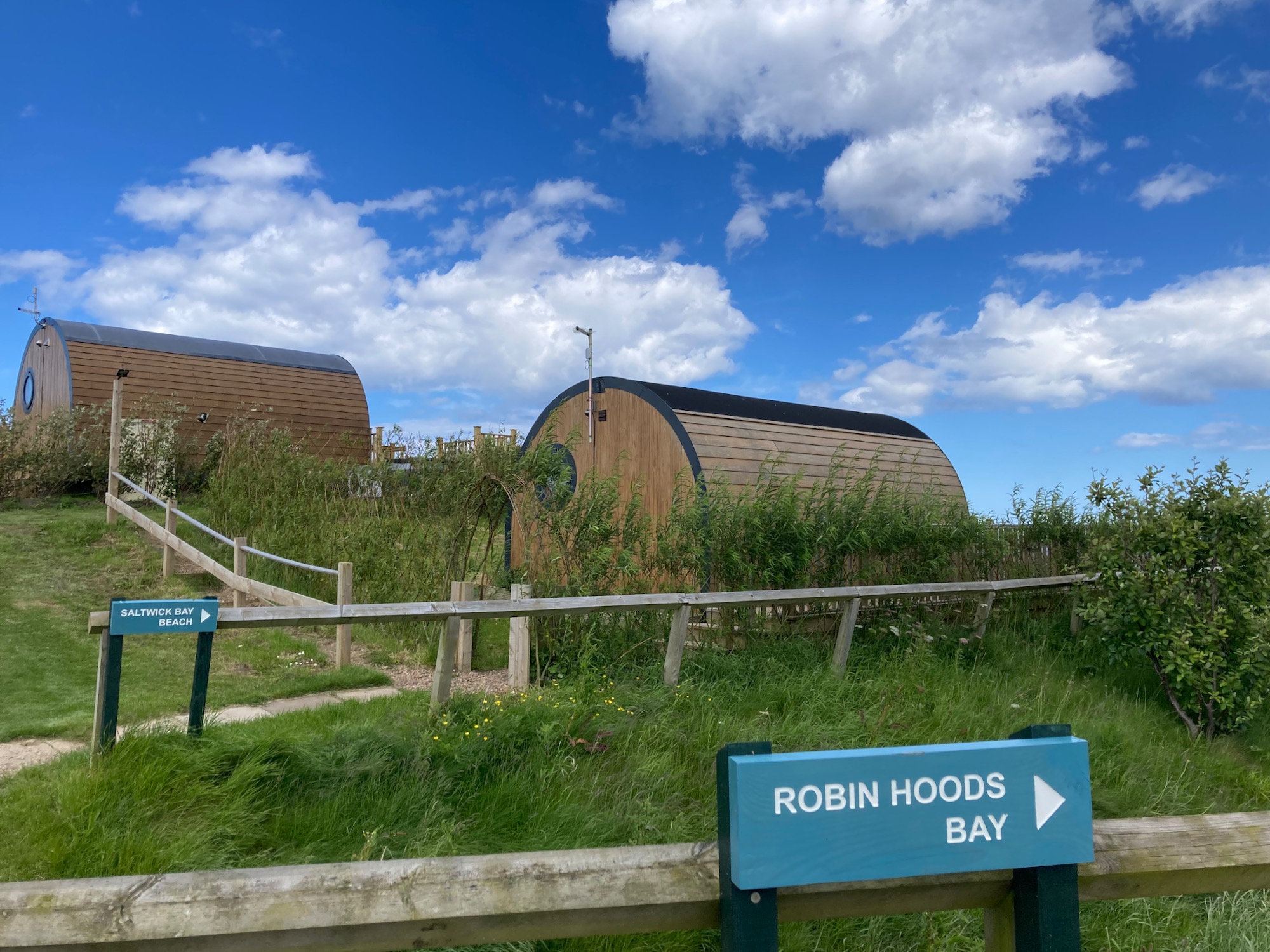
The path continues along the top of the cliffs until we reach Sandwick Bay, a mile outside Whitby. There are steps leading down to the beach which is apparently very popular with fossil hunters – it is also a spot where the famous Whitby Jet can be found. Overlooking the bay is a large holiday park – amongst the caravans and camper vans nestle these lovely wooden pods.
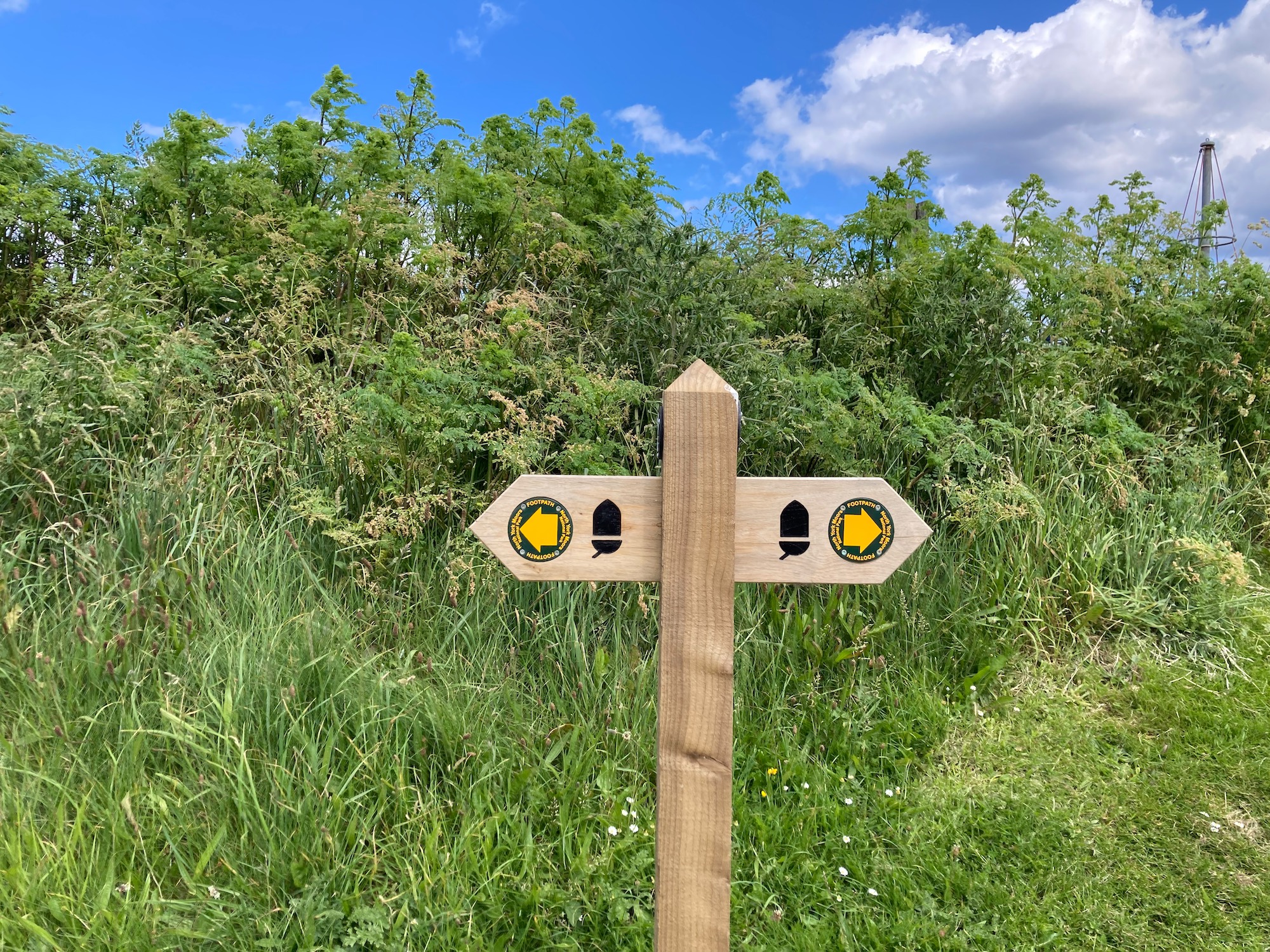
A brand new sign tells us we’re still on the England Coast Path and soon we can see the outline of the ruins of the abbey in Whitby.
Built on the site of the original seventh century monastery, which was later sacked by the Vikings (those pesky Danes), the abbey was rebuilt in the 1220’s and thrived as a centre of Benedictine learning for well over 200 years. It was then destroyed by Henry VIII as part of the dissolution of the monasteries, sold to a private family and then handed over to English Heritage. The abbey was also bombed by German battlecruisers in 1914 – they were apparently aiming for the coastguard station on the headland.
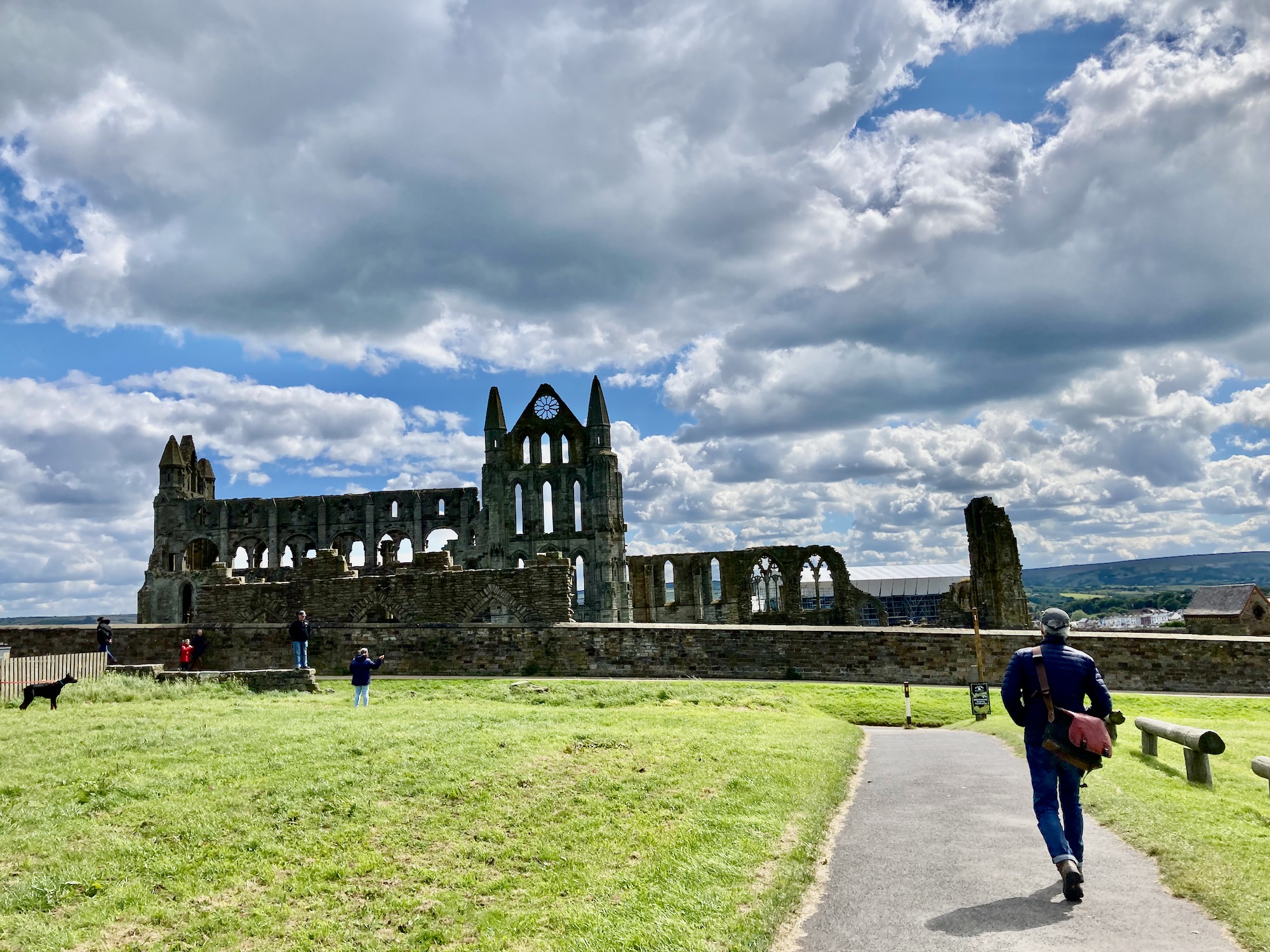

The place is heaving with tourists so we don’t go in but we do buy a postcard…………..
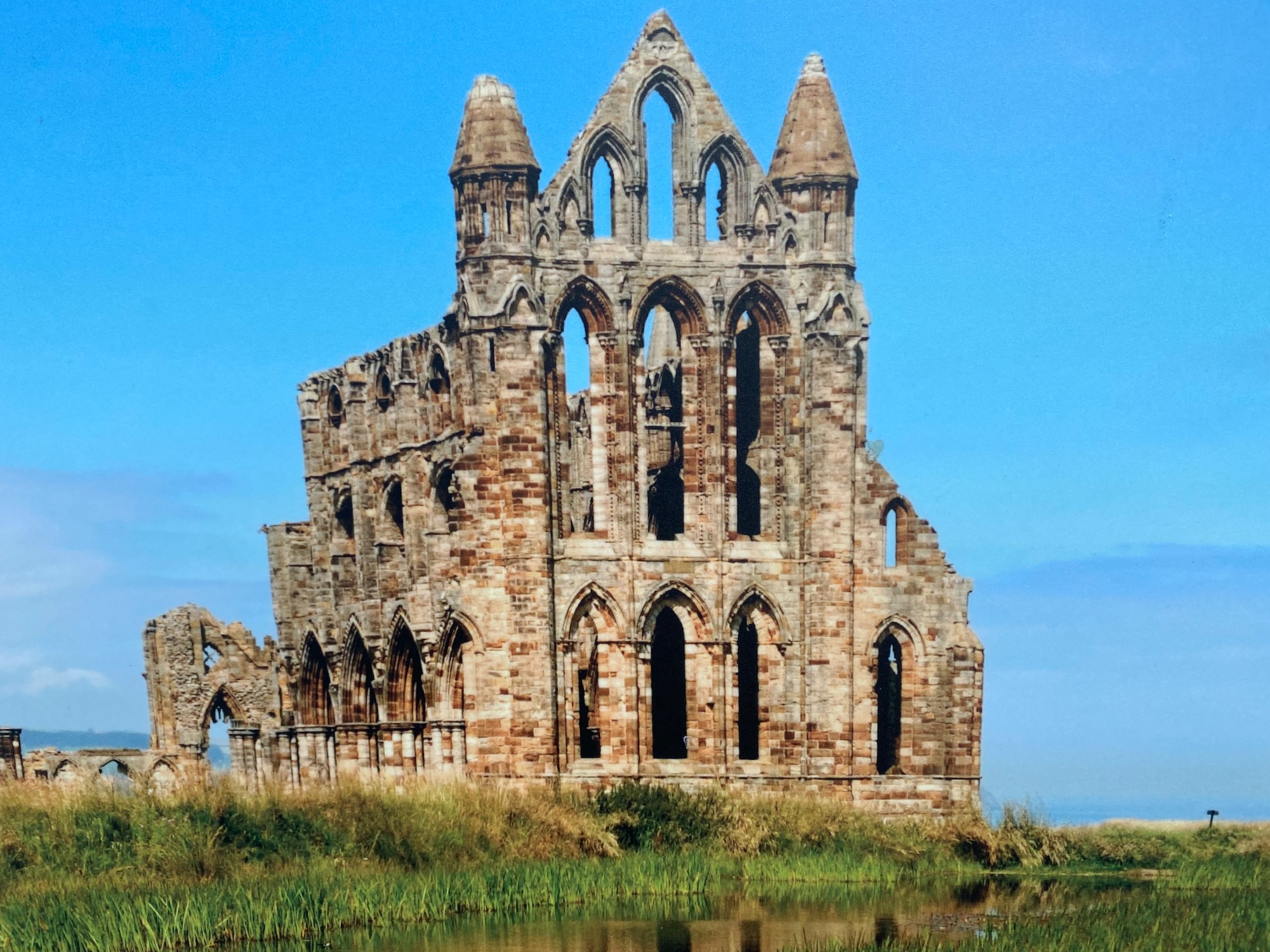
The abbey was of course one of the sources of inspiration for Bram Stoker’s tale of Count Dracula – this is a quote from the English heritage website:
“The favoured Gothic literature of the period was set in foreign lands full of eerie castles, convents and caves. Whitby’s windswept headland, the dramatic abbey ruins, a church surrounded by swooping bats, and a long association with jet – a semi-precious stone used in mourning jewellery – gave a homegrown taste of such thrilling horrors”
I myself have never been inclined to immerse myself in Gothic or any other kind of horror, but there are obviously millions that do – Whitby holds a biannual Goth convention which, over the course of two separate weekends draws people of all ages and inclinations….
From the abbey we walk down a winding cobbled street which is quite difficult to walk on and it is only when we get to the bottom that we realise we could have taken a flight of steps through a churchyard like everyone else is doing.
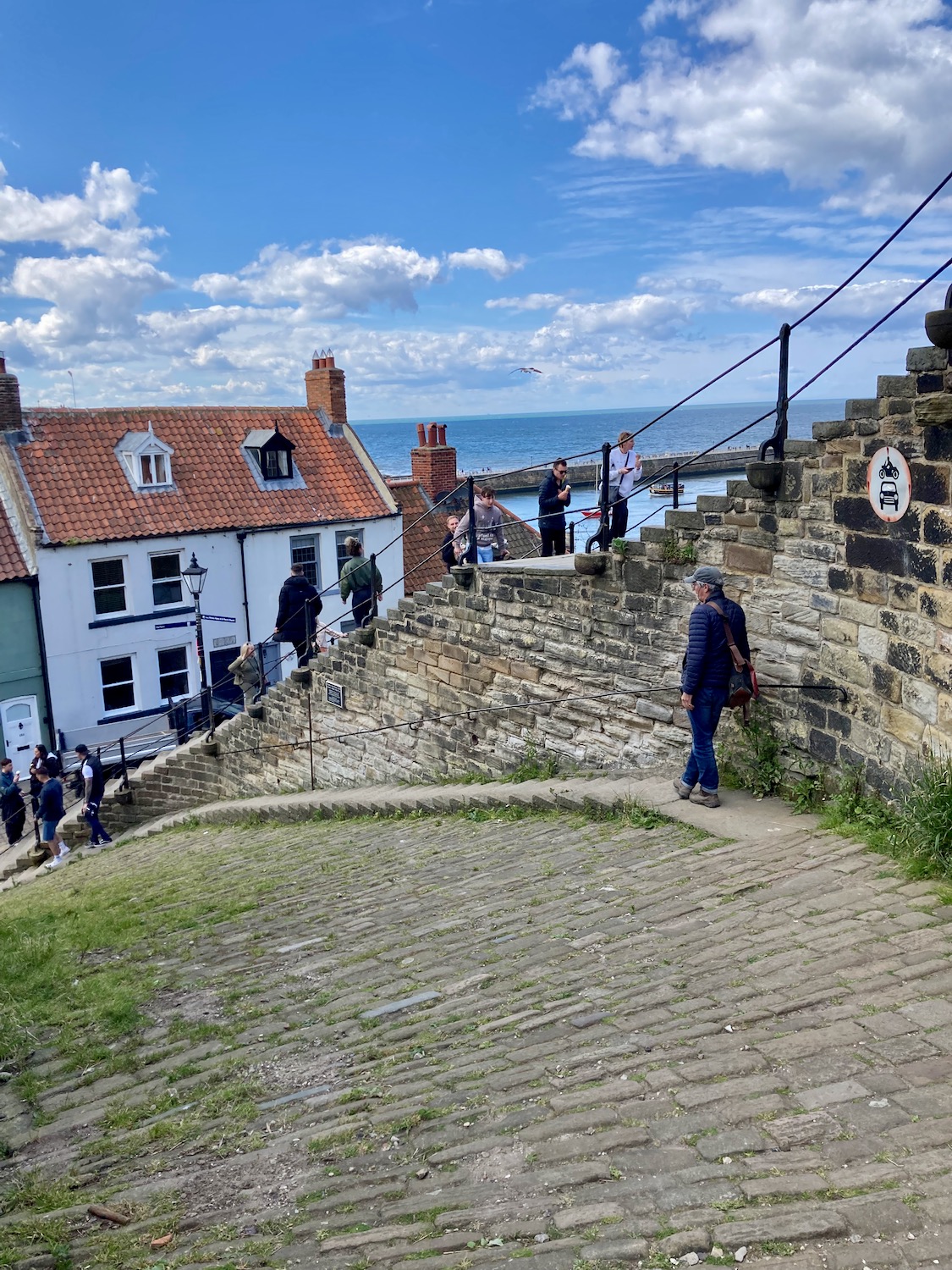
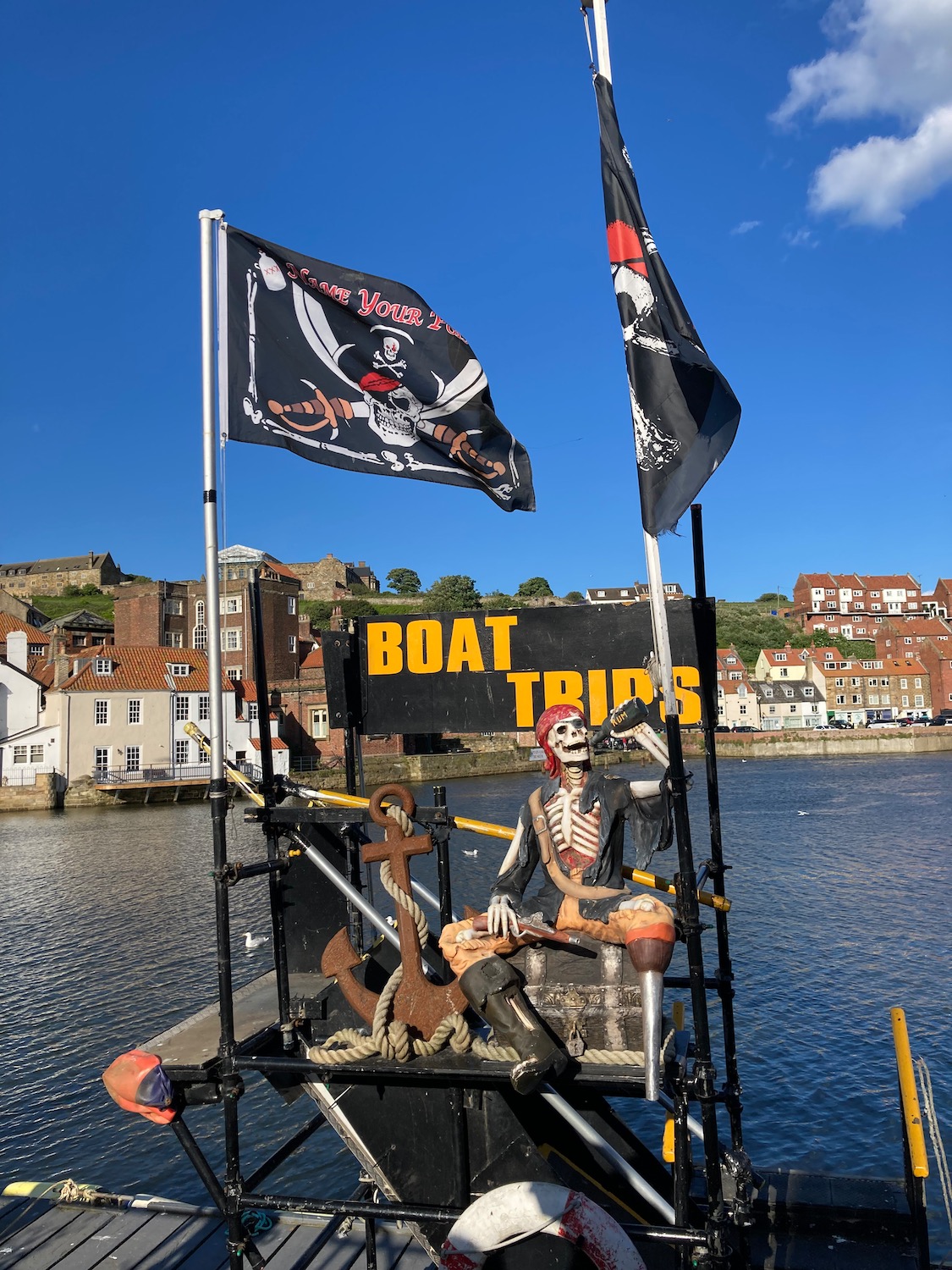
But Whitby is not our destination today so we walk quickly past all the small shops selling jWhitby Jet jewellery and pirate costumes, trying to find place for a quiet cup of tea. In the harbour there are numerous outfits offering pirate boat trips (whatever they might be) and an extraordinary amount of fish and chip shops but not really what we’re after.
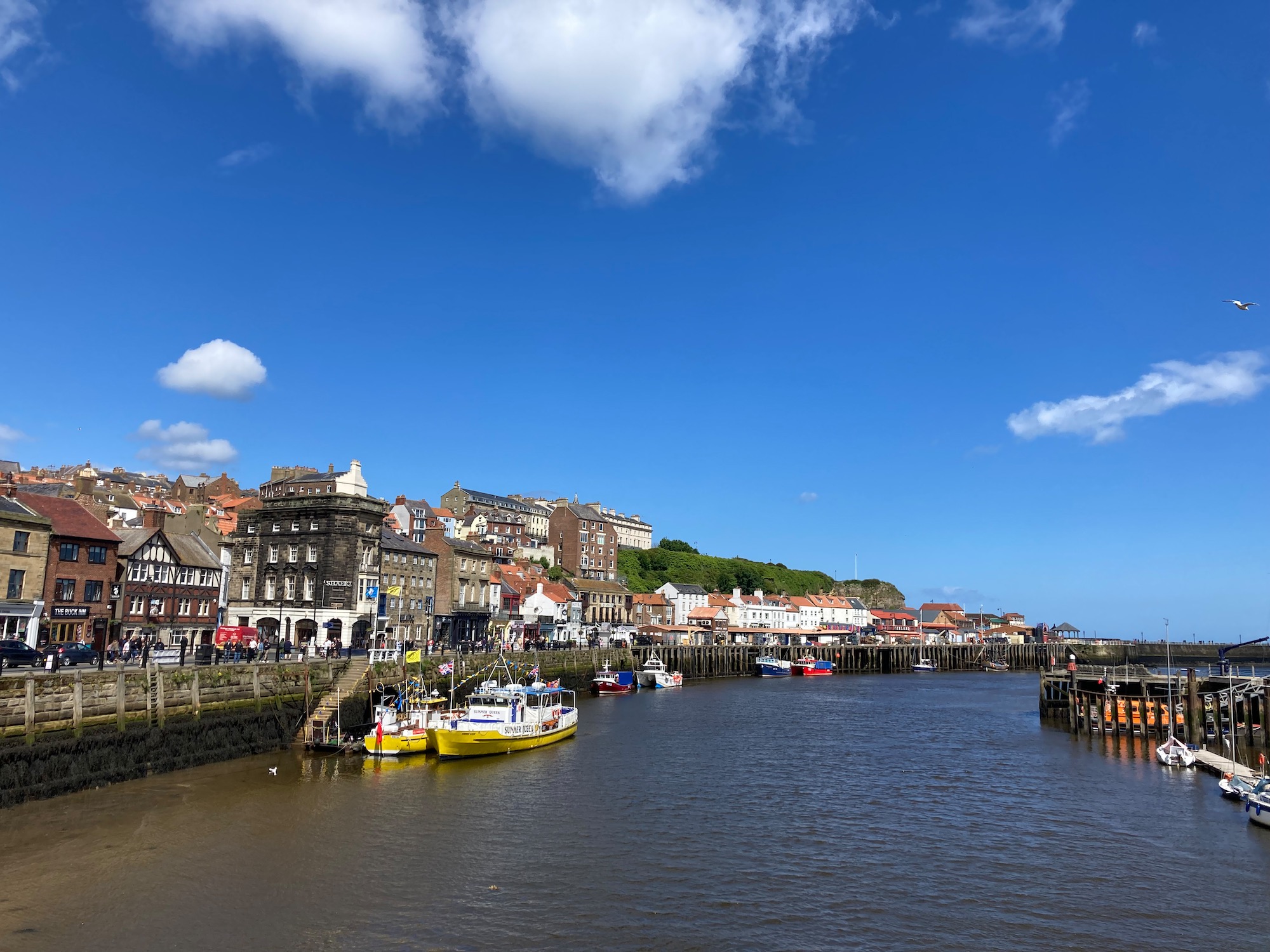
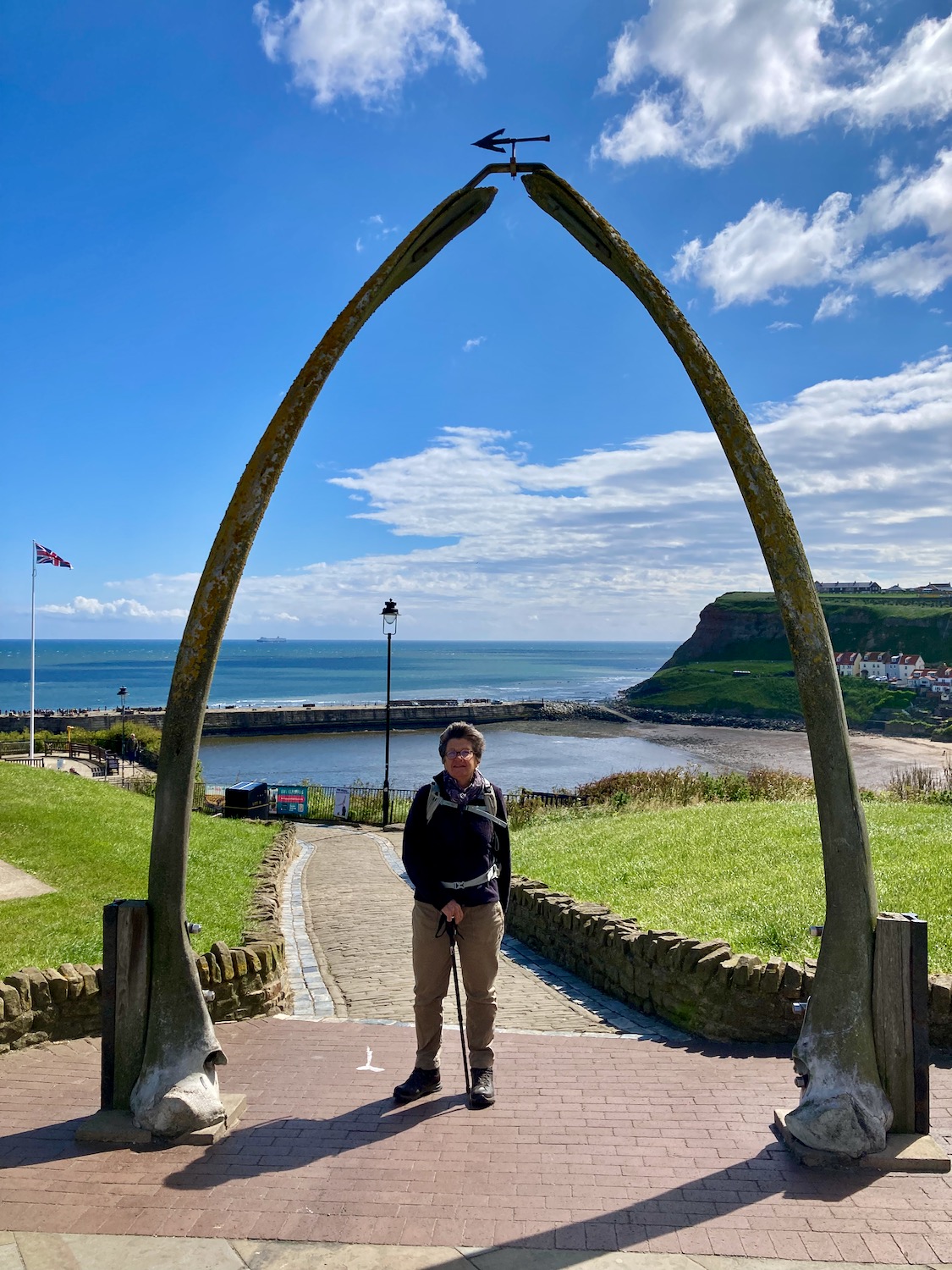
So……..hoping we might find a cafe on the other side of the harbour, we walk past the funfair and up the hill to the Whalebone Arch in the direction of Sandsend, a village three miles away.
The twenty foot jaw bones were originally placed here in the eighteenth century to honour the town’s important whaling industry, but the ones I’m standing underneath are actually the third set to stand on this spot. Over the years the bones have been affected by harsh weather and started to crumble. The latest incarnation is a set from a whale killed legally by Alaskan Innuits and set up in 2003.
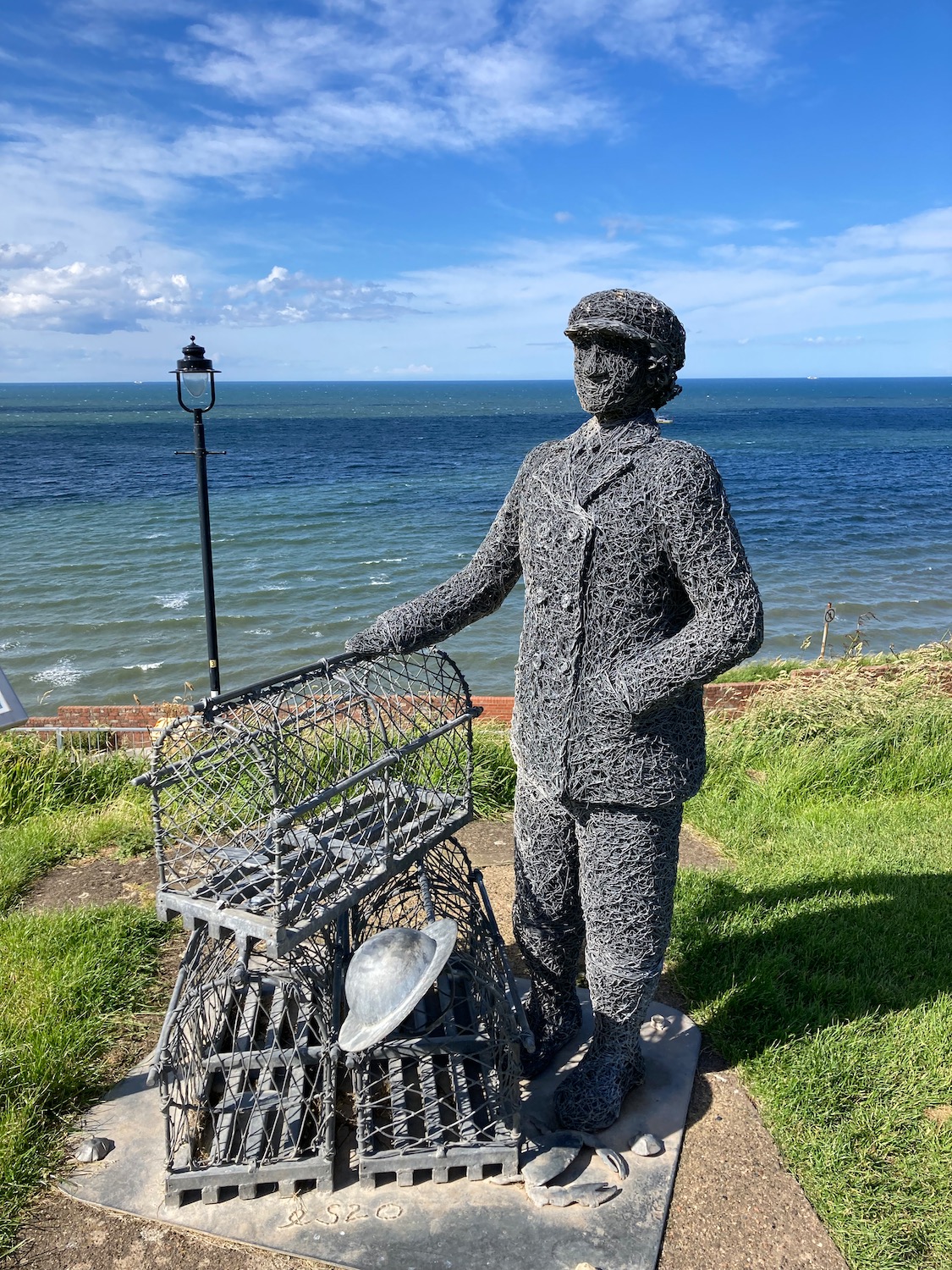
Up on the cliffs leading out of town is a wire sculpture of “Skipper Dora”, who was the first female skipper on the north east coast. Her work as a nurse in the First World War left her with bronchial problems so she moved to Whitby for the sea air. She then took up fishing and had her own boat built – a remarkable woman.
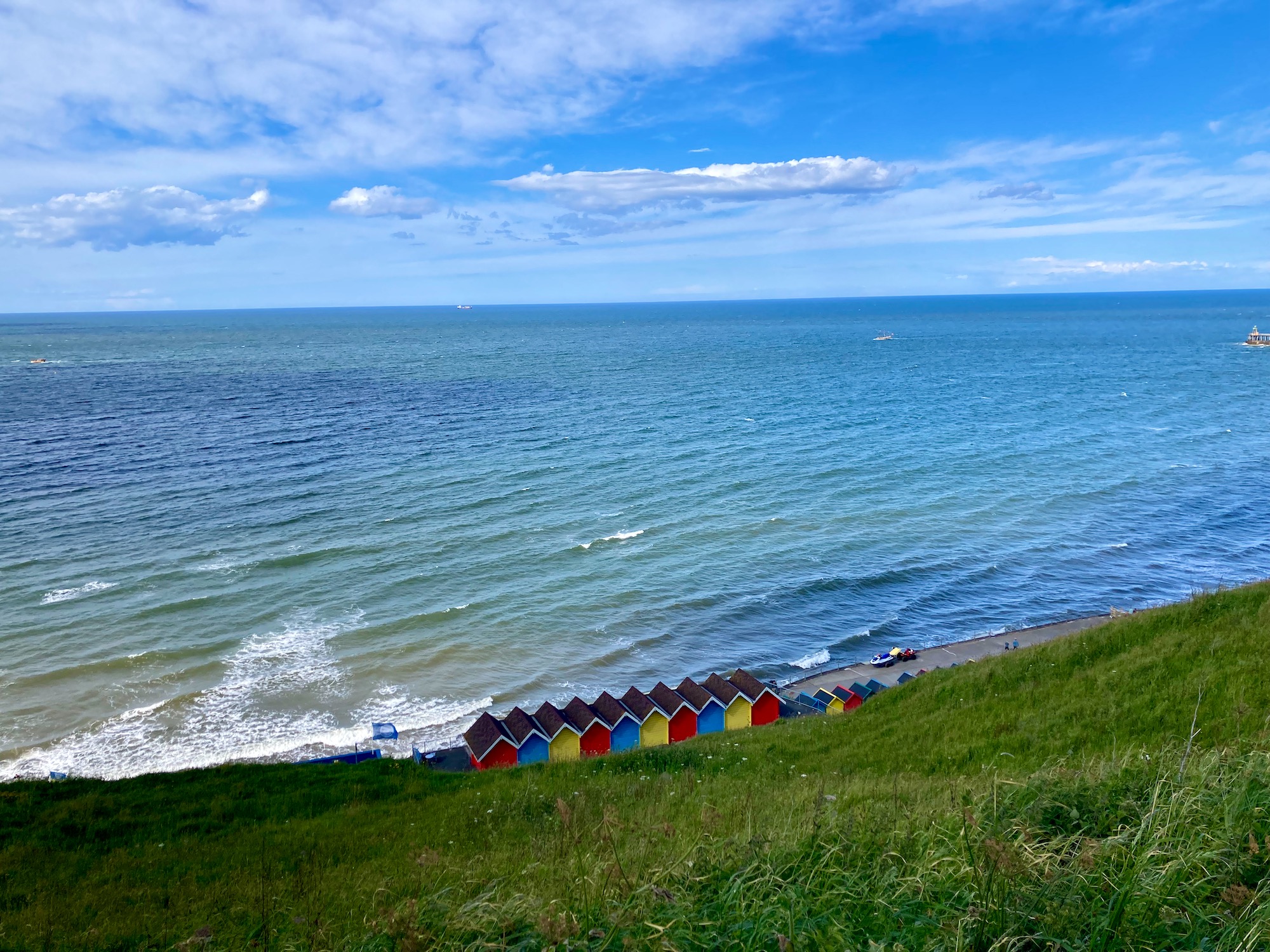
Down below a pretty row of beach huts catches my eye, making me think there could be a way of walking closer to the sea, but it’s too late now – I’m following the path on the OS map
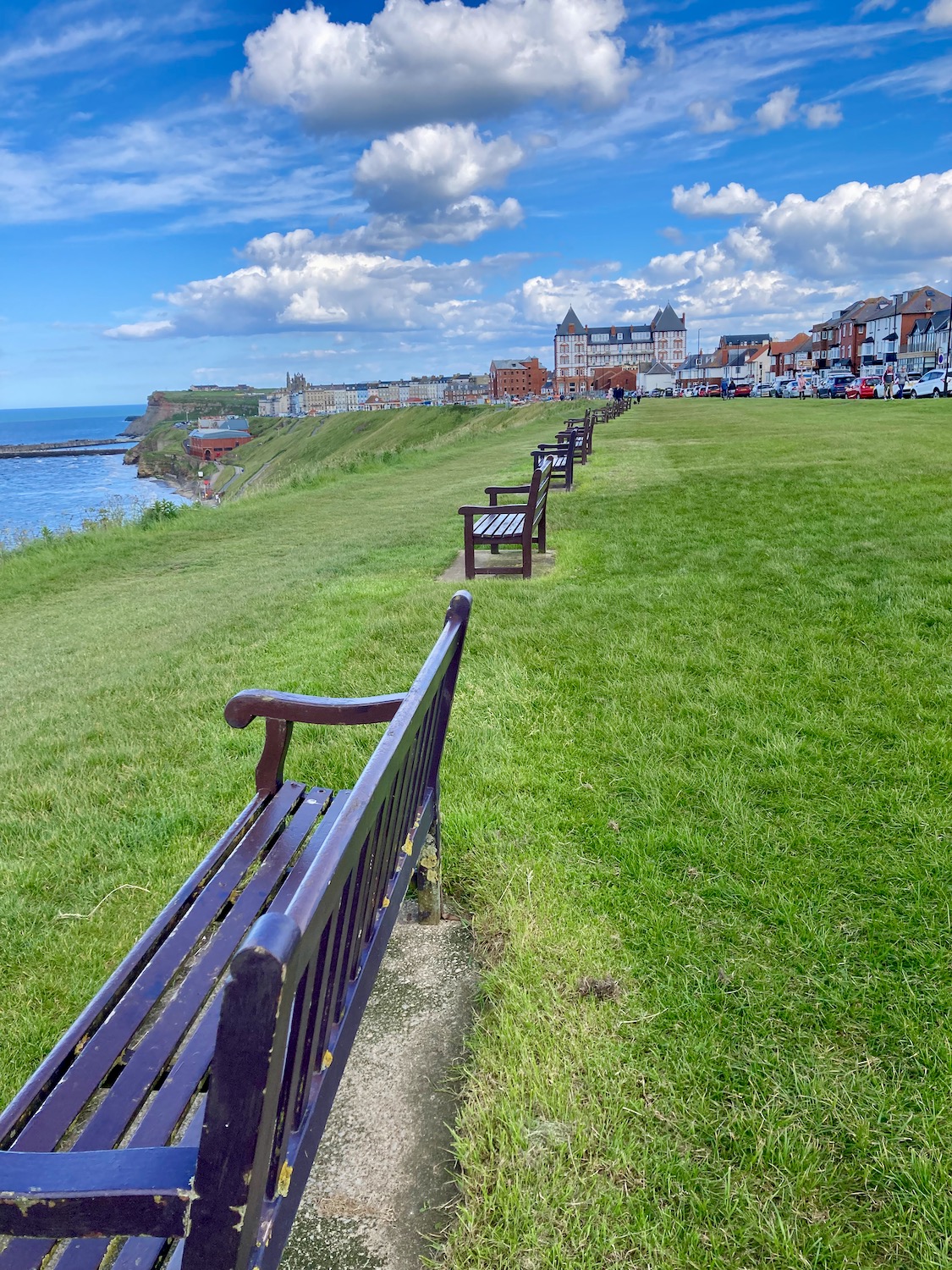
We then walk past a row of memorial benches – don’t think I’ve ever seen so many in one spot.
After a short stretch of road walking we are now approaching Sandsend – we could possibly have walked along the beach from Whitby (as Damian suggested) but when I look back I can see there is a headland half way down, which is already submerged.
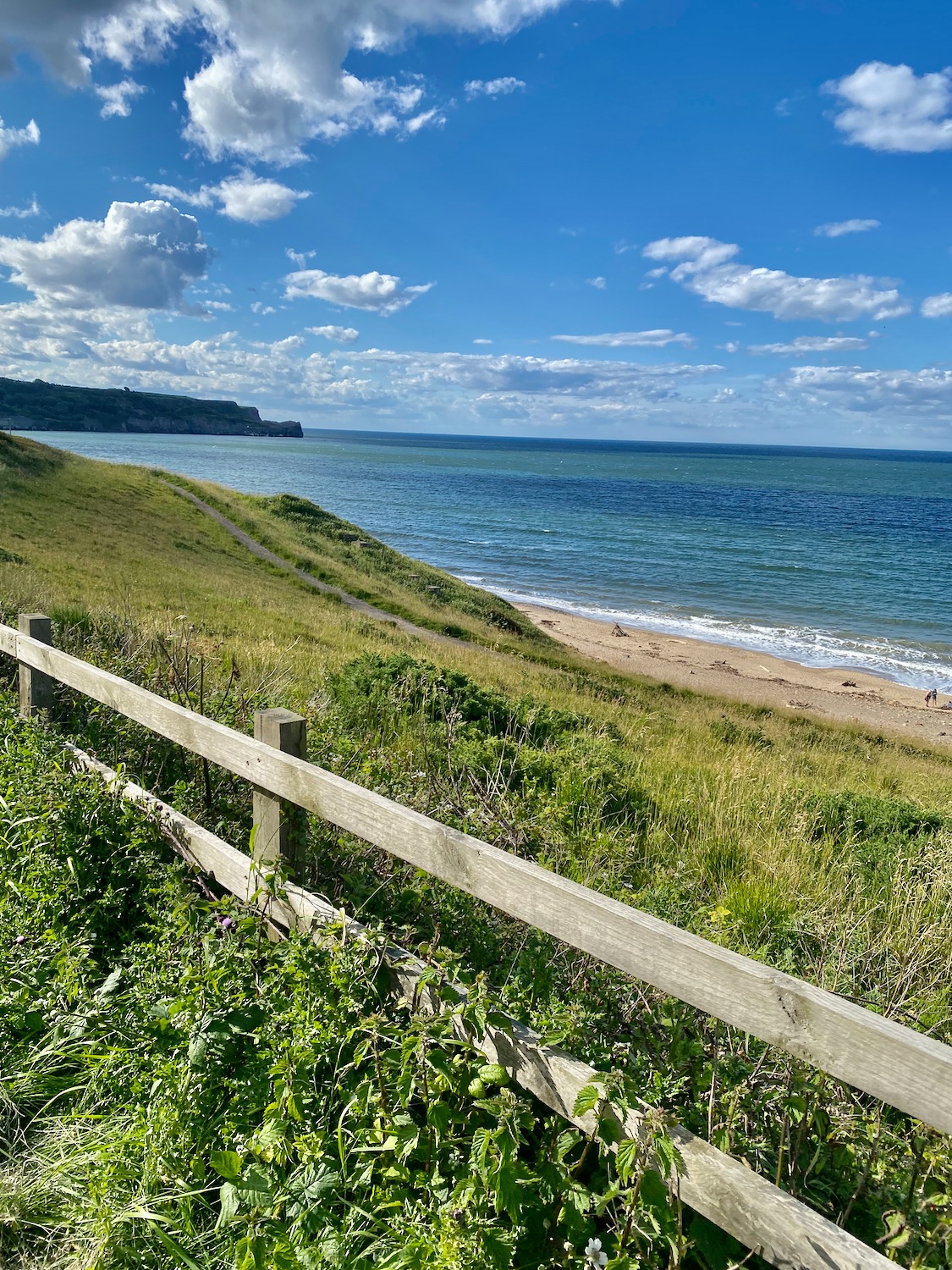
More memorial benches………………but more importantly where is the pub?
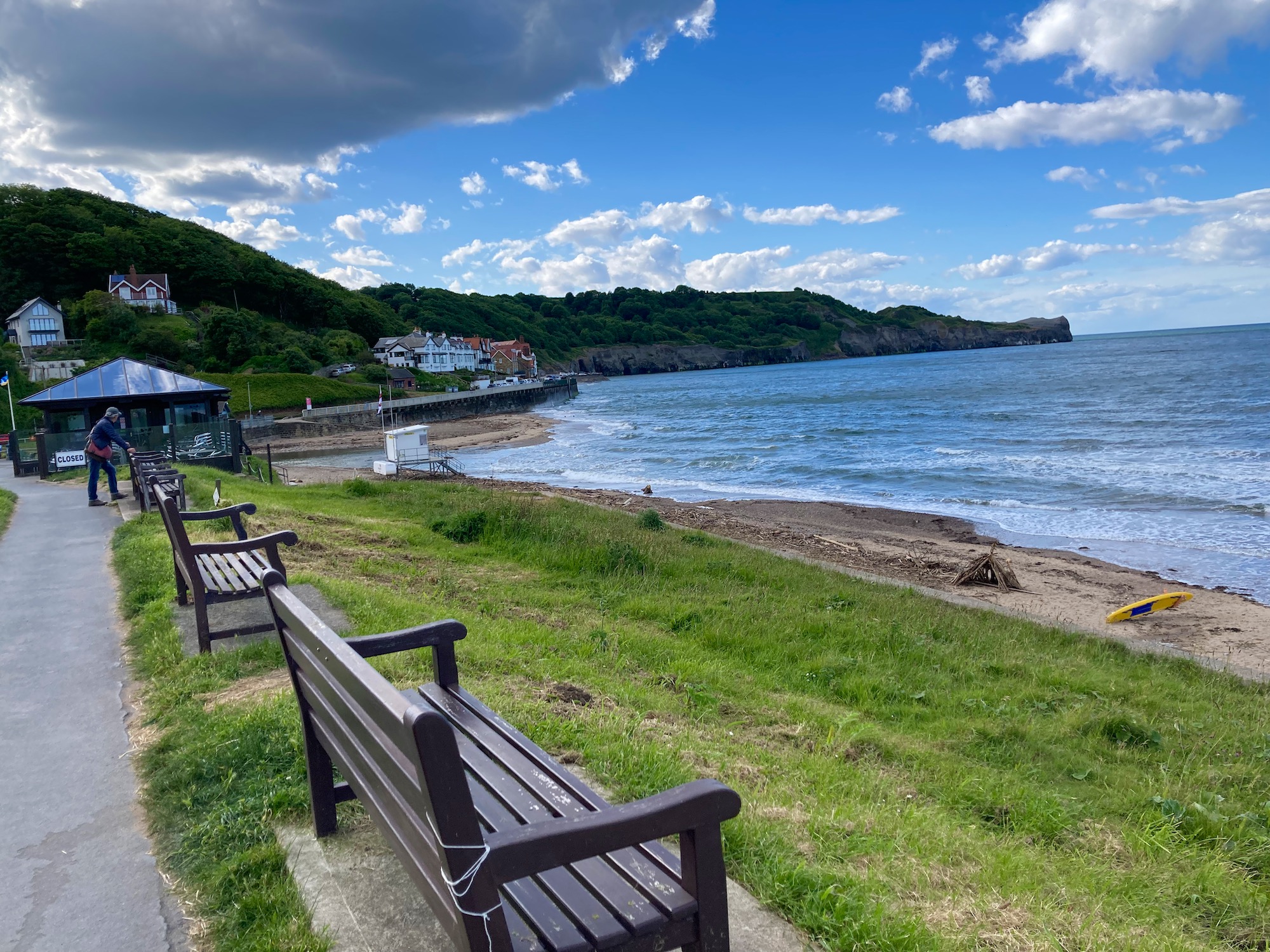
The Hart Inn will do very nicely thank you especially as there is a raft (collective noun) of ducks nearby to keep us entertained.
Distance: 10 miles
 Joining the Dots
Lovely stretch of the coast with an Interesting history. Skipper Dora sounds amazing. I don’t get the Goth thing either but I love Whitby and Robin Hood’s bay. I like the chicken you held in Edinburgh!xx
it was such a strange experience – I could feel it’s little heart beating xx
Sponsor it and periodically receive updates on its welfare, with short videos of it haphazarding its turf as it scavenges for critters and grains.
You have to admire those goths, still (after all these years) getting a thrill from parading the movement that tickles their fancy and gentle dark side.
Google informs that a ‘whit’ is a tiny (almost imperceivable) amount. late middle English, so I guess those invaders could have been jeering, sneering or possibly just acknowleding the size of the place. Either way, it is charming and you describe it in your lovely way. Ax
Even though I didn’t really understand the first sentence, I’ll take it as a valid stream of consciousness. Thank you so much for reading and adding to my store of linguistic knowledge x