Paull is a sleepy village roughly five miles outside of Hull as the crow flies, but as we are not crows and because there is a dirty big patch of dockland and chemical works in the way, our walk turns out to be considerably longer. We leave the car in St. Andrews Quay where we stopped yesterday
It takes roughly 30 minutes for the bus to reach Paull – we alight in front of the pub which has an amazing view over the Humber from the beer garden at the back.

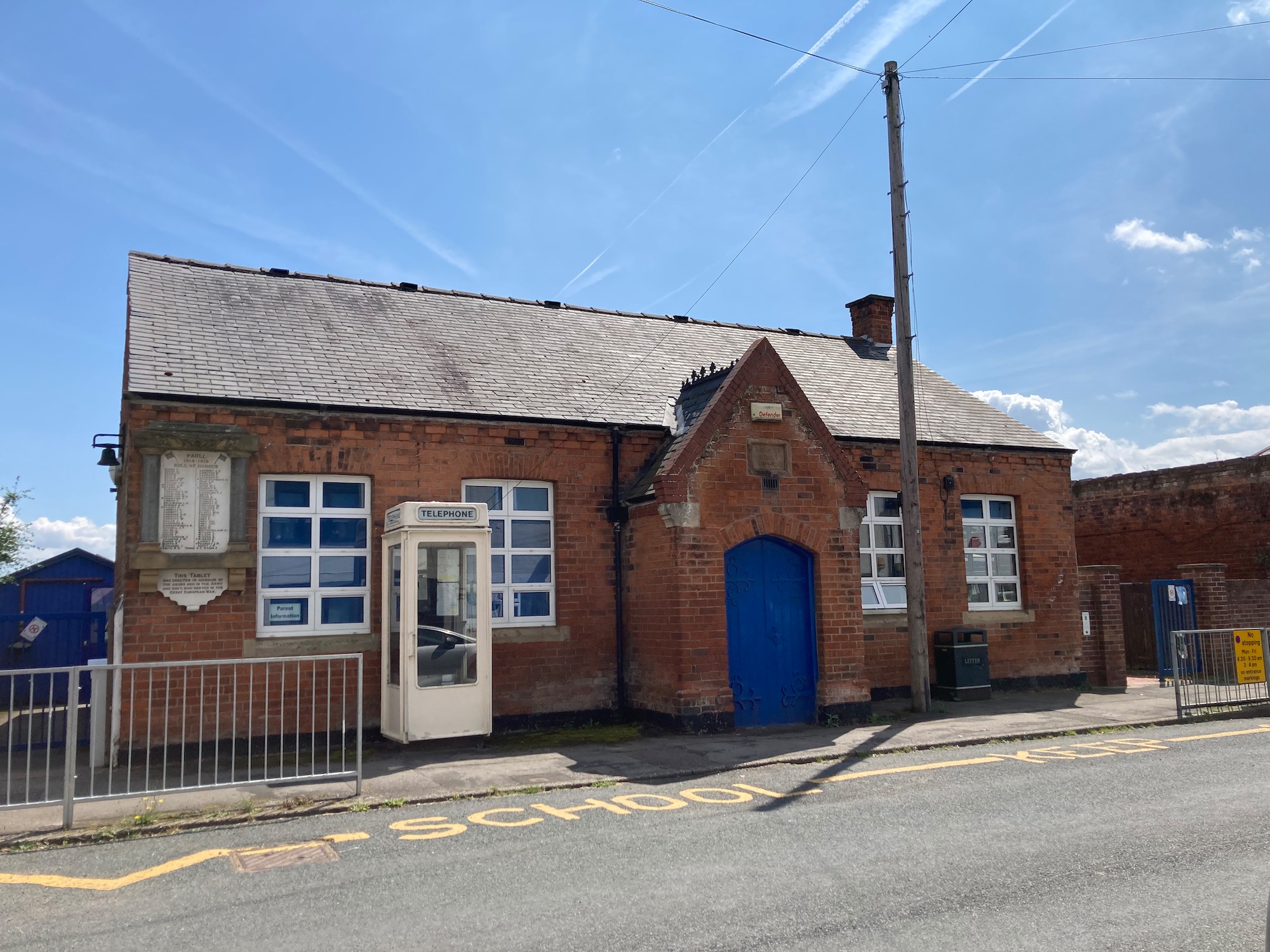
Turning left we walk down the road passing a school on the way – a cream coloured telephone box stands out front. I later discover that these telephone boxes are unique to Hull and some of them are so rare that they are now Grade-11 listed.
It all goes back to the 1800s when the telephone was invented and the lines buried in the ground were maintained by local councils. As time went by, the Post Office and BT took over from local councils in the rest of the country, but not in Hull. Here, a company was set up, now called Kingston Communications, to run the phone networks. KCOM is still in charge of the lines today which means most broadband internet is provided by the company too. Refreshing to learn about a successful bid for autonomy.
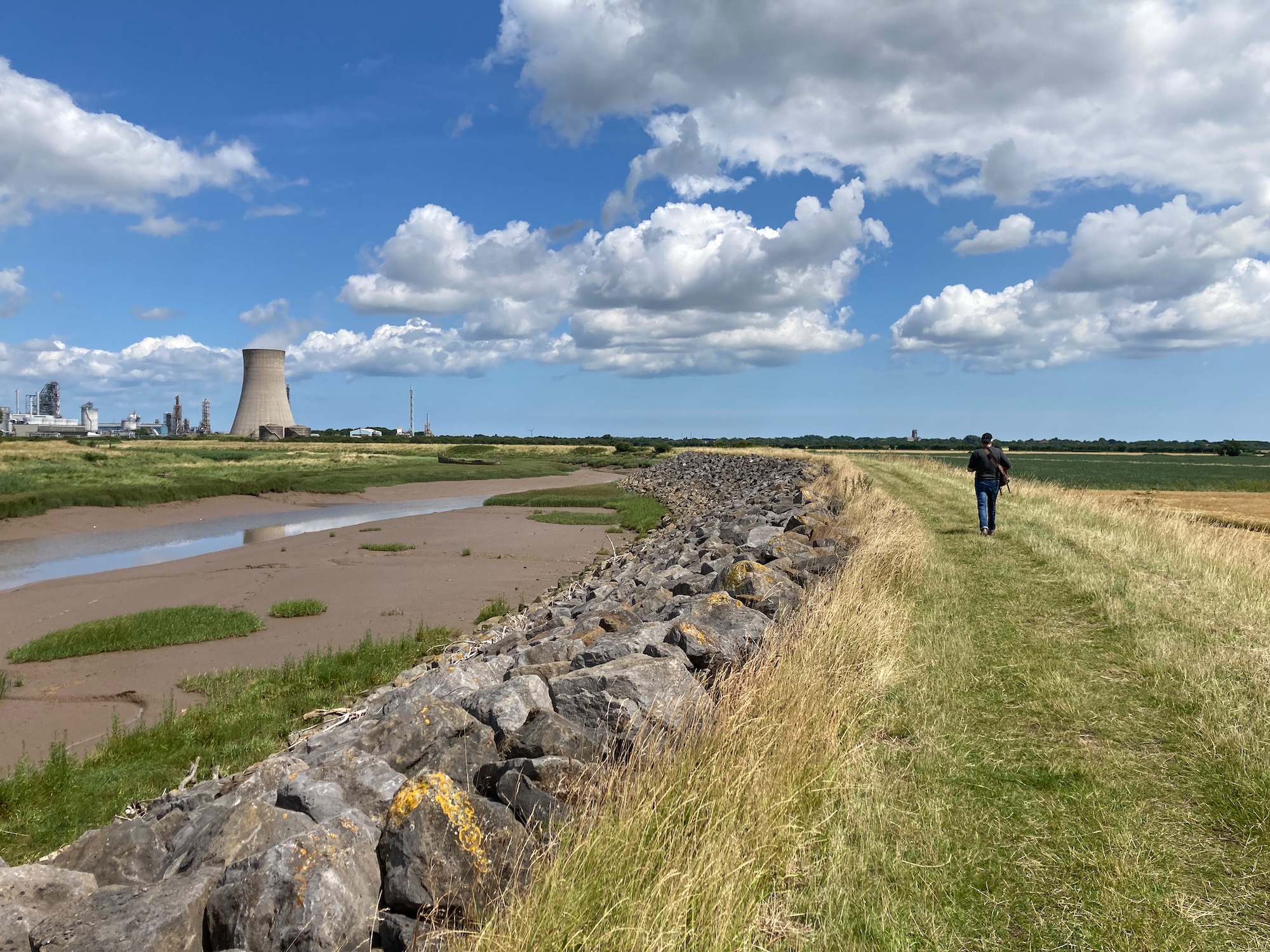
A footpath appears off to the left, which will take us to the south bank of a waterway marked as Hedon Haven on the map. There is a wide grassy path that offers views of the chemical works on our left and enormous cultivated fields on our right – it is a bizarre combination.
There is also a cloying sweet smell in the air which is difficult to get rid of, no matter how long or how often I hold my nose. Chemicals used in the cosmetics industry perhaps?

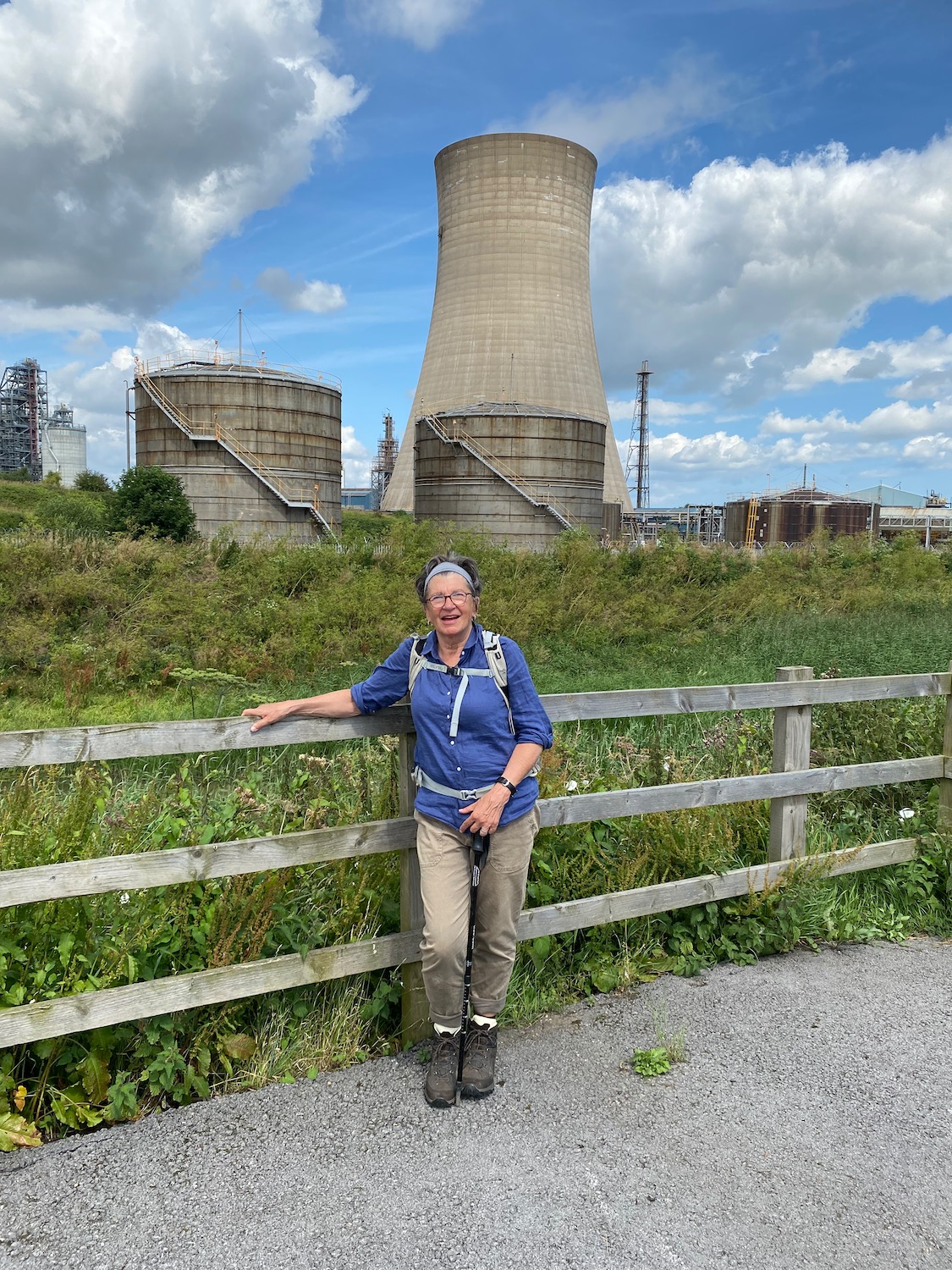
Time for a photo in front of this gigantic chimney which dominates the landscape, like some prehistoric site of ritual sacrifice – I feel I ought to be kneeling in front of it.
At the end of the path is a sign directing us up a minor road – there is no verge to walk on but there is very little traffic.

At the end of the road we are faced with a very busy roundabout and after much deliberation manage to land on the left hand side of what is, at this point, a dual carriageway – at least there is a path. This soon runs out so we use the traffic lights to cross the lanes and start walking down the A1033 on the right hand side. And this is what we do for two miles – it is not as draining as I thought it was going to be, as the path is sometimes separated from the road by trees and bushes but still pretty noisy.


At the fourth roundabout the map indicates a turn off to King George Dock where you can catch a ferry to Rotterdam if it takes your fancy. But we are now following signs for what turns out to be a relatively peaceful, well maintained, tarmac track all the way into Victoria Dock.

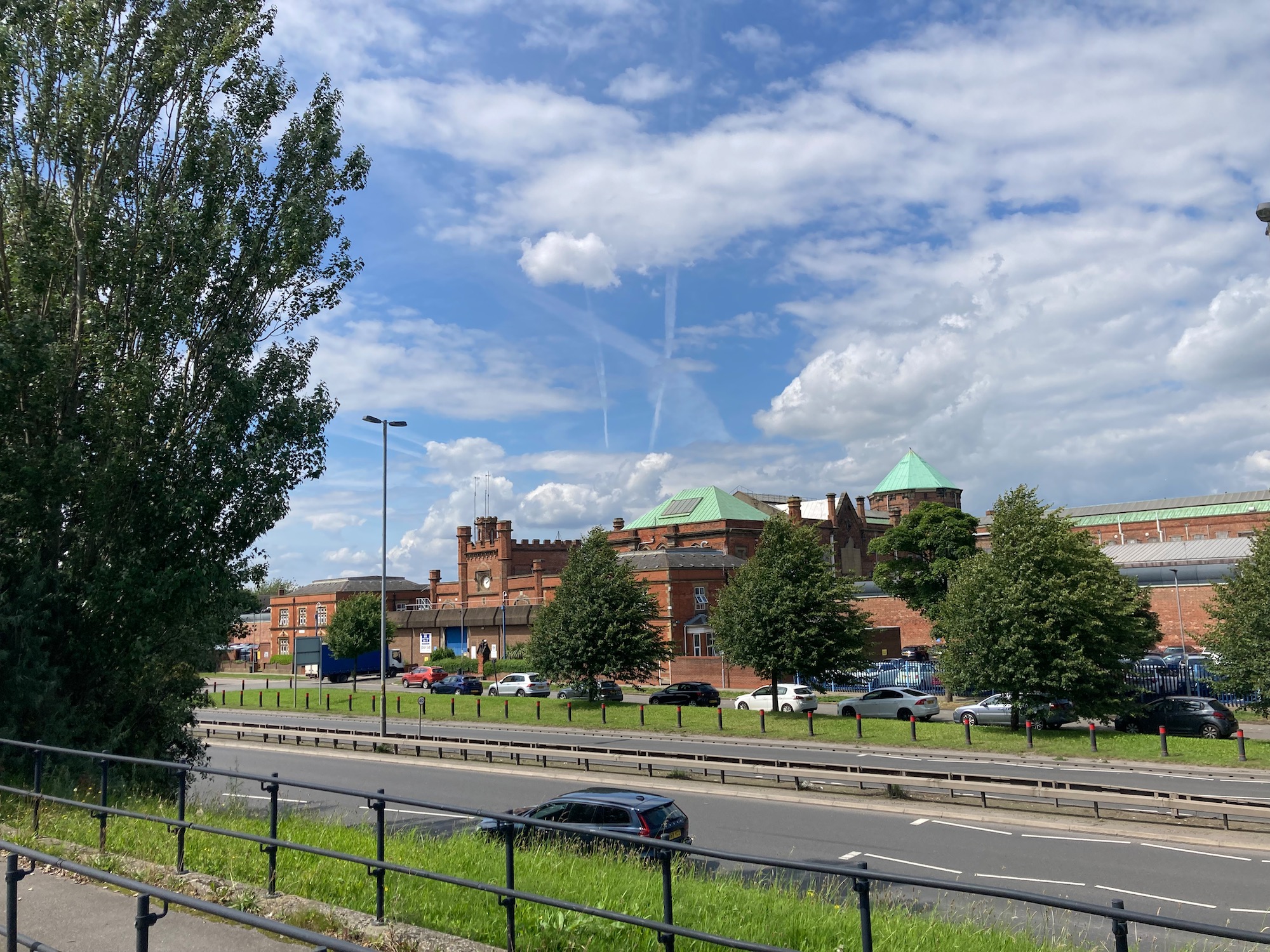
Half a mile down the track a gap in the bushes allows us a view of Hull prison, a typical red brick Victorian building. A previously high security prison it is now known as a “local” prison holding only prisoners on remand, but in 1976 it was involved in a three day riot by the inmates over staff brutality – two thirds of the building was destroyed.
I have incarceration on my mind at the moment having just read Rory Stewart’s book “Politics on the Edge” where, in 2018, as Minister of State for Prisons, he describes his uphill struggle to improve the appalling conditions in Britain’s prisons. Despite the deeply frustrating bureaucracy and entrenched opinions of those working in the system, his efforts to combat the soaring violence and drug use in our prisons were largely successful. Percentages of assaults dropped significantly and the percentage of positive results from random mandatory drug tests dropped by 50% ……………………….
He is also a walker, taking time off from public life in 2002 to undertake a two year walk across Asia, including a 36 day solo trek across Afghanistan – respect..
https://www.goodreads.com/book/show/95643.The_Places_in_Between
And while we’re at it, have a go at the darkly comic and shocking account of life behind bars. “Bit of a Stretch” by Chris Atkins – it’s hilarious.
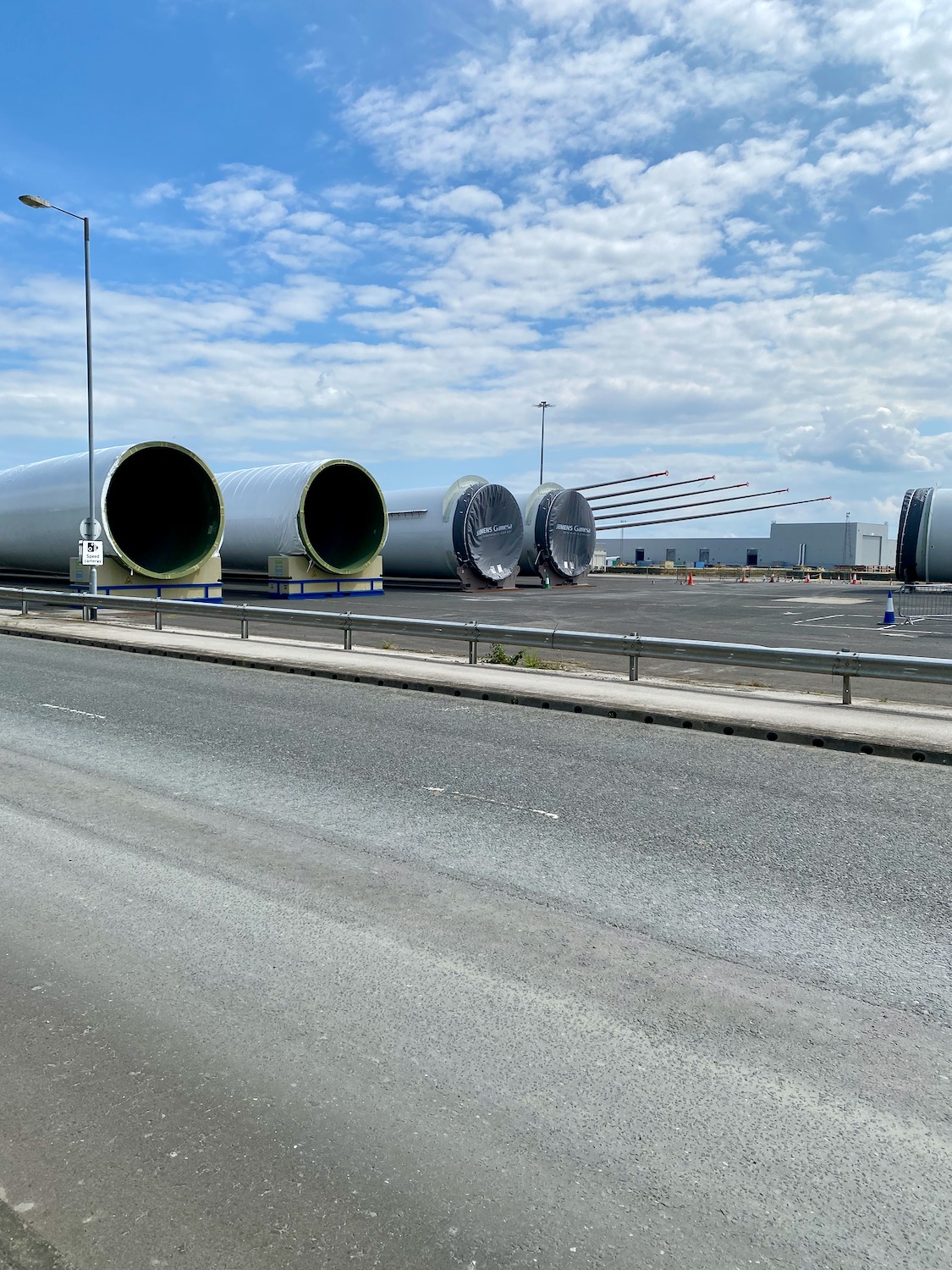
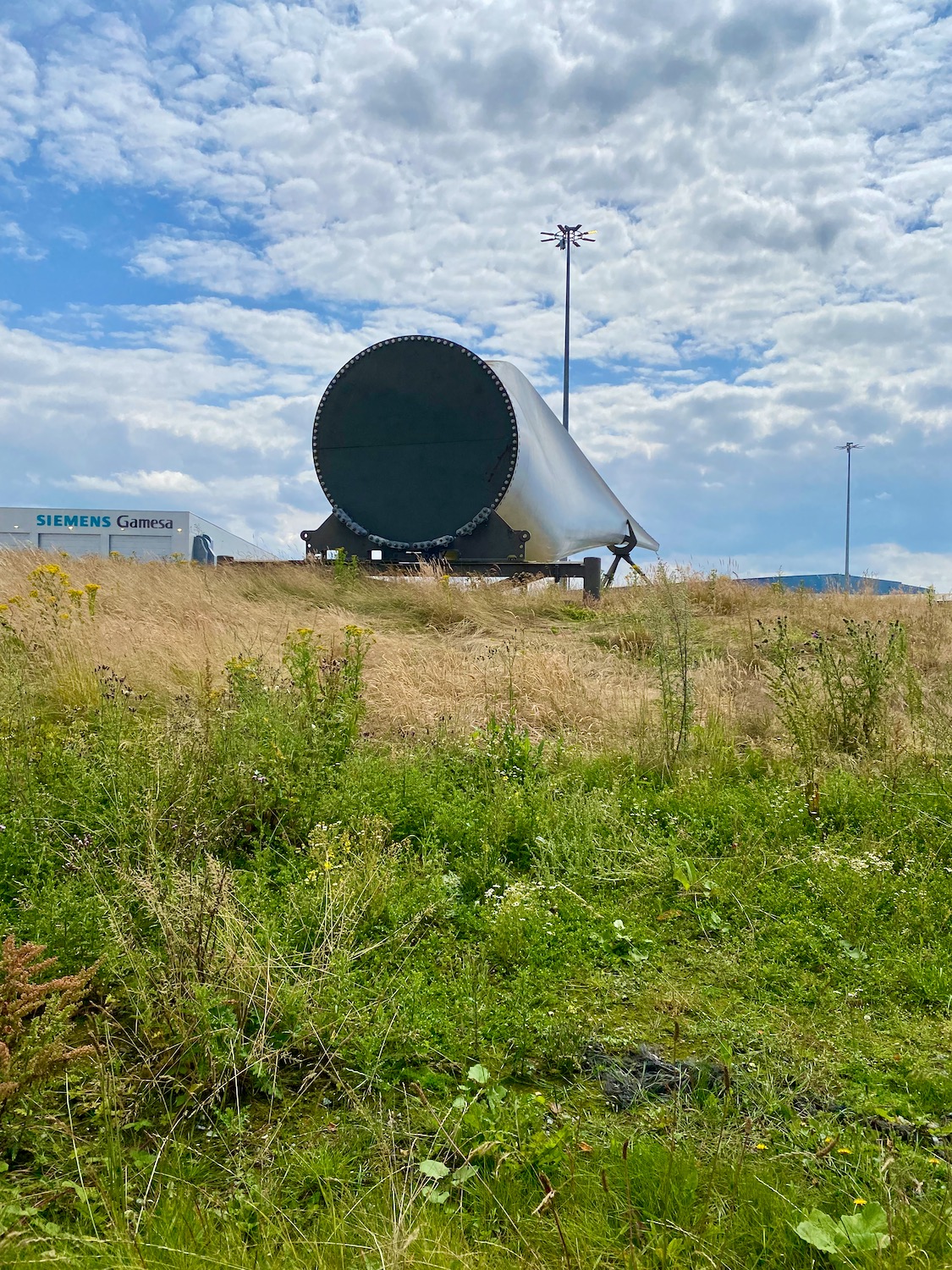
Right, back to the path, which is now running past the Siemens Gamesa factory, one of the only two facilities in the UK to manufacture blades for wind turbines – the other is Vestas on the Isle of Wight. Made of fibreglass reinforced polyester, these beautifully curvaceous beasts are scattered about the forecourt waiting to be transported, painfully slowly. to off shore wind farms around the country. .

This is a comparatively new path we are on and bushes and tress have been planted on either side – anyone know what this is? My plant recognition app frequently lets me down.

At the end of the road we are directed back to the river and on to the promenade, having successfully circumnavigated the docks – it’s time for a little sustenance and a rest.

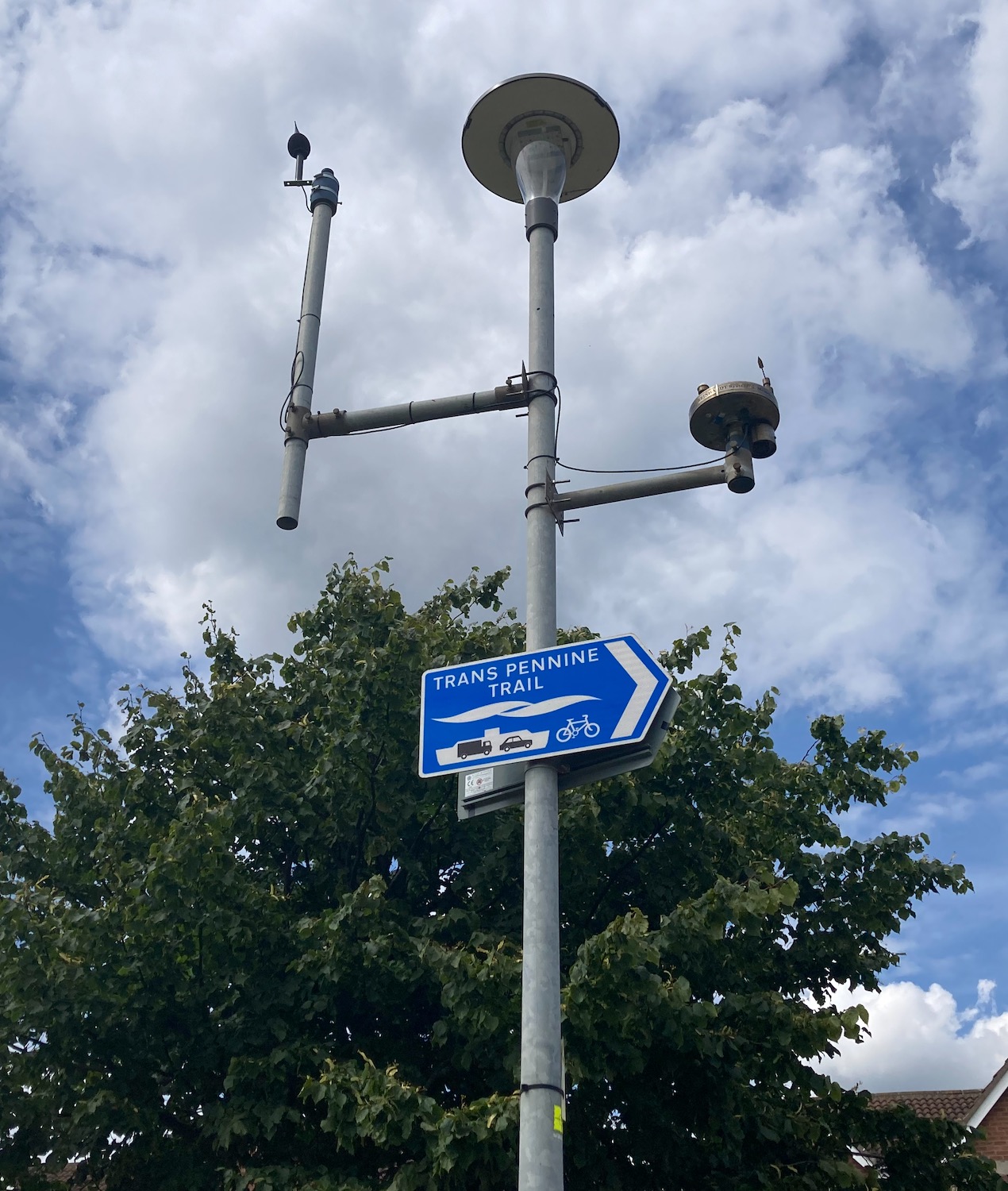
Behind us is a lamppost directing unwary walkers towards the Trans Pennine Trail which, if you were to do our walk in reverse, will find themselves facing two dead ends and on the wrong side of the railway line….just saying.
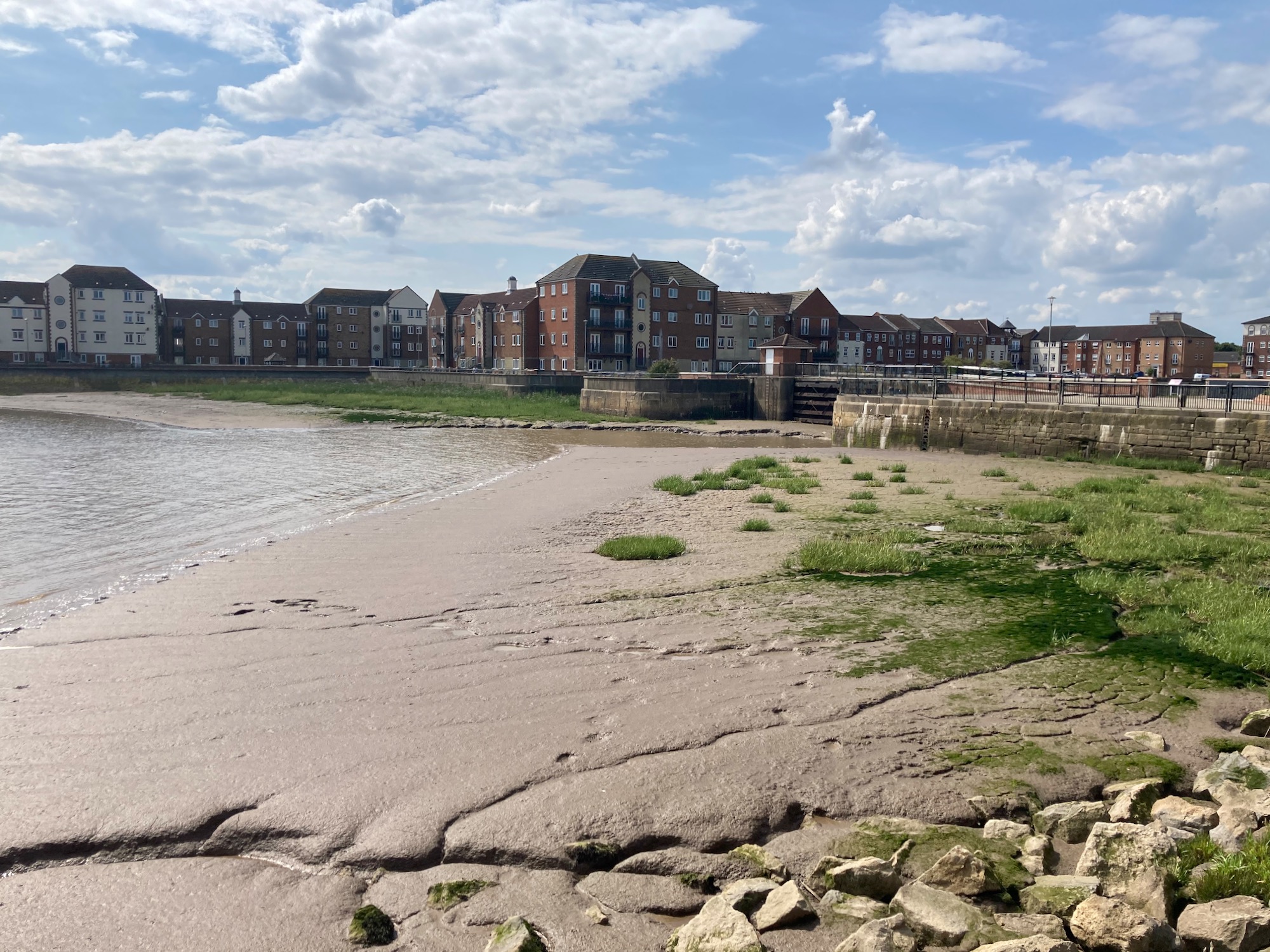
An information board tells us that the promenade was built between 1987 and 1992 as part of a mile long coastal defence scheme – at a cost of £2.5 million. The works have successfully held the water back ever since. It is very peaceful…………………..

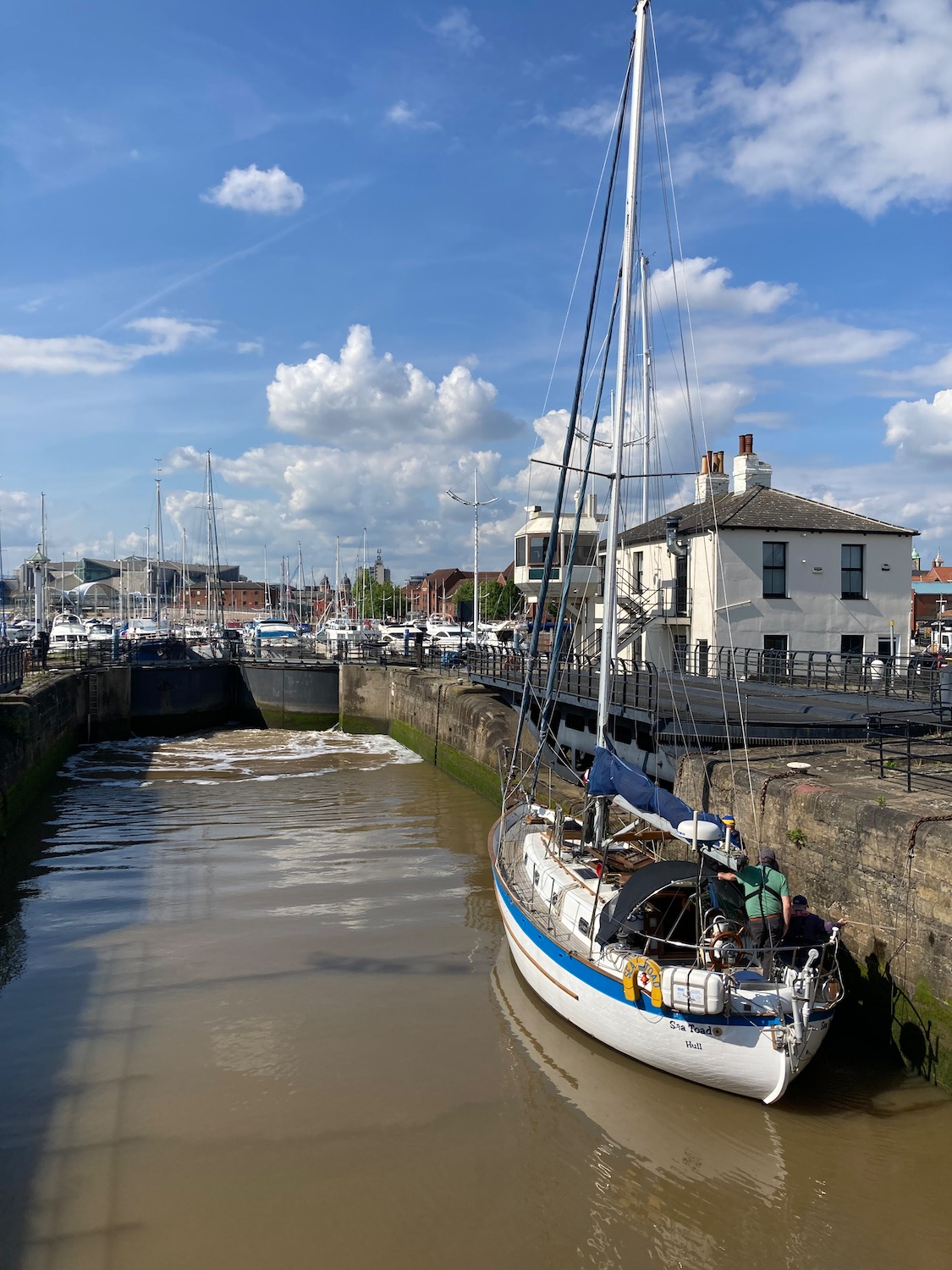
We walk over a lock…………….
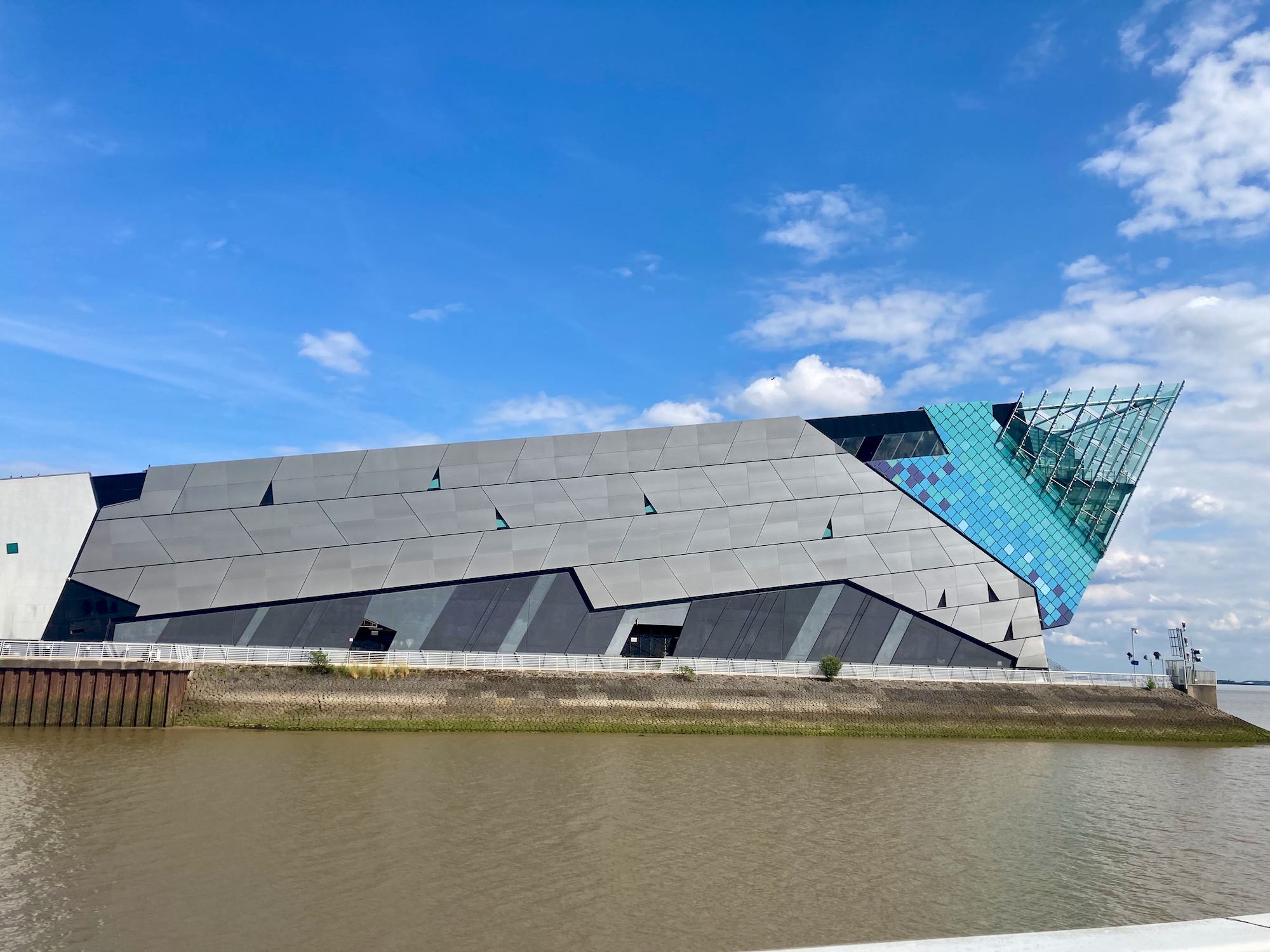
………………….and wonder whether we should visit the Aquarium – The Deep – but no, we still have a way to go.

I take a picture looking back – it is an unusual building – almost reptilian.
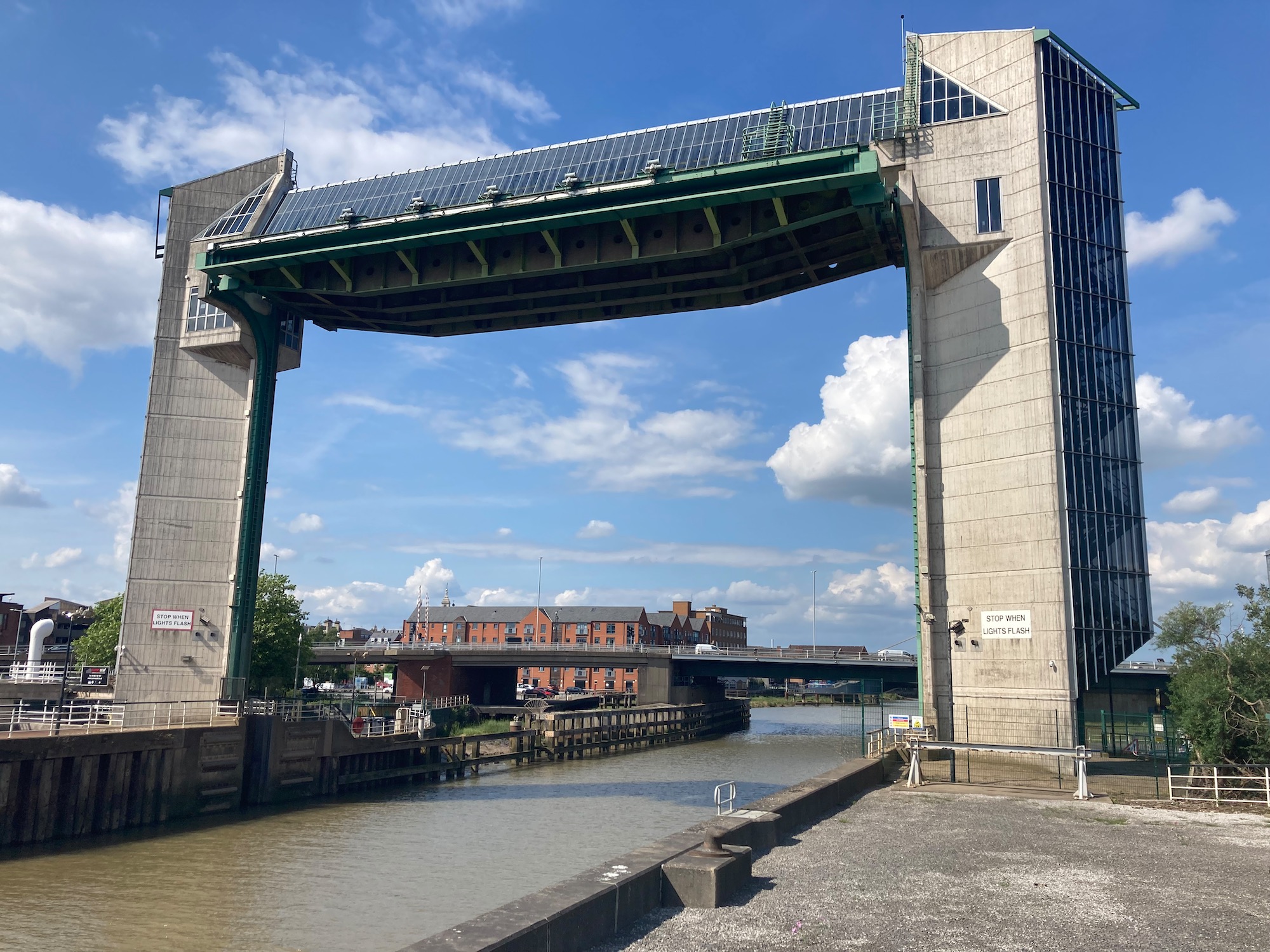
And then past what I later find out is a tidal barrier – this short video shows you how it works. I continue to be amazed at man’s (or woman’s) ingenuity.
We continue down Victoria dock promenade, it is very hot and people are sitting outside pubs drinking pints of ice cold beer – stop it!
A pretty indifferent piece of public art………………………….or maybe I’ve seen too many Goldsworthys.

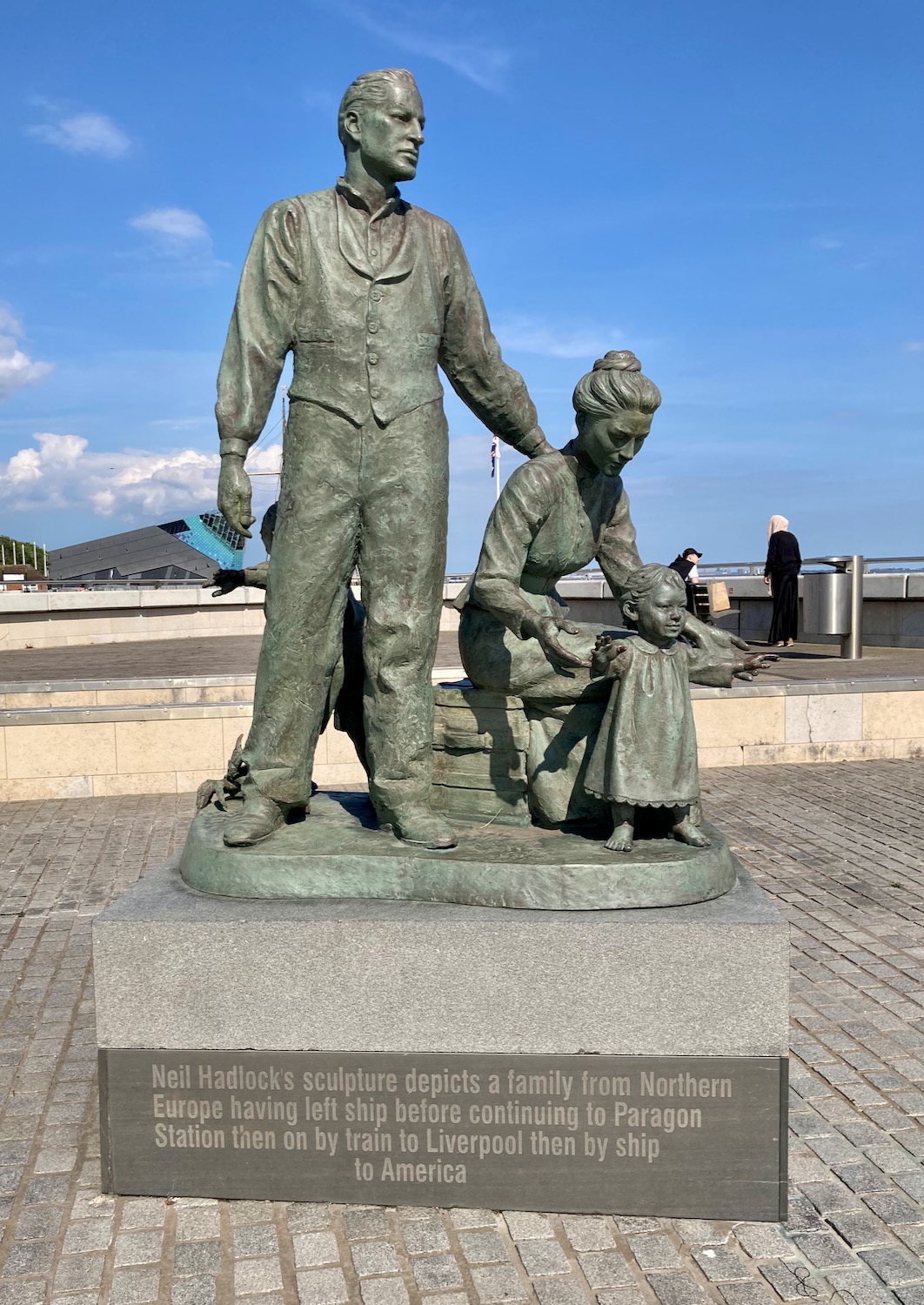
And a memorial to those brave souls who between 1830 and 1914 left their homelands in northern Europe looking for a better life in the “New World” – some things never change. During this period Hull became the busiest port for the movement of migrants from the UK – over 2.2 million passed through to Liverpool and finally the USA.
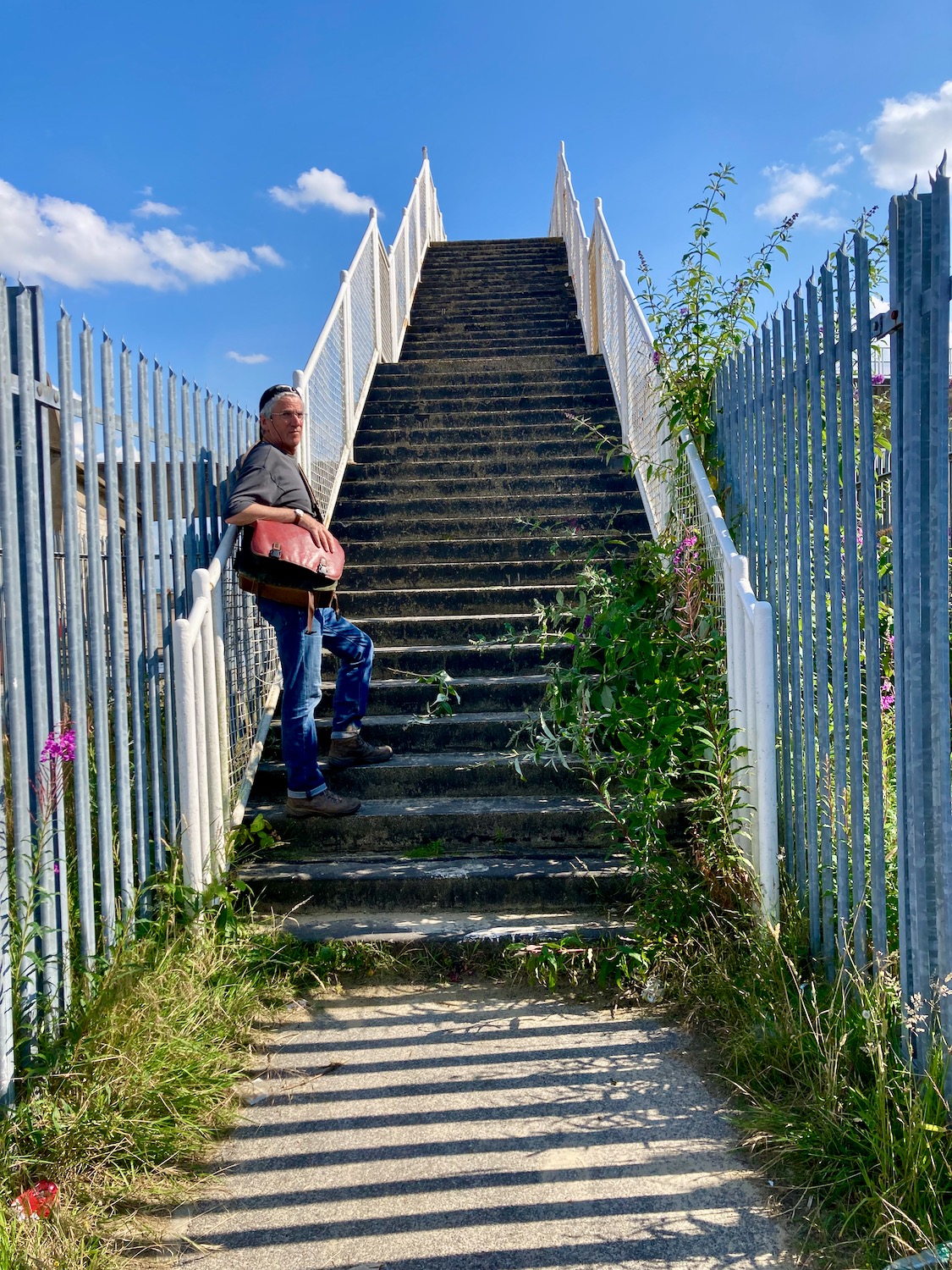
Leaving the promenade we cross over a footbridge on to Albert Dock which closed to commercial traffic in 1972. Unlike the other Hull docks this one incorporates a mile long concrete riverside quay accessed by steps and a bridge. We are initially fenced in on both sides which is a little unpleasant and the intensely bright sunlight bouncing off the metal is making me feel dizzy.

The whole place has an abandoned air about it although there are obvious signs of activity.
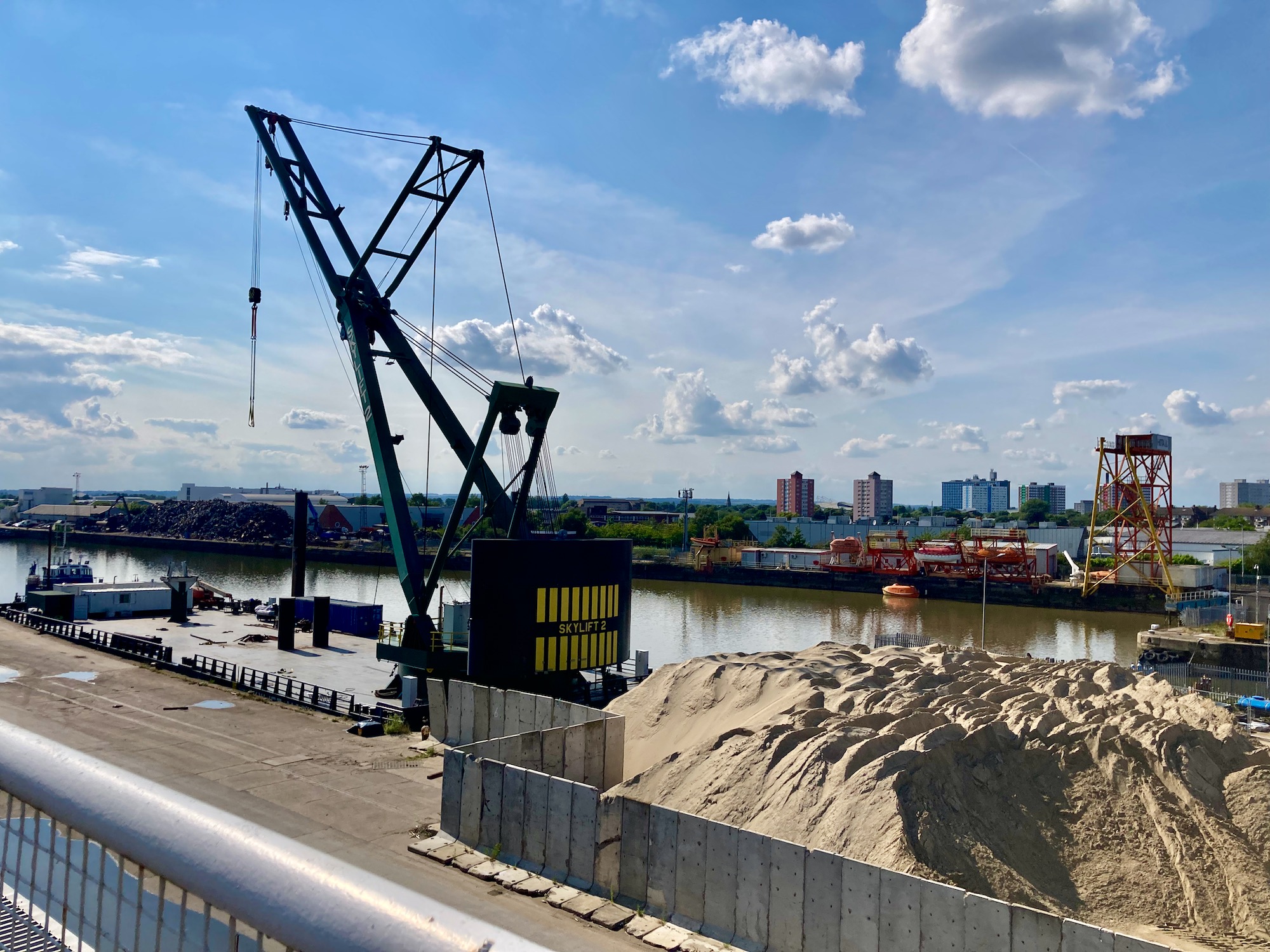
We cross a bridge which overlooks the dock, and are overtaken twice by panting, sweaty joggers who thunder across the concrete walkway making the whole bridge tremble – it is very hot.

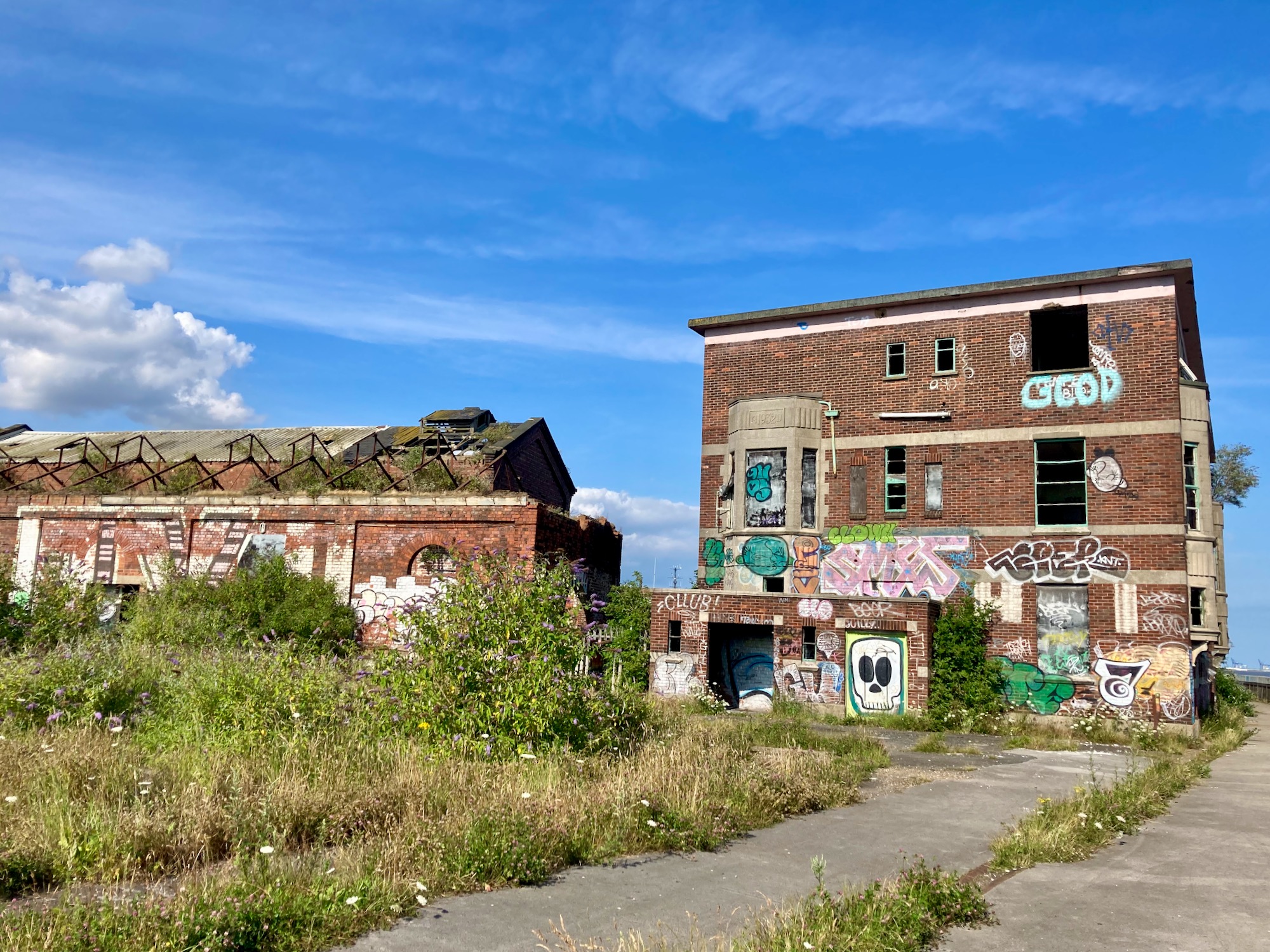
At last we come to another set of metal steps which take us down through a collection of disused industrial buildings covered in the usual meaningless tagging – we hear sounds of tinny rap and laughter coming from inside, probably better not to investigate.

And on and on – are we nearly there? Yes we are – the path scrubs up to a tidy, newly planted walkway, running, amongst other things, past a rusted steel memorial to lost trawler men.
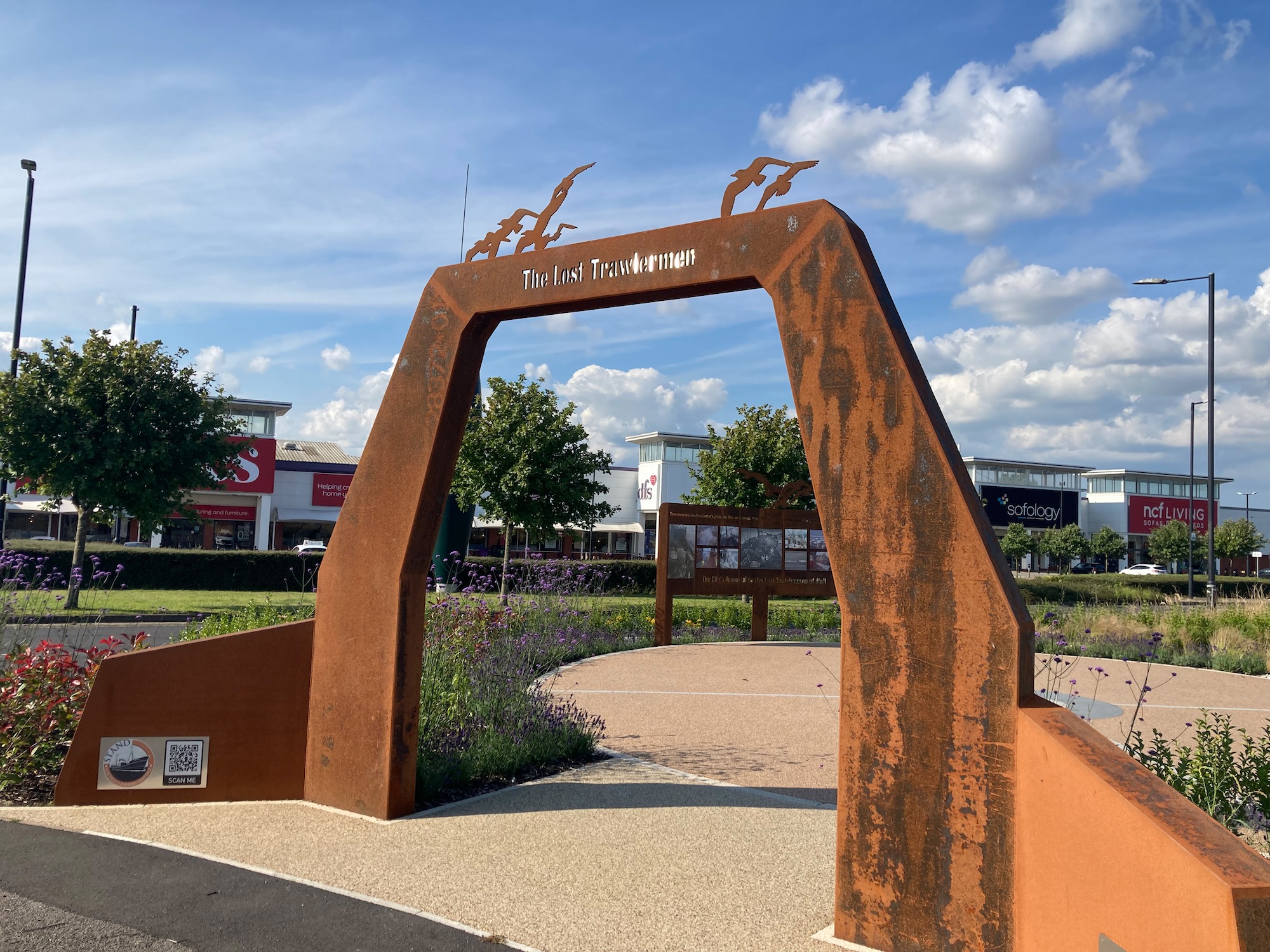

And finally to St.Andrew’s Quay where the car waits patiently.


And now for cold beer!
Distance: 10 miles
 Joining the Dots
Well, very interesting and enlightening. Lots going on – at the edges. X
The plant is properly Yellow Rocket or Laburnum anagyroides.
I think you are right! I only saw the seed pods, as the flowers come out late Spring. Tak
The chemical works looked pretty when I left them behind in the dawn light. A lot of road walking though. Enjoy Spurn Head! 🙂
Spurn Head – yes – don’t usually do walks where I have to come back the same way to the starting point but I guess this has got to be an exception…….did you see the caterpillars? Thanks for reading Tony….
I did find some strange creatures. 😉
I really enjoyed viewing and reading about this walk. Well done Damian getting on the video! Interesting information about the unique telephone boxes, prison system ,tidal barrier and human migration. I’m sure you enjoyed that beer!xx
Certainly did! Xx