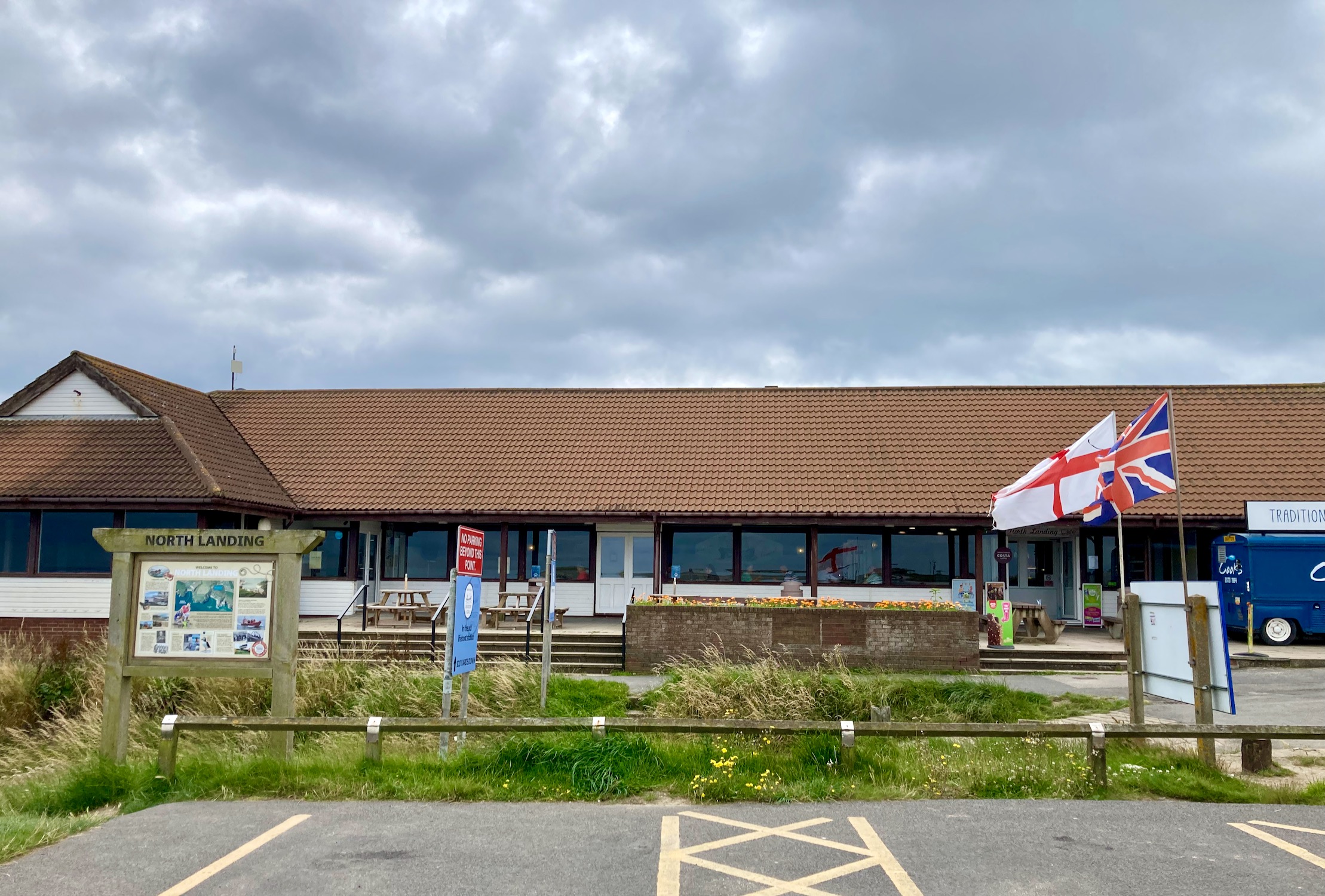
Damian is back and we’re heading south again to North Landing, located on the north side of Flamborough Head. It is part of a nature reserve and as such has a cafe, a carpark, toilets and information boards. The beach is accessed down a steep narrow path but that’s not where we’re going. It’s nice to see chalk cliffs again.
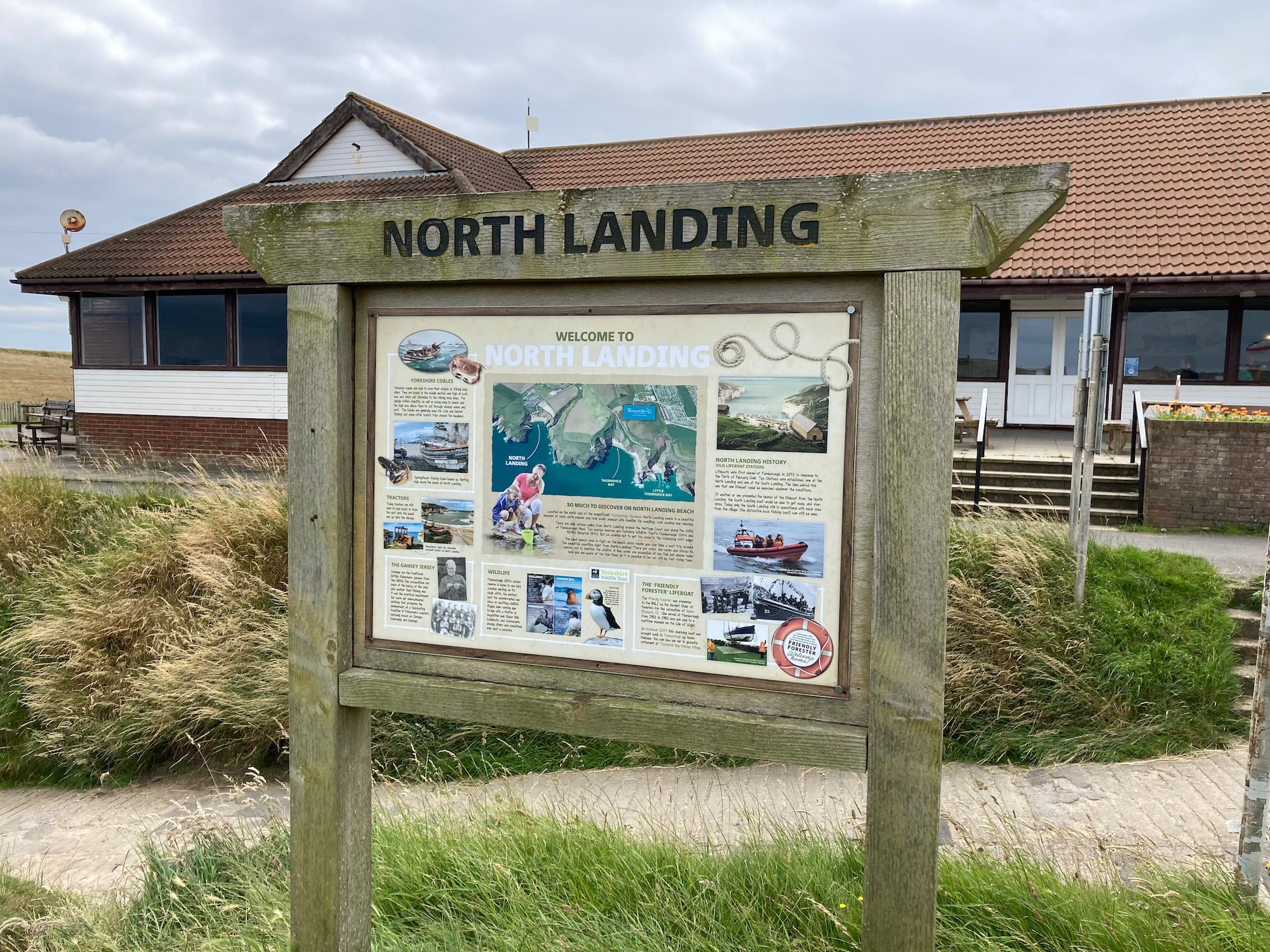

We turn left and follow the cliff path to the neighbouring bay and more information boards.
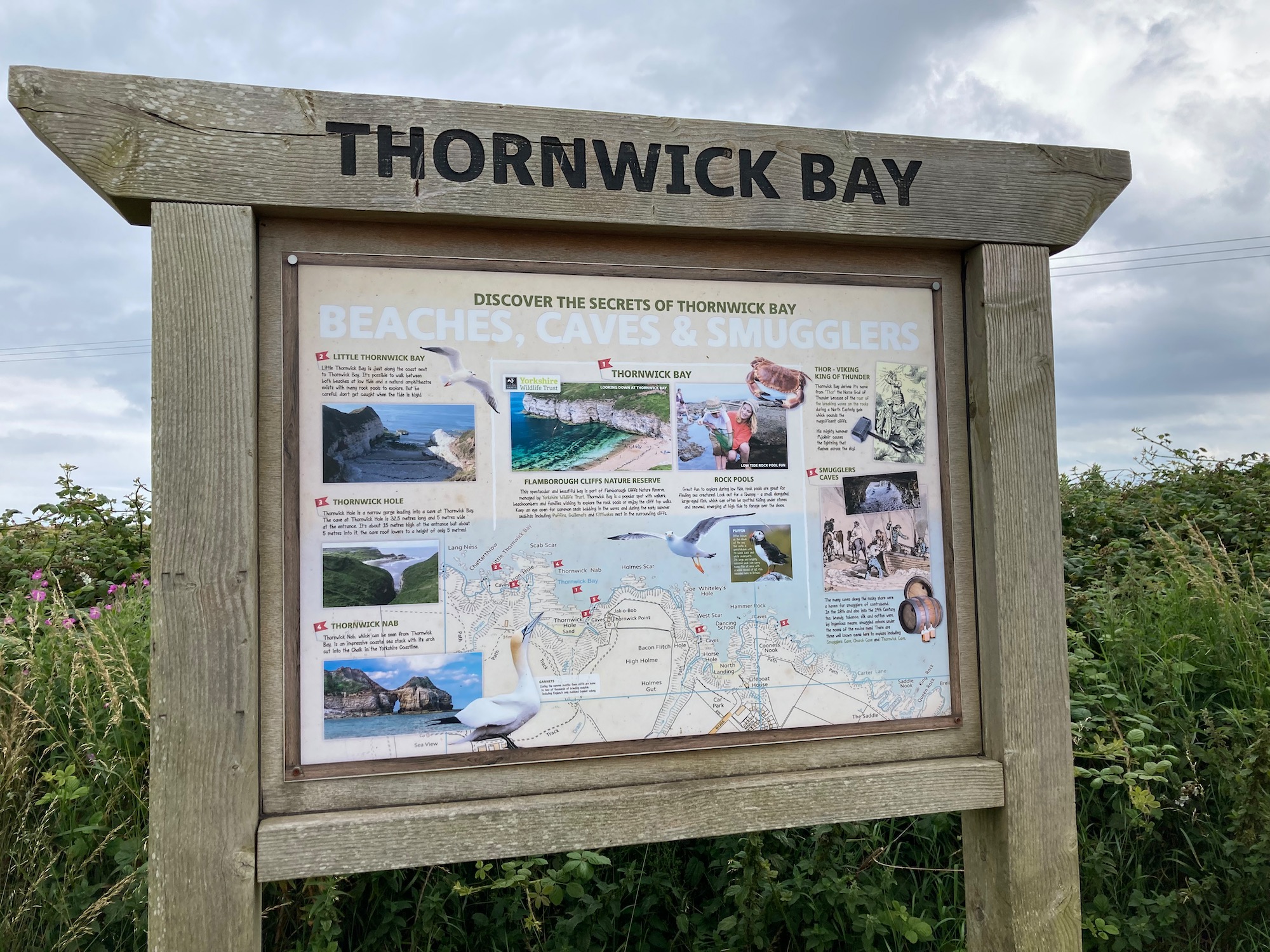
Here is what I found interesting……………
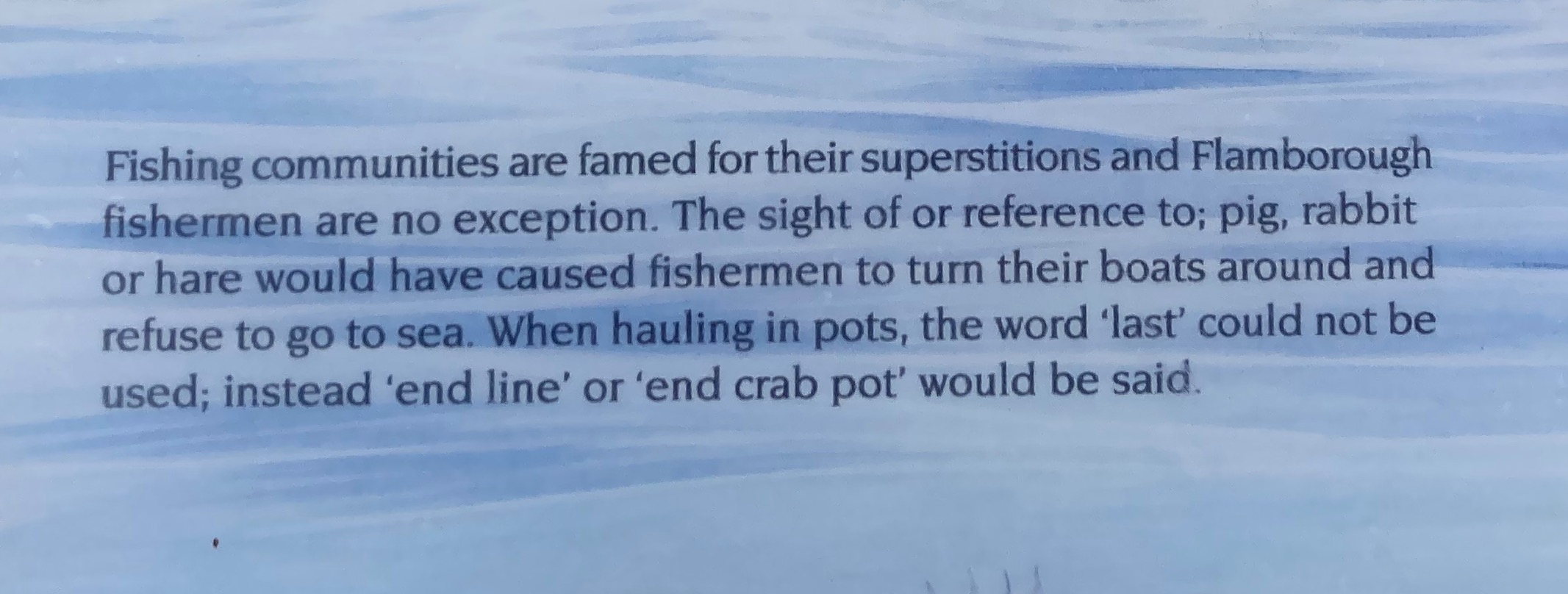
The lobster fishermen used boats based on the shape of the Viking longboats……I like the name.

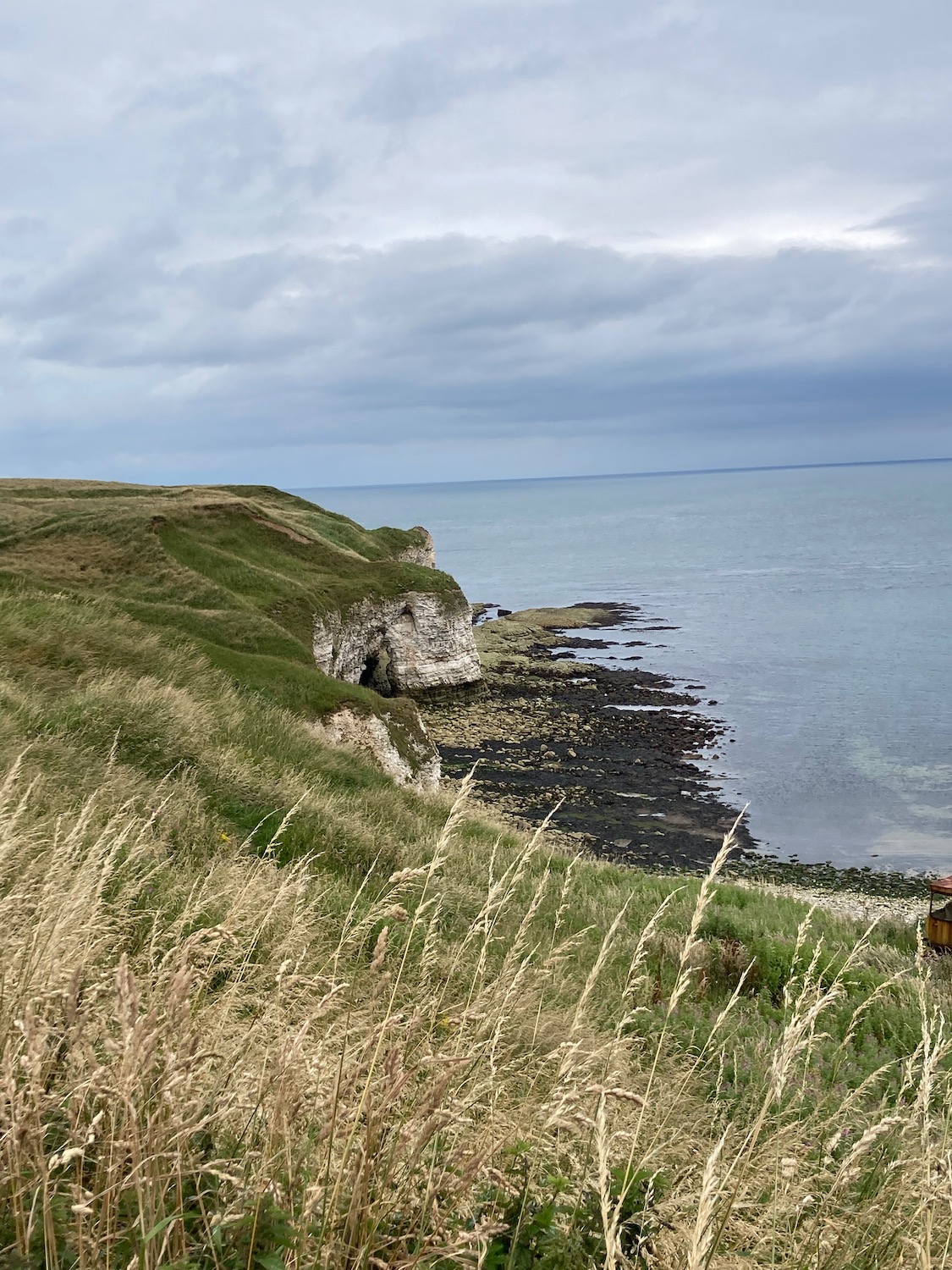
The cliff path is well marked and easy to walk on and also affords views of quite unusual rock formations – lots of nabs (headlands) and nooks (coves). The sky is also brightening now – it’s going to be a lovely day.

After about three miles we come across what looks very much like a close circuit camera, fenced in on a small promontory and trained on the cliffs opposite us.

It turns out this is part of a seabird research project by the RSPB to study the productivity of Razorbills, Guillemots, Kittiwakes and Gannets. Well, from the racket I’d say these hundreds of birds, ducking and diving around nests on the cliff face, are very productive indeed. It takes me right back to the Grand Hotel only here it’s very much in keeping with the surroundings.
This cliff face is studded with squawking seabirds …………

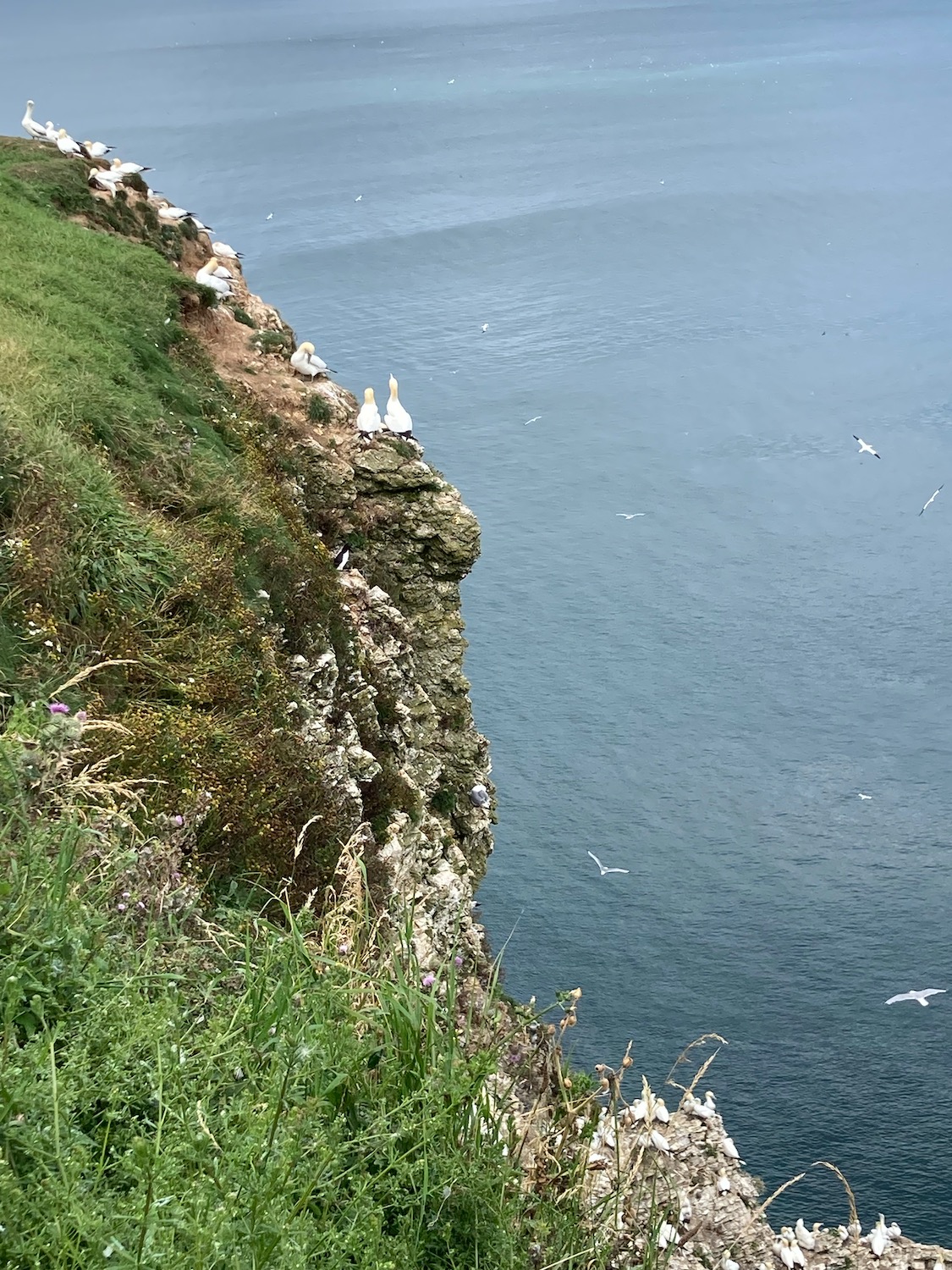
We have reached Bempton Cliffs, which unbeknown to us is the site of one of the UK’s top wildlife spectacles. All along the cliff top viewing galleries have been built and there are quite a few people about, some shouldering cameras with impressive zoom lenses. I later find out there is a visitor centre a short distance inland with road access.
We have of course forgotten to bring the binoculars………………..

We do see lots of sleek gannets gliding through the air and then suddenly diving into the sea – but no blue headed ones.

More information boards describe the practice of “climming” – scaling down the cliff face to raid nests for eggs. I presume the hard hat is to lessen the impact of a sudden dive bombing by angry birds. Brave men…..
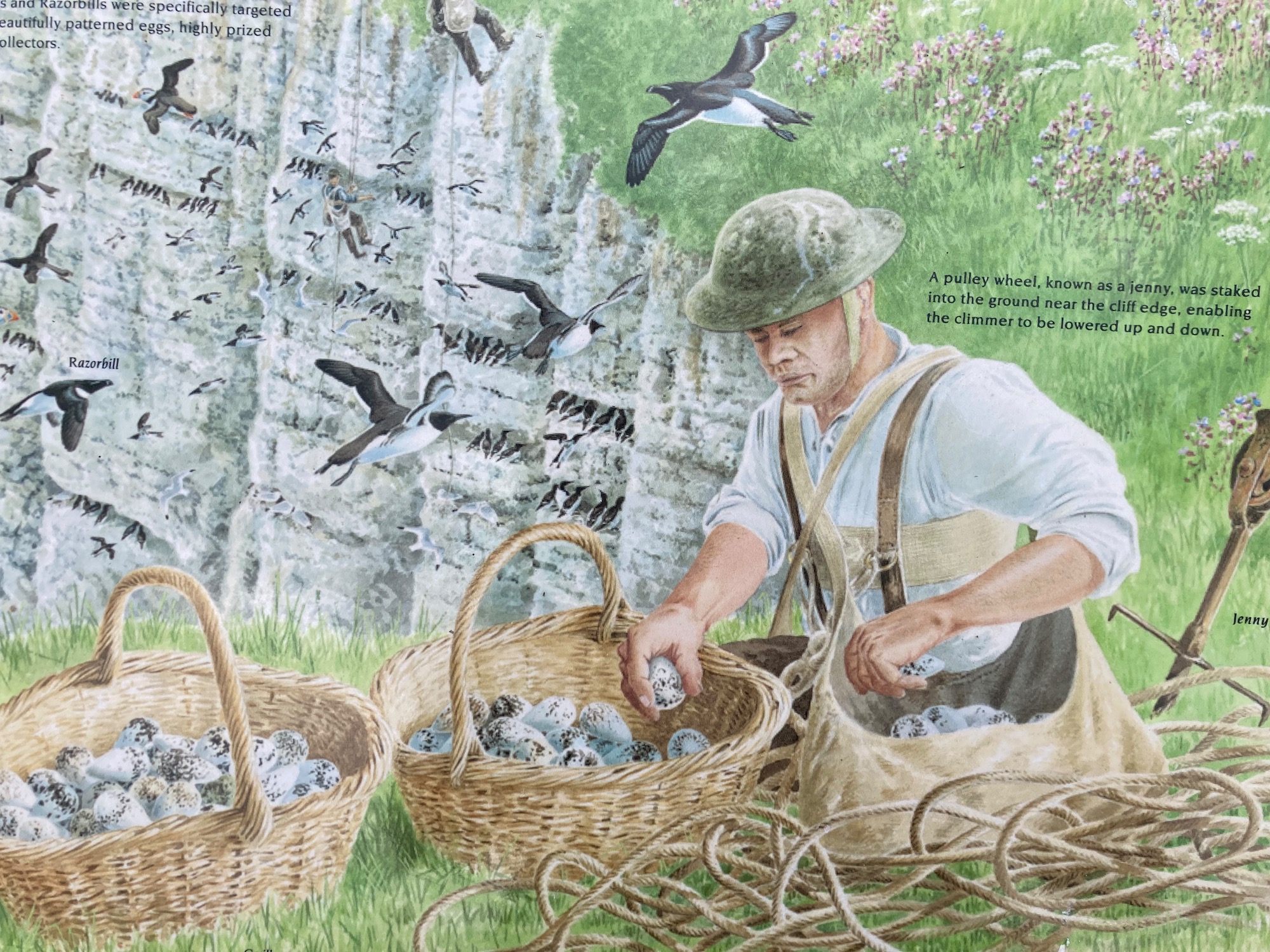
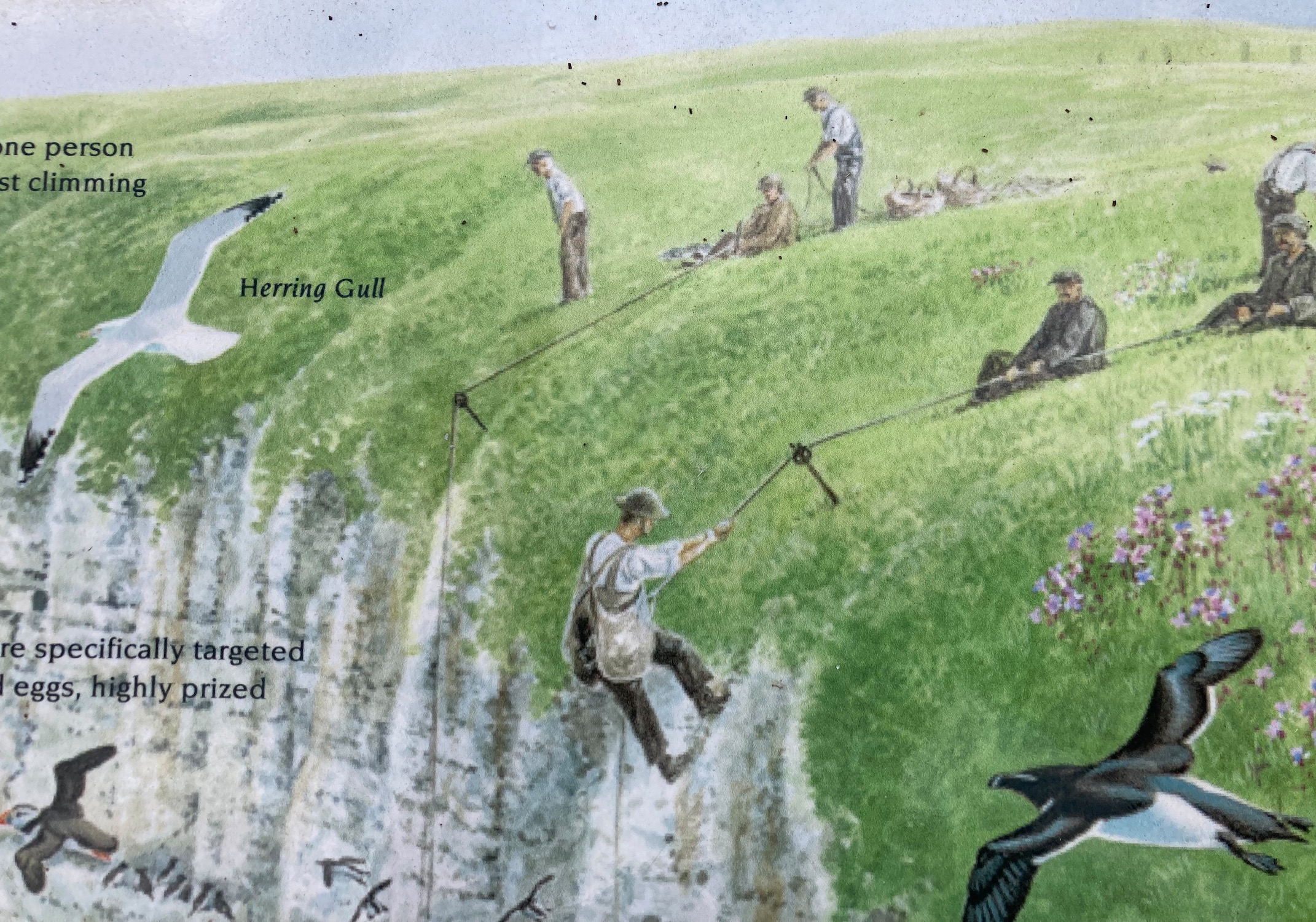

It brings to mind the St Kildans, the ‘bird people’ who also abseiled cliffs (and climbed up sea stacks) to collect gannet and fulmar eggs, or in their case, also to capture fulmars to eat and milk their oil. Sadly, the St Kildans could not sustain their way of life and asked to be evacuated by the British Government who agreed and they abandoned the island in 1930. This is the official story – I think the jury is still out as to whether they went willingly or were forced to leave.
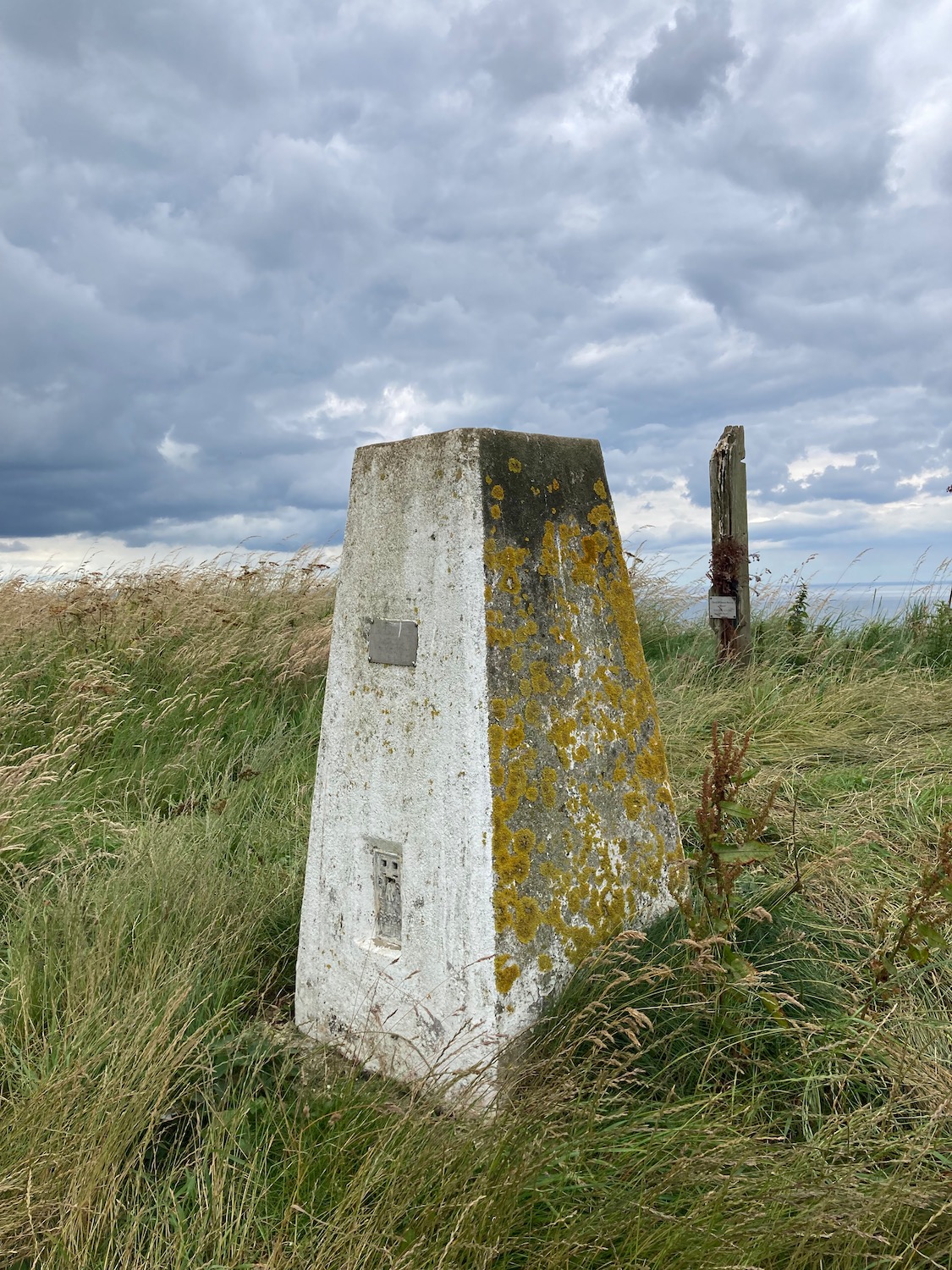
But it’s time to move on – by now we are a little peckish and although we pass quite a few benches, there are still too many people around. The path now leads us away from the cliff edge, winding round in a loop called Low Fields. After what seems like a very long time we decide to stop for lunch at the next half acceptable spot, which happens to be a triangulation point – the highest point for miles around – although it doesn’t feel very high.
Moving on after a very welcome lunch (food always tastes better when eaten outdoors) we find ourselves in a very different landscape and almost lose the path in fields of swaying corn.

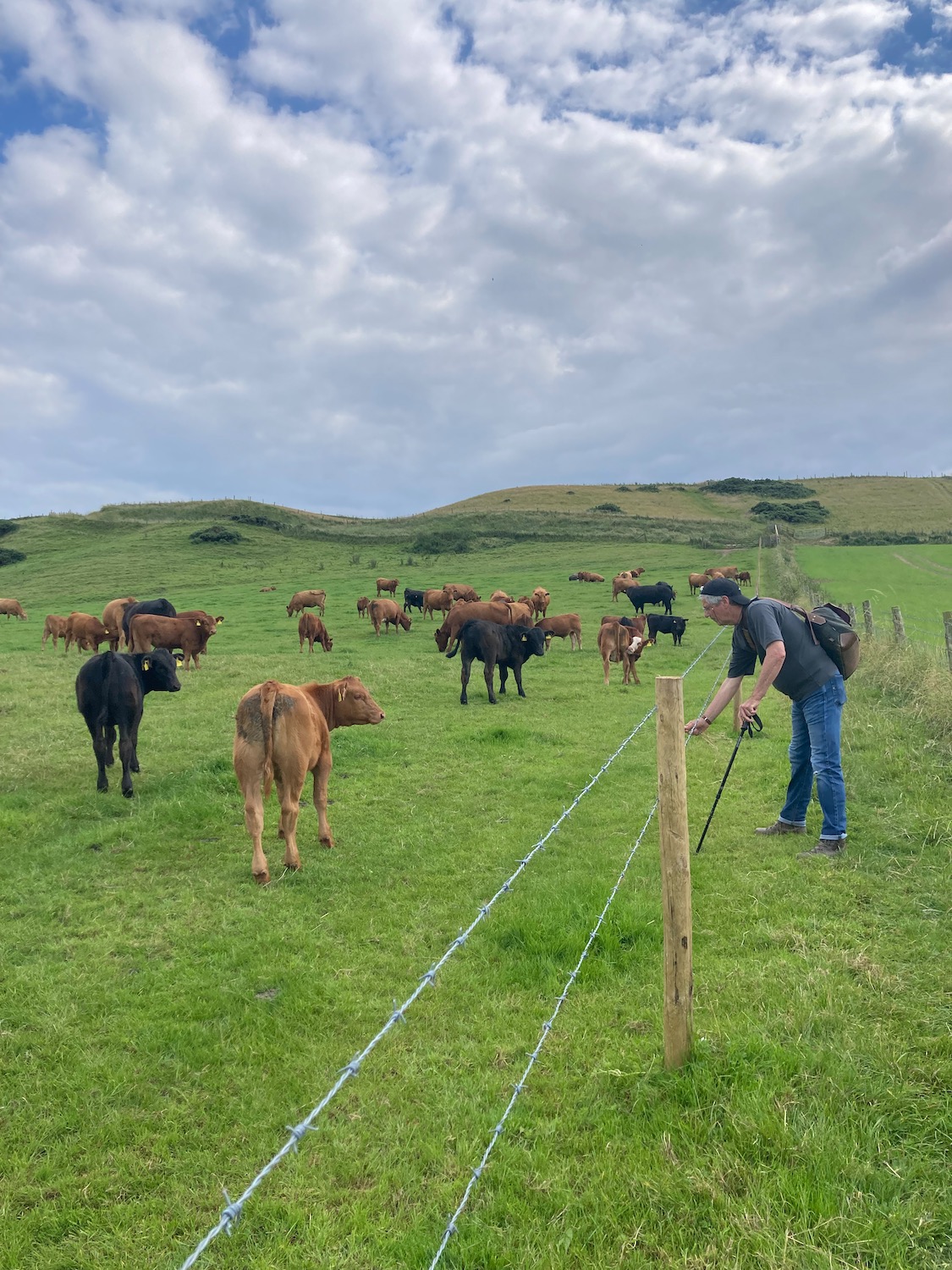
But then it becomes clearer…………….here is Damian talking to the animals again, problem is they never seem to want to talk to him.
And confirmation of the path – this signpost hasn’t got round to including King Charles and probably never will.

Half a mile on we veer off the path and wander through the caravans of Reighton Sands Holiday Park until we reach the very spot where I finished my walk from Filey a few days ago. The tractor and trailer stand ready to transport people down to the beach but it’s now late in the day so there are not many takers.

Distance: 9 miles
 Joining the Dots
gannets are my favourite birds, so beautiful 🤩
Then you need to go here………..Bass Rock in the Firth of Forth, which is the largest gannet colony on earth! x
Nabs and nooks and bays. Fabulous. X
Watching birds has grown on me as I get older! An interesting walk for you bothxx