I must admit that over the years I have learnt to appreciate industrial landscapes – Port Talbot, Newport, Liverpool, Hull. But then came Middlesbrough and I am put to the test.
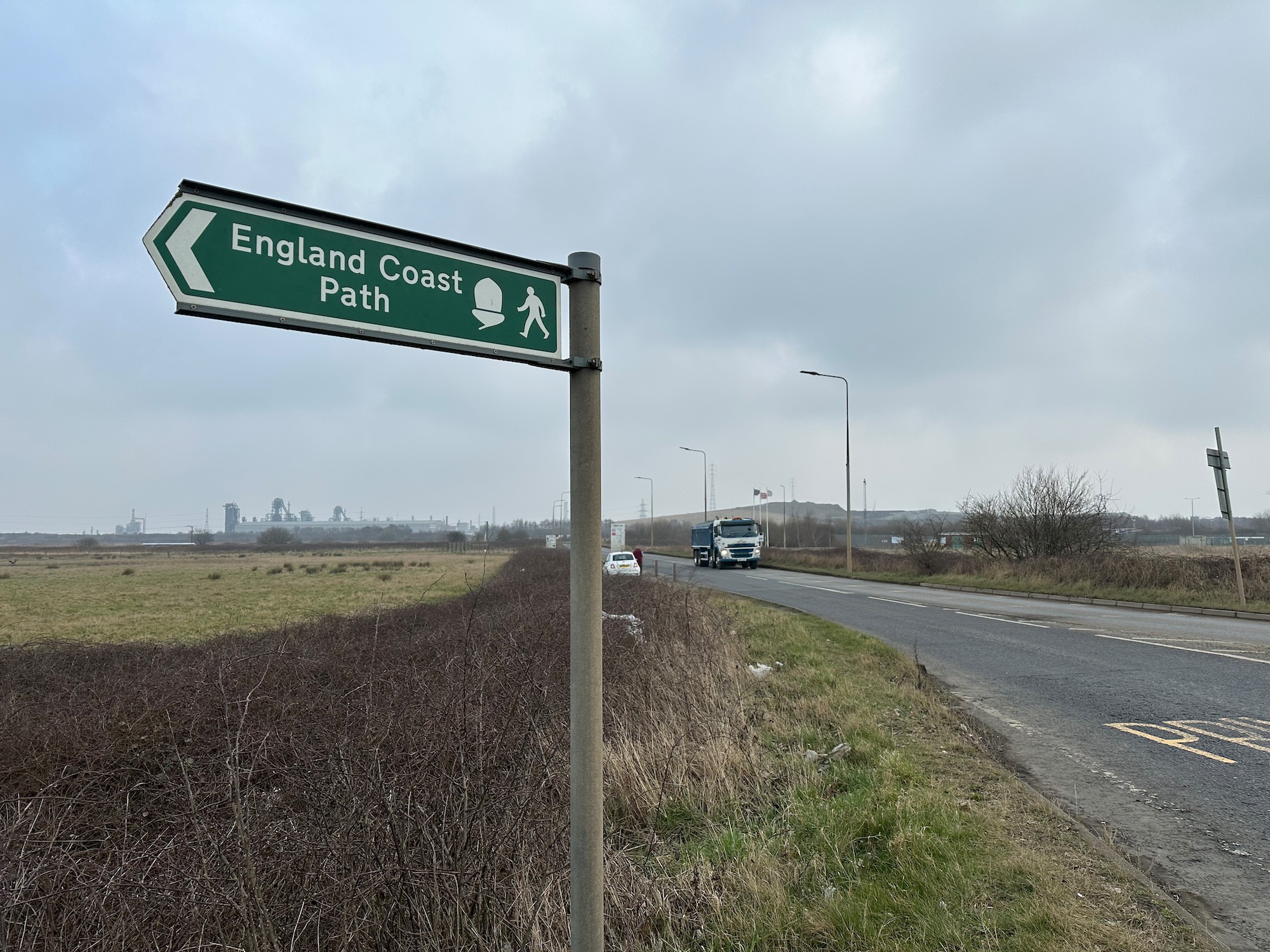
We start our journey by crossing Newport Bridge where a pedestrian path keeps us away from the traffic. After navigating a busy roundabout we then cross Billingham Beck and continue to follow the main road. I was hoping to get closer to the riverbank but the red/green diamonds of the English Coast Path have other ideas – they probably know best.

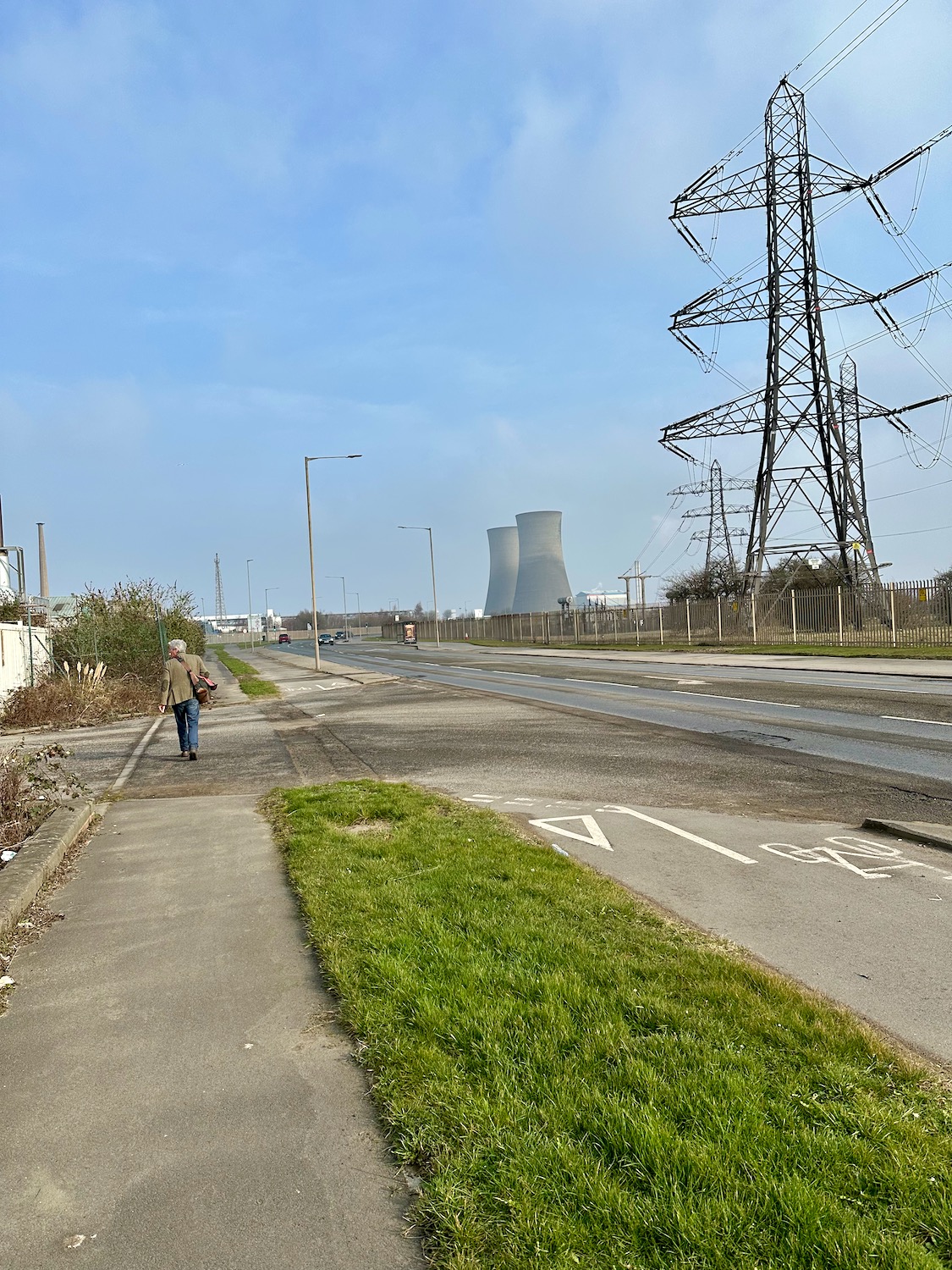
Works to our left and wharves to our right – there’s no way we can get anywhere near the river.

I recognise these two cooling towers from yesterday when we sat eating lunch on the south bank of the river.

I accept my fate and do some mindfulness practice – one step at a time. Yes this is still a coastal path.
Leaving an oil storage depot and a power station behind, we move into a more environmentally friendly domain in the shape of the Saltholme Nature Reserve, just off the main road. Reclaimed from a previous industrial site the reserve offers viewpoints and nature trails through one thousand acres of wetlands. The Visitor Centre, which lifts elegantly out of the lakeside landscape is built from mostly recycled wood, glass and metal and the cafe has floor to ceiling windows to allow for close up views of birds and wildlife. We sit with our tea and cakes watching a group of goldfinches flit in and out of the bushes – wonderful.

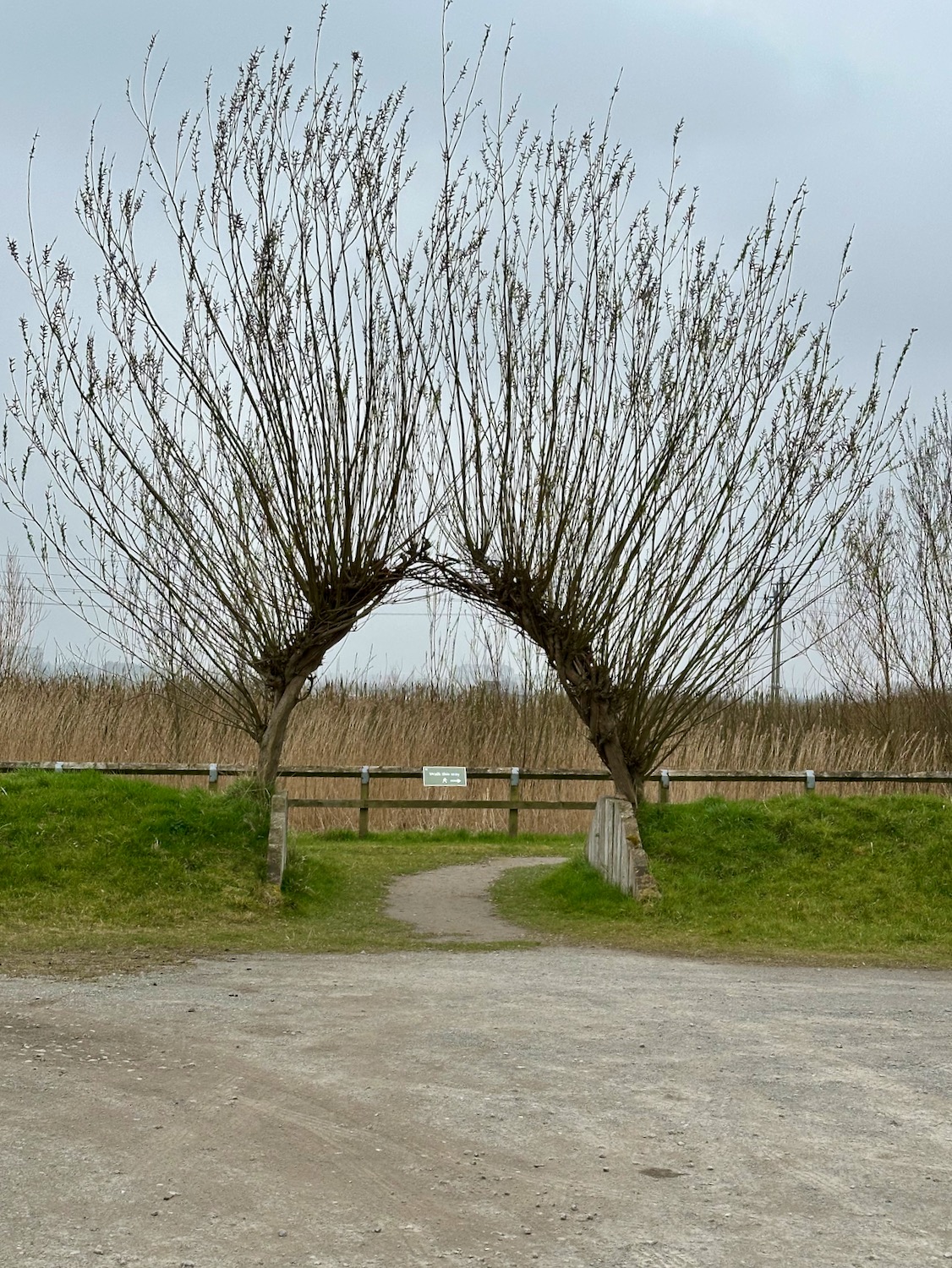
The car park is graced with willow arches…..reminds me of my hair in the morning.
But all good things come to an end………………but maybe not.
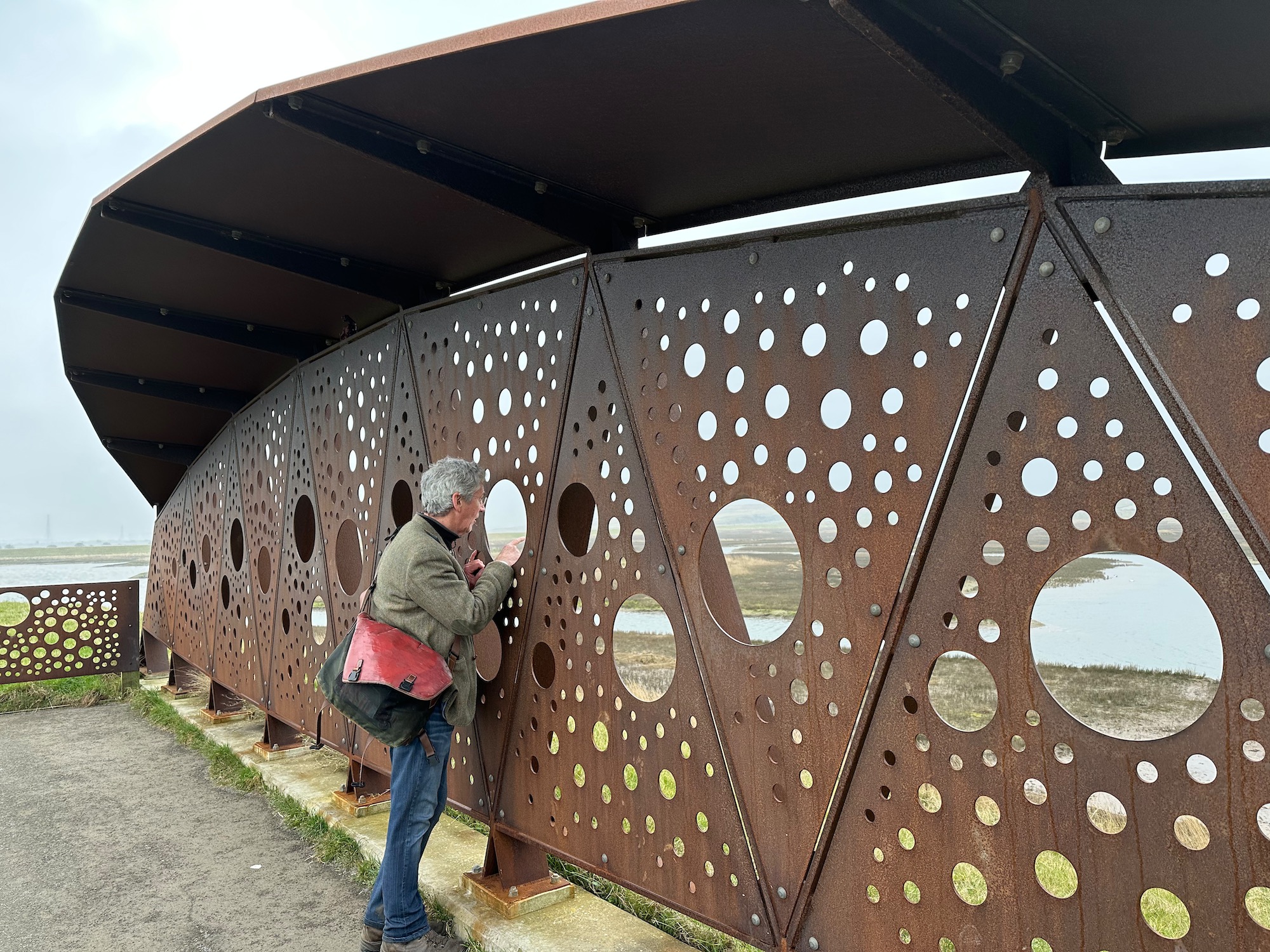
Just up the road stands a pretty steel hide allowing for views across the marshes – we see two seals but they are too far away for photos.

Further up the road, a welcome to Hartlepool, a major seaport in its time, and the first place to be bombed by the Germans in the 2nd World War.
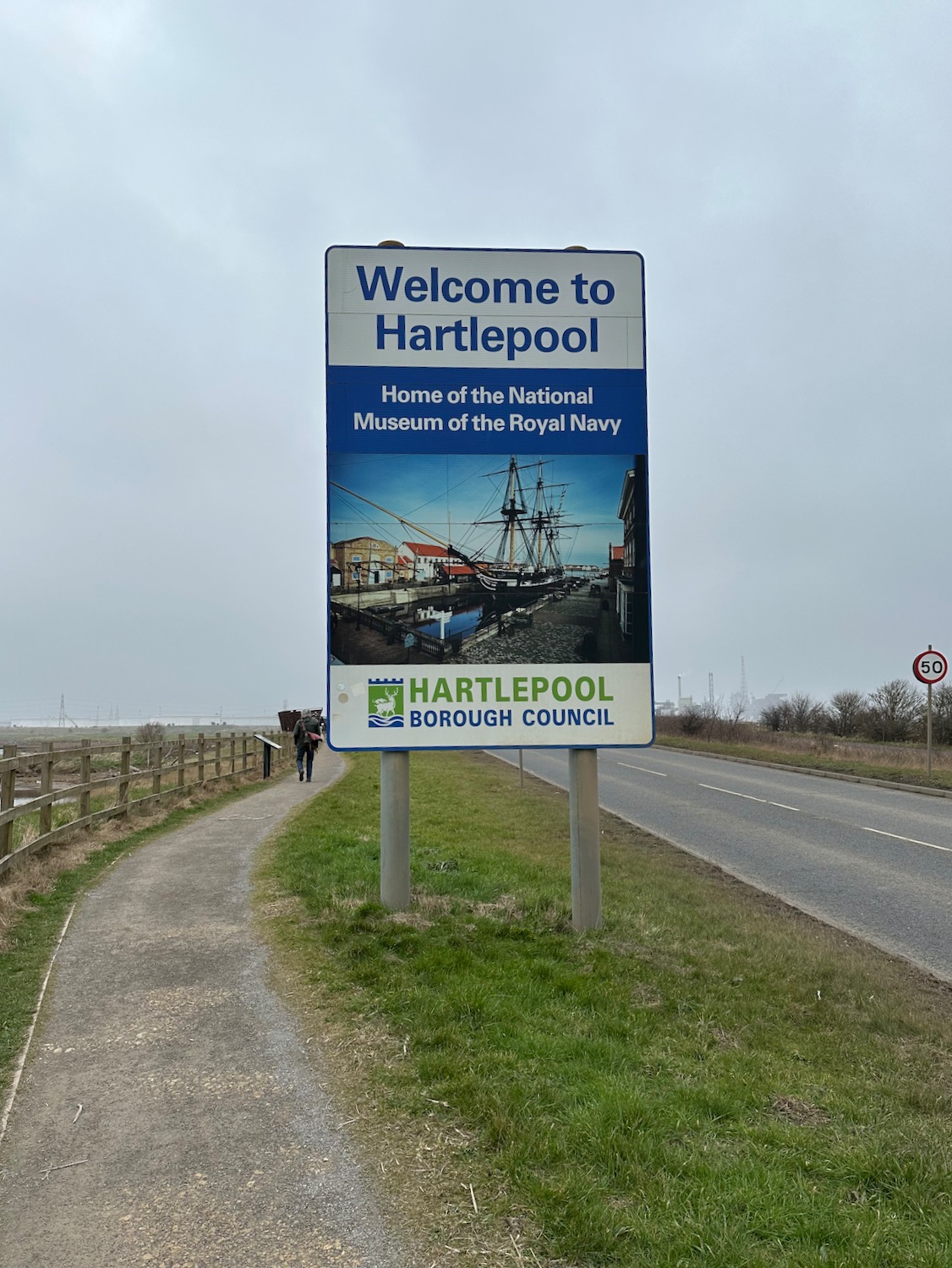
An information board has some good news….

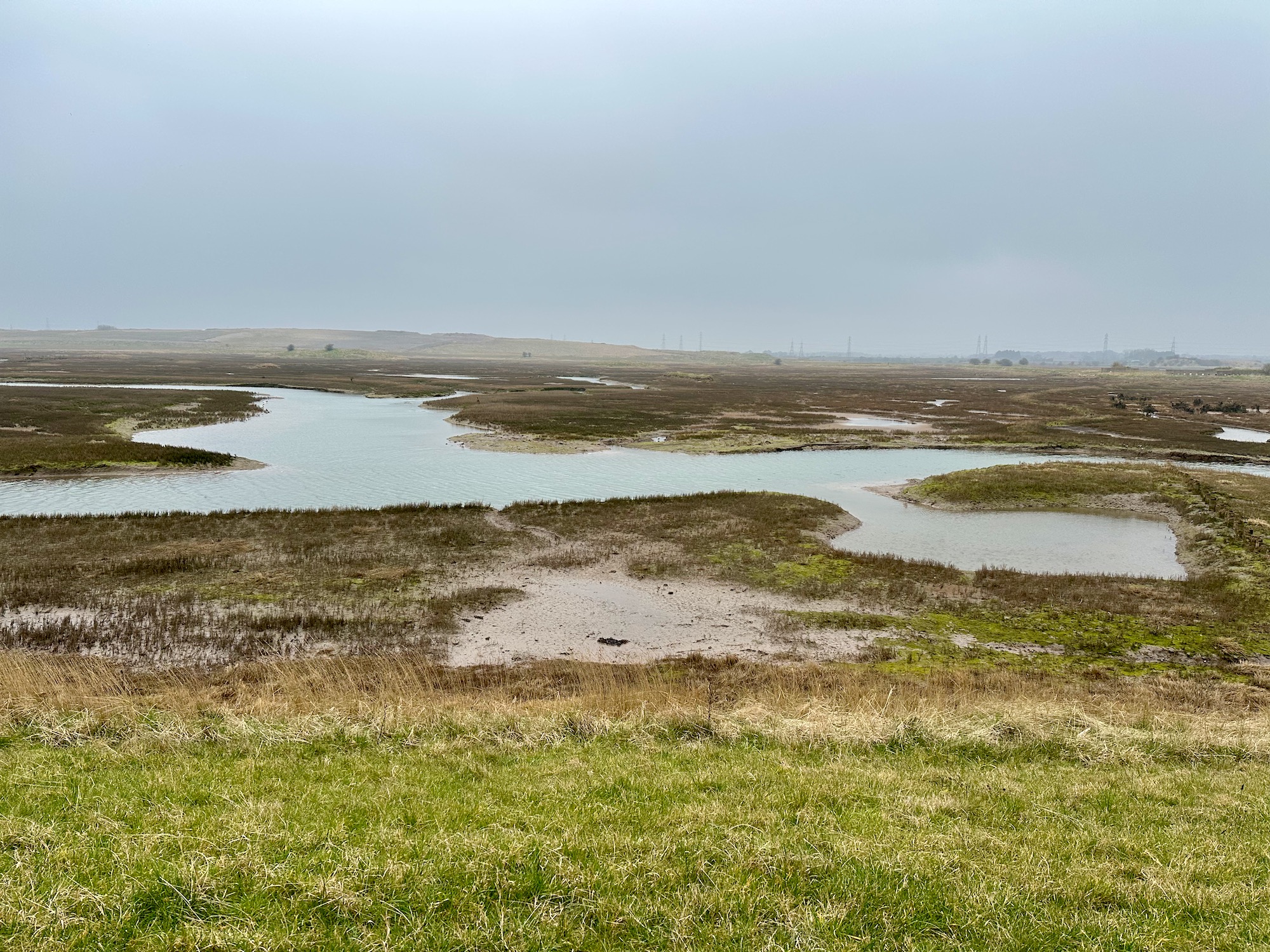
Such a strange juxtaposition of heavy industry on the one side of the road and a wildlife sanctuary on the other.
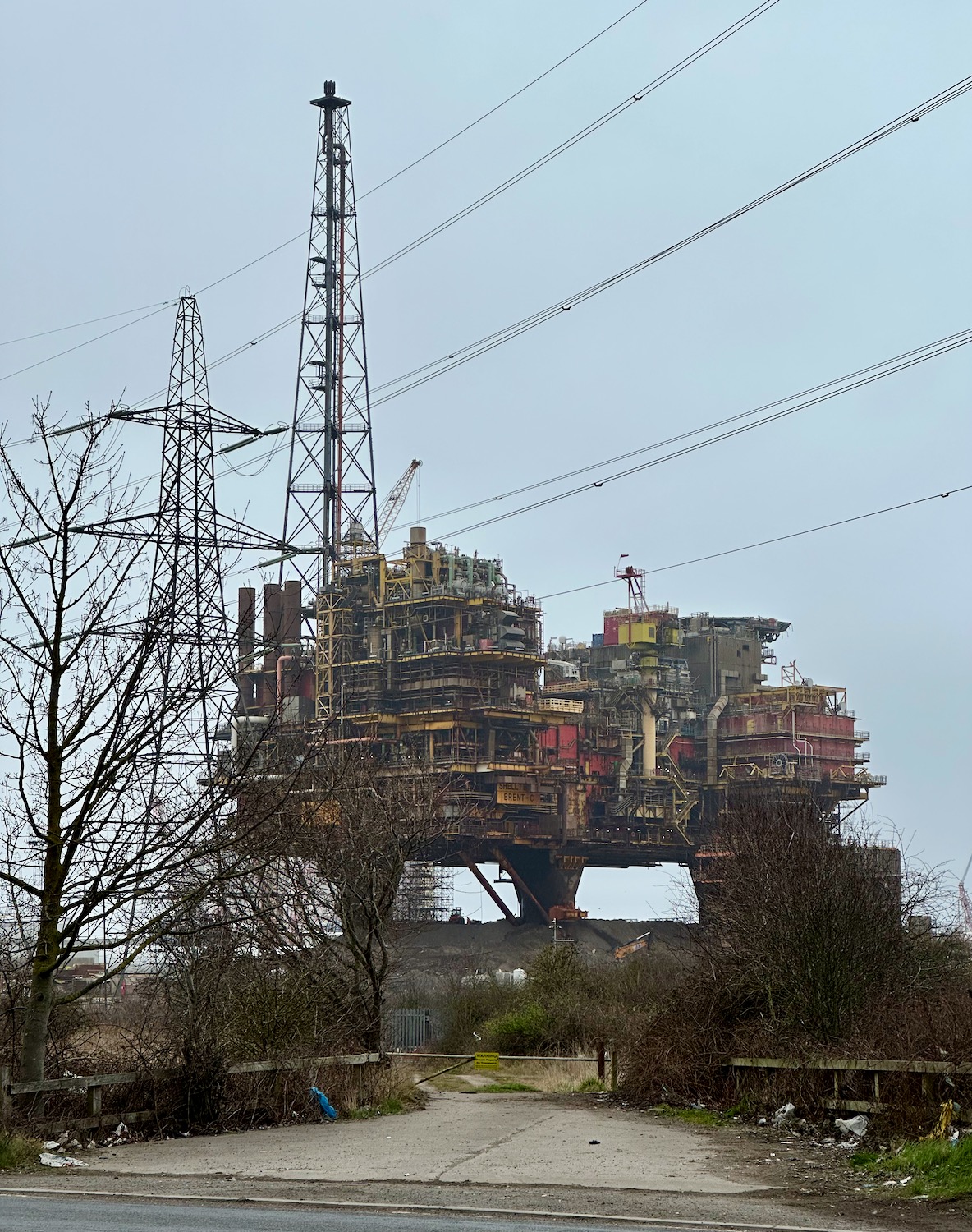
For the last gasp, through an almost apocalyptic landscape of flare stacks, a chemical plant and a sewage works, we come to a “graveyard”, presided over by Brent C, the last of the four Brent Field oil rigs to be decommissioned. Lifted from the seabed and transported here from the North Sea, this one now waits to be broken up – no mean feat.
Damian worked on the oil rigs many years ago and is full of stories about life as a roughneck. You can see why Ridley Scott was inspired by the badlands of the Tees Estuary in the making of the epic science fiction film Blade Runner.
And then we’re back to Nature again, turning right and up to the carpark of another nature reserve.
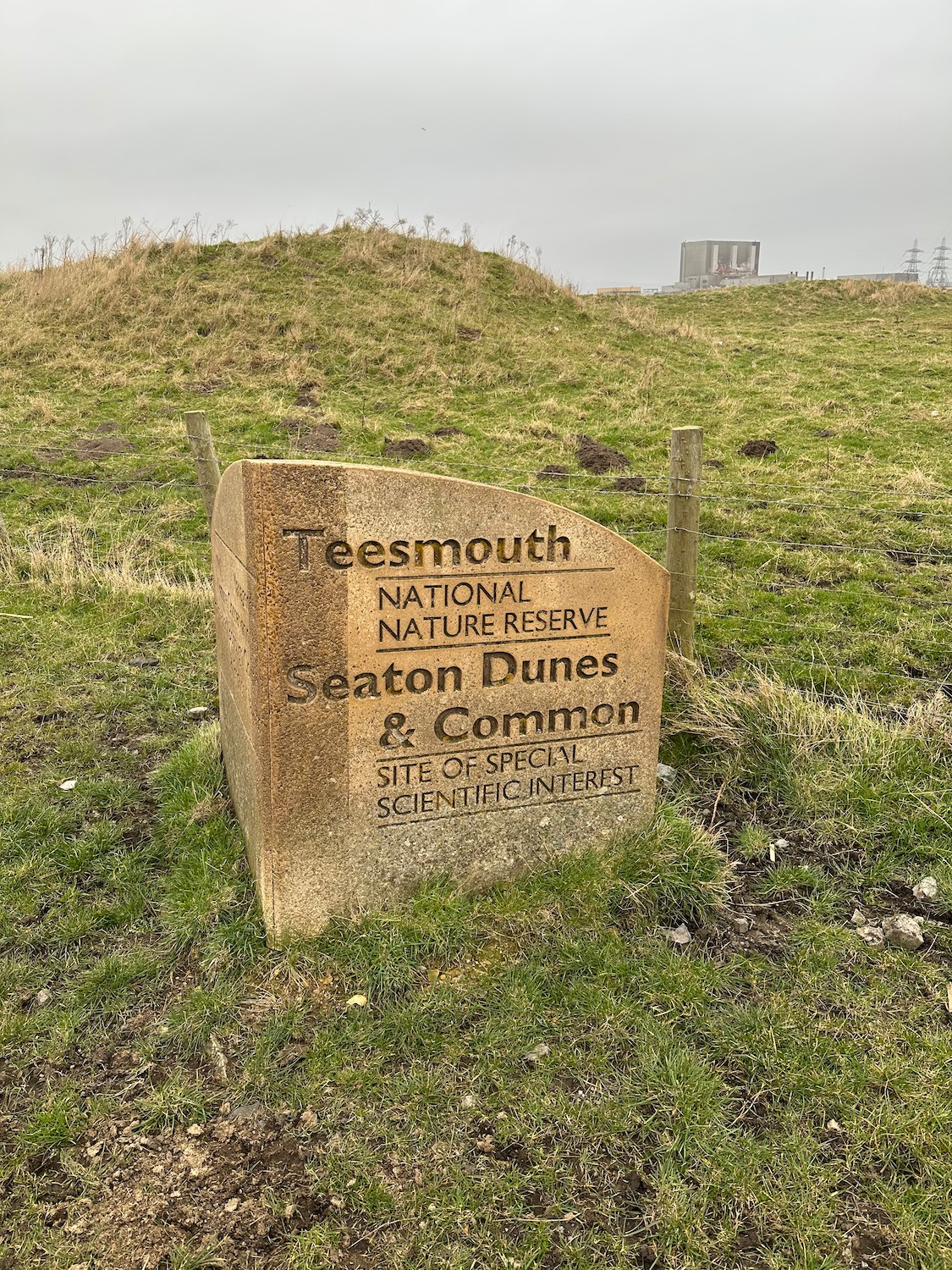
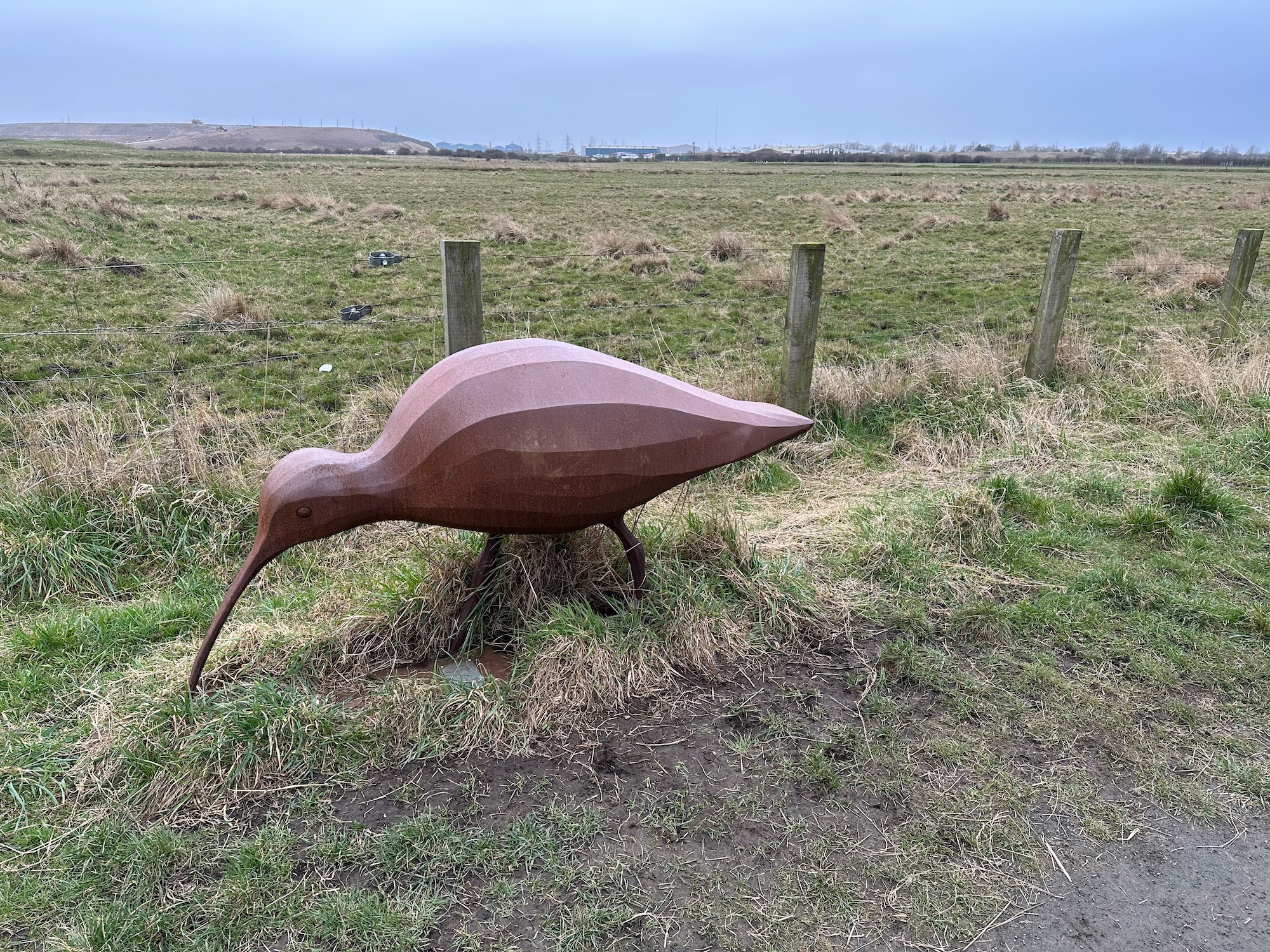
Reaching the dunes we turn left and cross a wide grassy area called Seaton Snook – is this a curlew?
Looking up Seaton Snook later I discover that through the 18th and 19th centuries there used to be a small town on this reclaimed land, with its own church, school, train station, zinc factory and a RAF base. All of this disappeared in 1968. There are no government records or newspaper reports referring to the town after that year, and apparently no former residents still living.
The origins of the town’s reputation for unsavoury practices begins in the Middle Ages, where there is talk of mysterious rituals used in Seaton Snook to obtain blood as a coagulant in salt production. Centuries later, after the small town is established, there are accounts of inexplicable drowning events, deadly ritual fights on the beach, and an outbreak of cholera. Despite being a thriving community of blacksmiths, teachers, musicians and church goers, I get the impression that the people of Seaton Snook were viewed with suspicion by the inhabitants of nearby Seaton Carew and further afield. The last straw was an outbreak of rabies – the trains no longer stopped in the town and the authorities started planning a fence to enclose the area. We are walking through the lost souls of Seaton Snook.
We arrive in Seaton Carew – the promenade is deserted and the art deco clock tower has seen better days, but there is a beautiful long sandy beach.


Perhaps the Teeside Estuary is not as bad as I thought it was going to be.
Distance: 11 miles
 Joining the Dots
I found that quite a bleak walk, but would have enjoyed seeing the decommissioned rig. You’ll soon be ploughing your way up and down through denes.
Yes the rig was spectacular…..
Yes a strange juxtaposition of nature and heavy industry on this walk. I didn’t know Damian had worked on the oil rigs! I loved the steel hides and glad to hear that the seals are thriving.The Sneaton Snook story is very odd. Xx
Yes but I must correct the title of his job – apparently he was not a roughneck but a roustabout (sounds much nicer)😊
over the years of following Tricia round the Coast I’ve seen many landscapes…..but this one takes the biscuit! Blade Runner is one of my favourite films. At least there was very little acid rain. I know you’ve got to take the rough with the smooth and many other figures of speech, but this landscape really does say ‘ it’s grim up north ‘
still, there’s a pot of gold at the end of every grim walk and that was being able to get up close and personal with Brent C, the beached colossus, dragged off the floor of the North Sea and brought to Hartlepool for dismantling. Hartlepool must have thought Armageddon had arrived when it saw this monster gliding up the Tees to its final resting place. Bear in mind this must have been one of the most expensive engineering projects in the word, certainly one of the biggest. What an ignominious fate. It makes me feel old to remember all the hullabaloo when Brent C first started to pump oil ashore. And now there she is being cut up by workers with oxy-acetaline torches and turned into scrap……
let’s hope we get some green countryside on the next walk?
The England coast path didn’t exist when I did this walk so I used, or tried to use, the transporter bridge. I can see that yes sadly now the map shows the coast path avoids the transporter bridge. I guess that confirms it is unlikely to open any time soon. A shame.
Very much so……….🫤