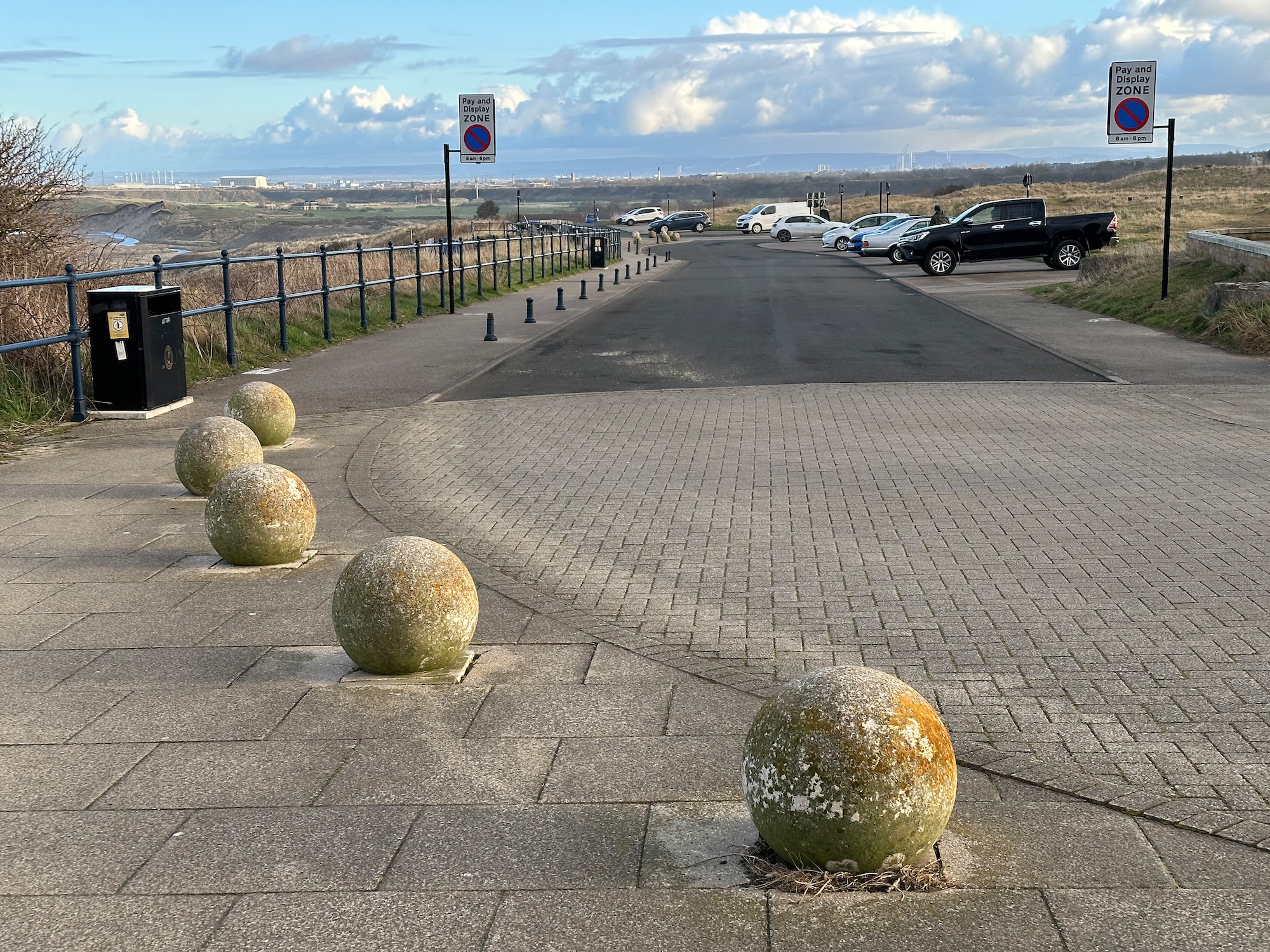
The rather clumsily named Nose’s Point is a small promontory east of Dawdon, where up until 1991 all coal waste from the local colliery was unceremoniously tipped over the cliffs on to the beaches below. It is said that this practice created an expanse of slag three miles out to sea. Fortunately, the site has now been reclaimed – wildflower meadows have been restored, ponds have been created for wildlife and marine life has returned to the area in abundance. We start walking from the carpark – walking into the sun and with a tail wind – all good.

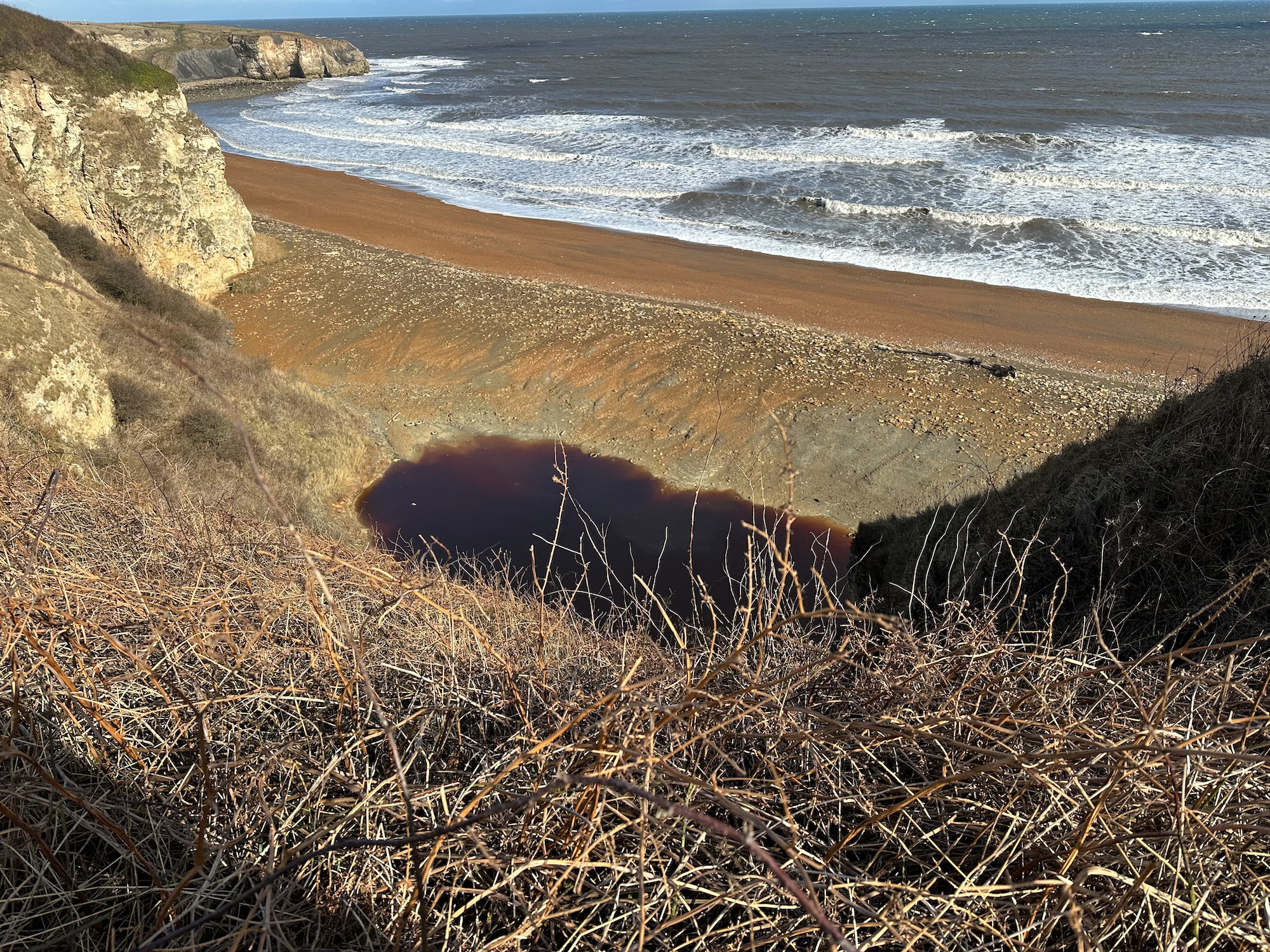
Despite the big clean-up, lumps of coal can still be found on the beach and from the clifftops it’s easy to see blood red pools of water, which are apparently tainted with iron oxide. As far as I know iron oxide is poisonous so I’m surprised that nothing has been done about them.

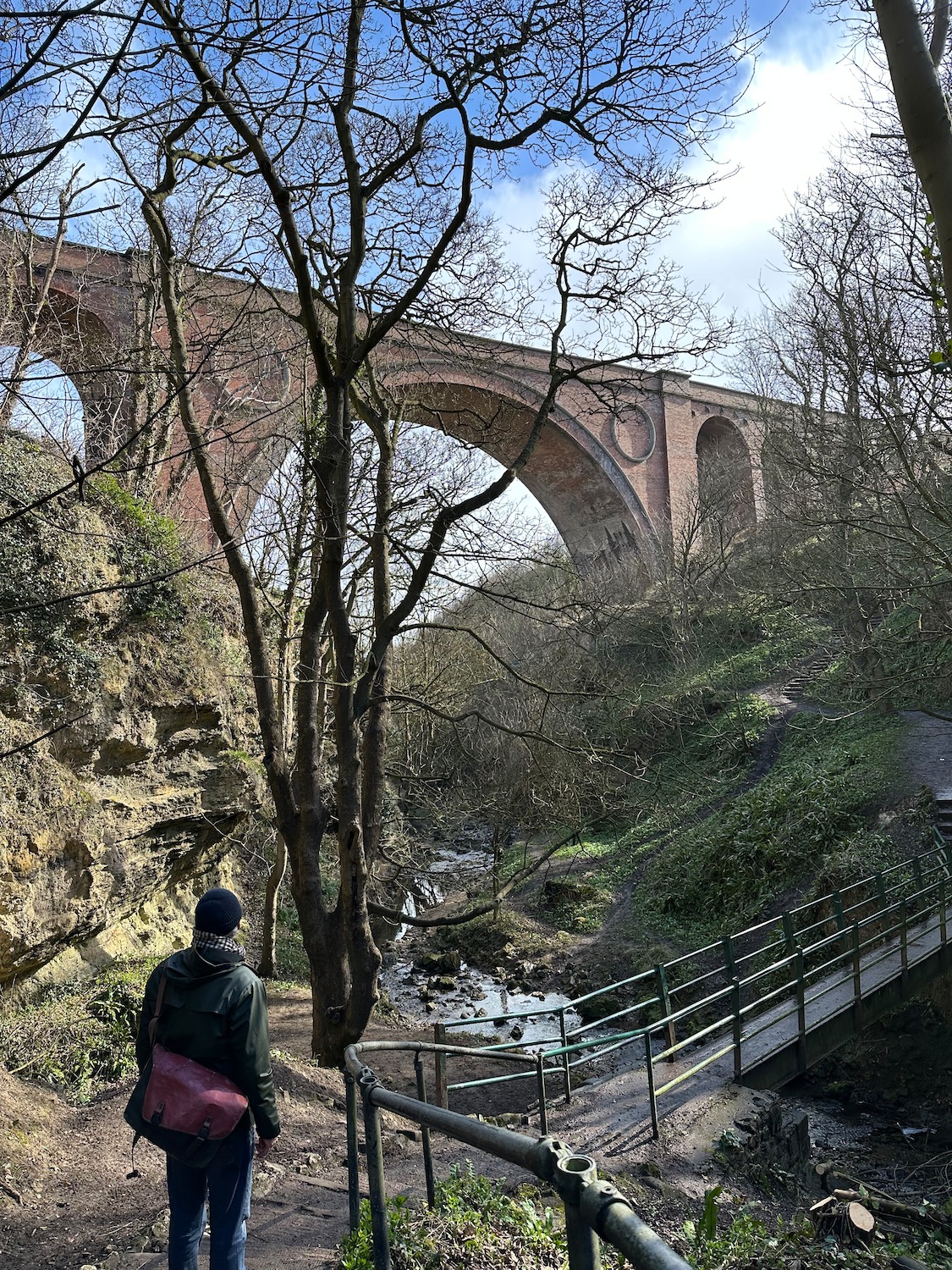
Just past Chourdan Point the path leads us through a patch of woodland – it’s very peaceful out of the wind.

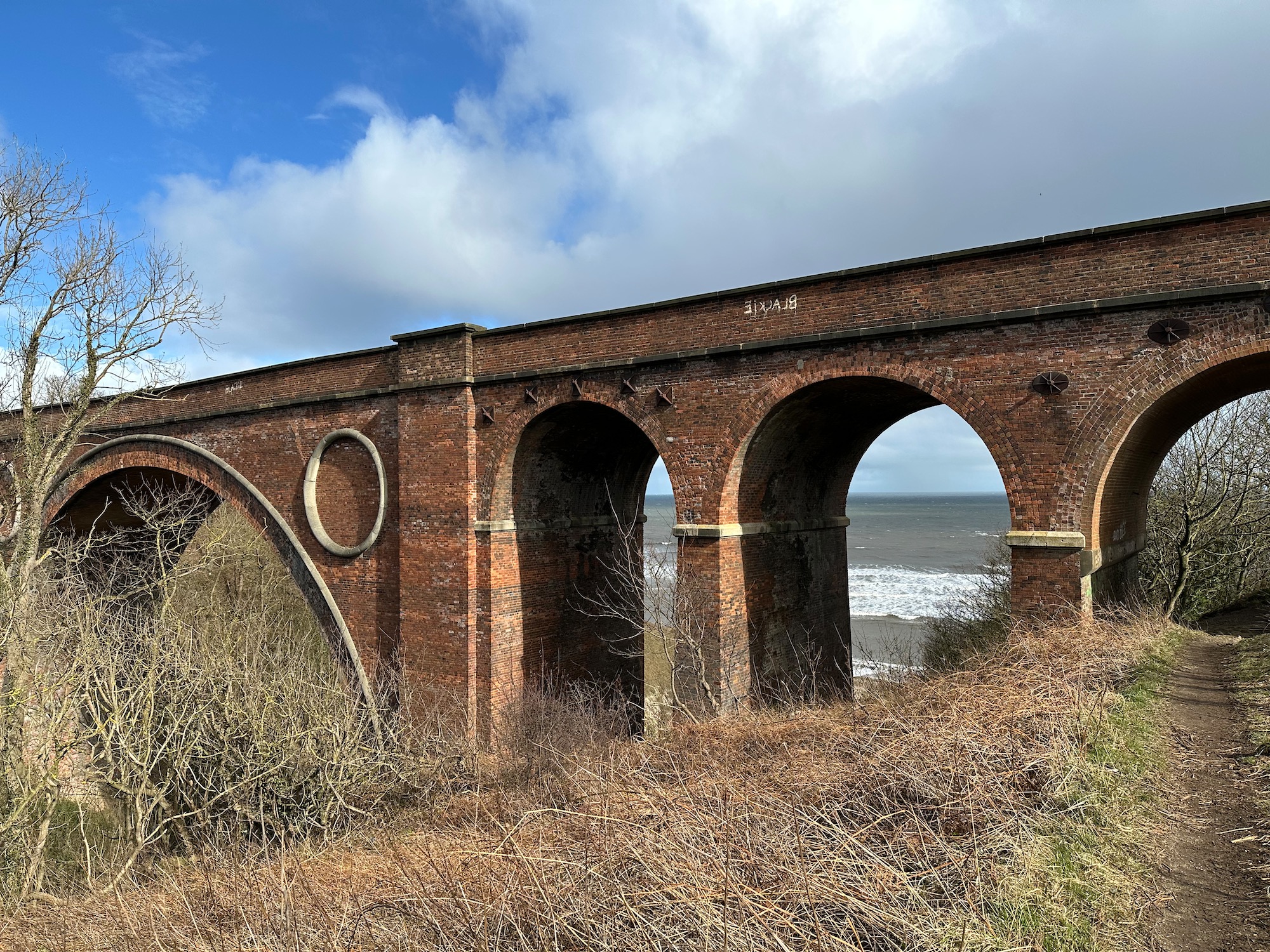
And suddenly, out of the blue, (as it were) a beautiful red brick viaduct appears, straddling a busy stream marked on the map as Hawthorn Burn. We take a moment to marvel ……
Climbing out of the valley we get to see more…
After a bit of confusion as to how to proceed we find the path which takes us up to the cliffs once more – there are people on the beach below, goodness how they got there.
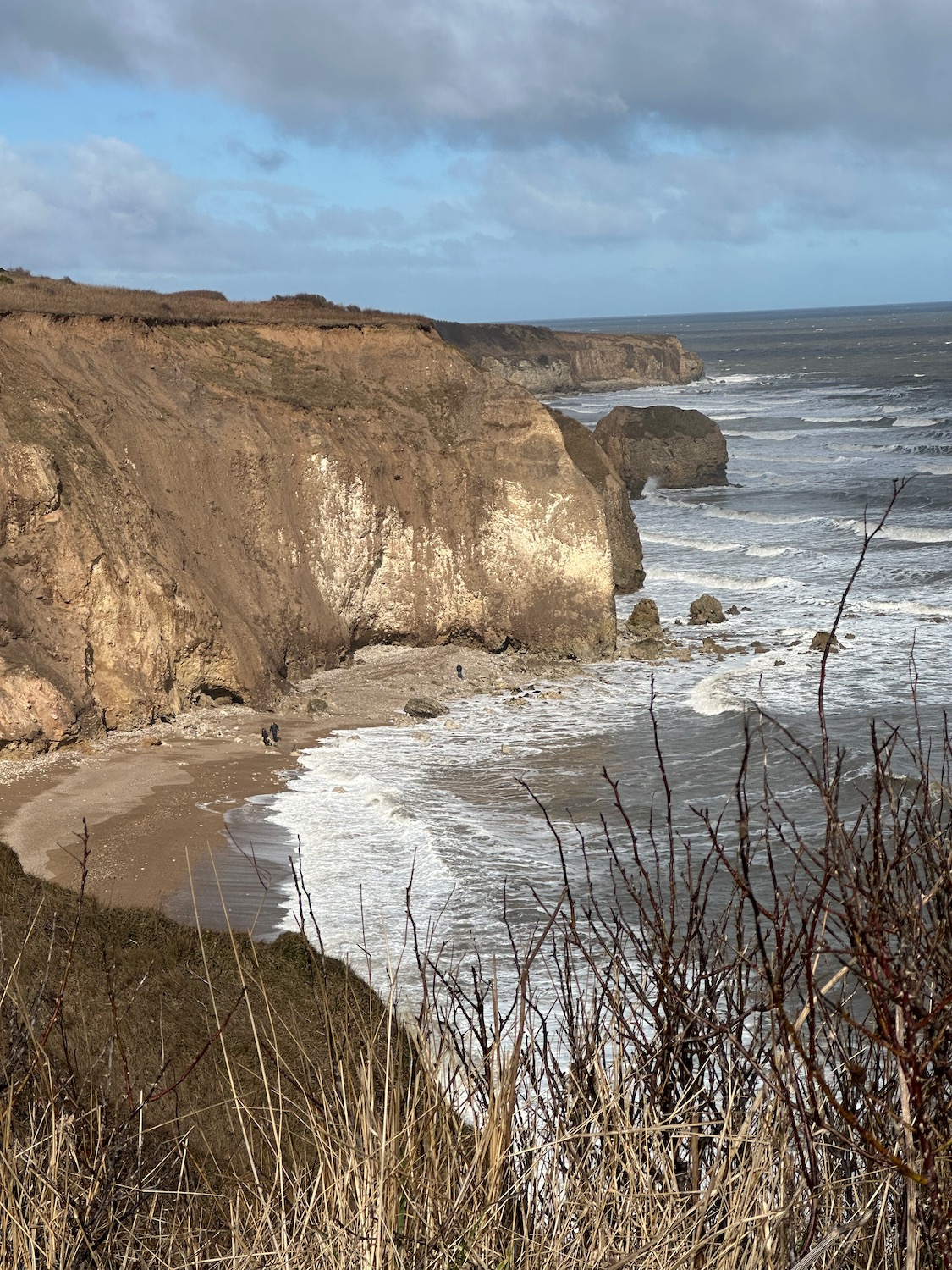
Further on we come to another dean (glacial valley), which we cross by following a mile long diversion inland and back again. On our return to the shore I am momentarily disorientated by having the sea on my right hand side before I realise what has happened.
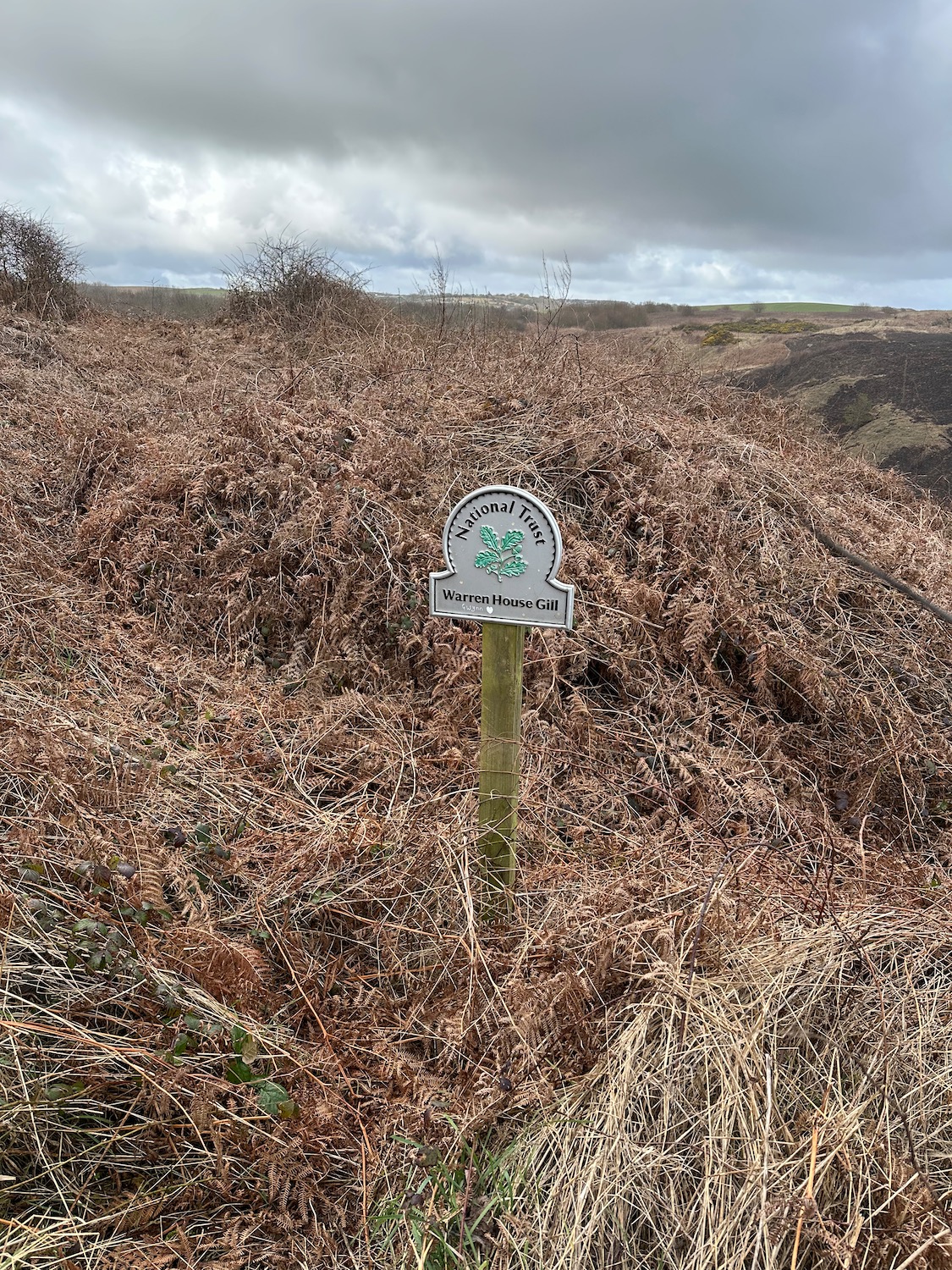
So a dean is a valley and a gill is a small valley – we climb up the far side of Warren House Gill to a pair of steel butterfly wings commemorating the area’s industrial past and find a handy stone shelter to attack our sandwiches and tea.

We are actually enjoying ourselves – honest.

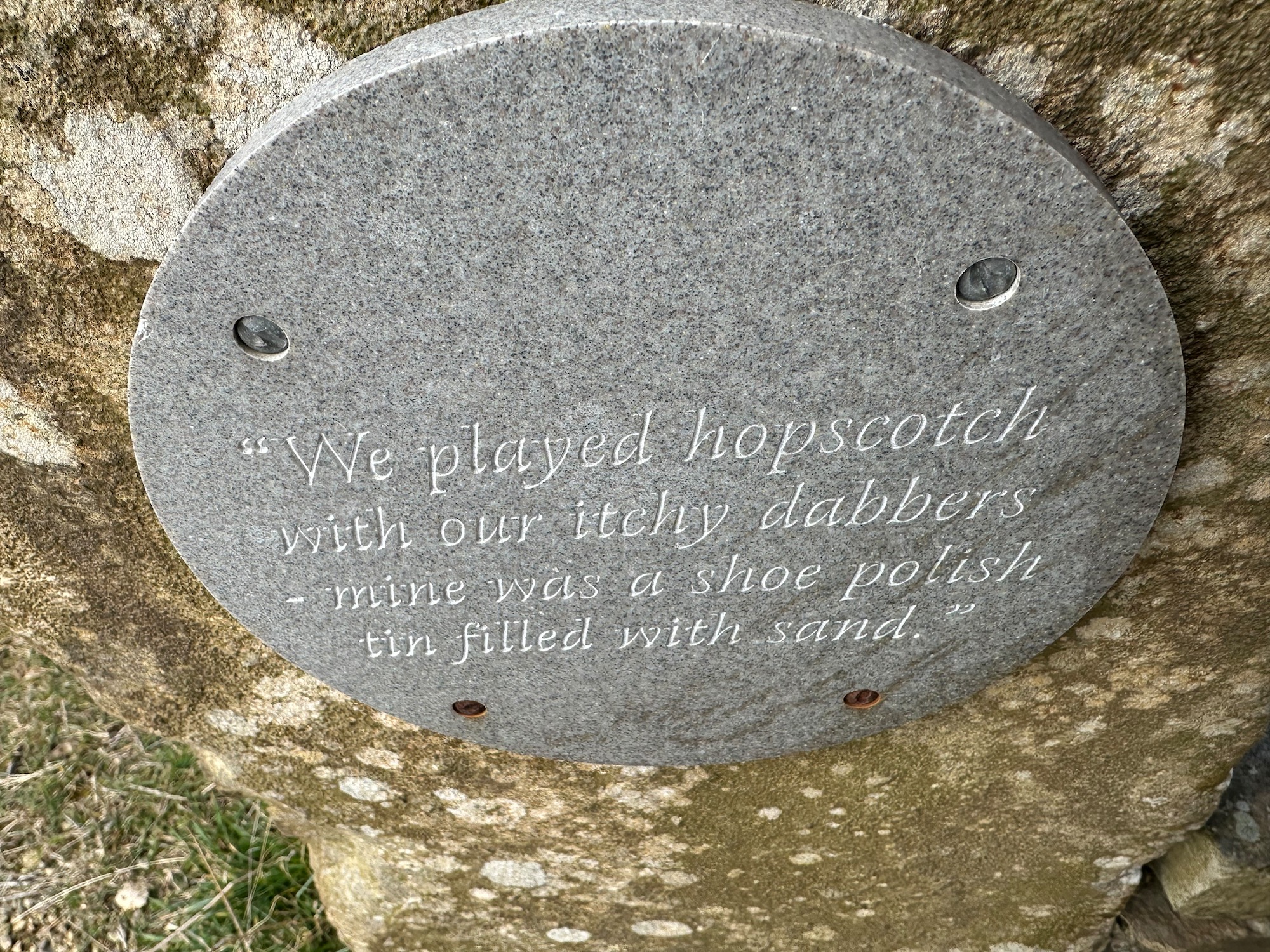
A plaque on on one of the end walls talks about “itchy dabbers” and although it’s easy to surmise what this phrase refers to, I cannot find anything on the net to tell me where this phrase comes from. In my primary school in mid Wales we used small broken slabs of marble – where they came from I have no idea.
Onwards – passing Whitesides Gill and then you guessed it Blacksides Gill, where a path down to the beach is instantly rejected, no time or energy for that.

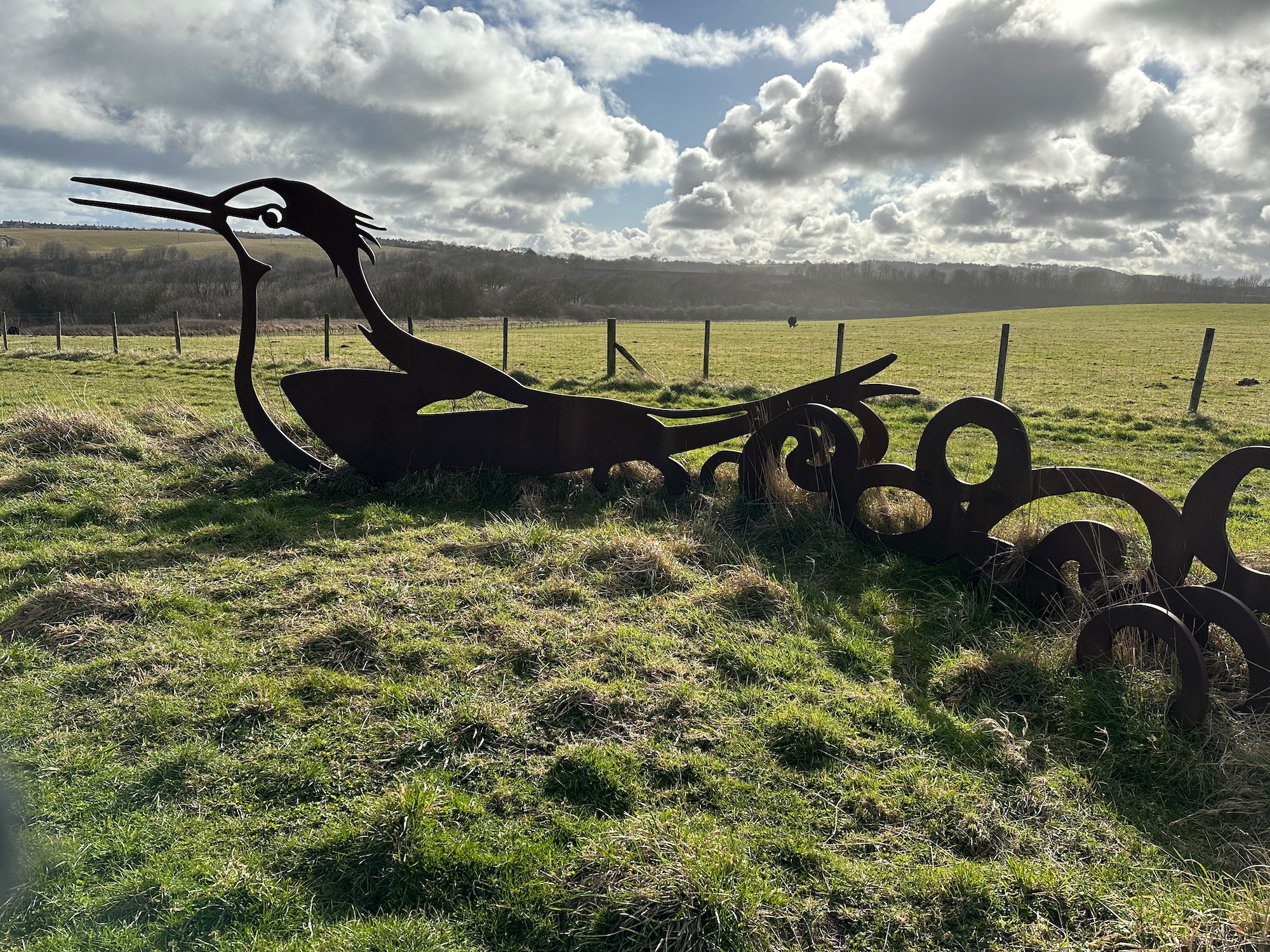
We carry on along the top of the cliffs – this steel representation of a seabird perches beside the path – yet another reference to what were once thriving iron and steel industries.
Limekiln Gill is navigated with the help of a footbridge and a ford ,and as we move towards Blackhall Colliery, the wonderful Horden Viaduct rises up over to our right. Built in 1905, the viaduct used to have a footbridge on the seaward side – that must have been an exciting experience for some. Fifty years later the footbridge was taken down after an incident in which a gentleman was stabbed by a lady while crossing the bridge. Such a common occurrence these days, in our towns and cities, but quite unusual in the 50’s.

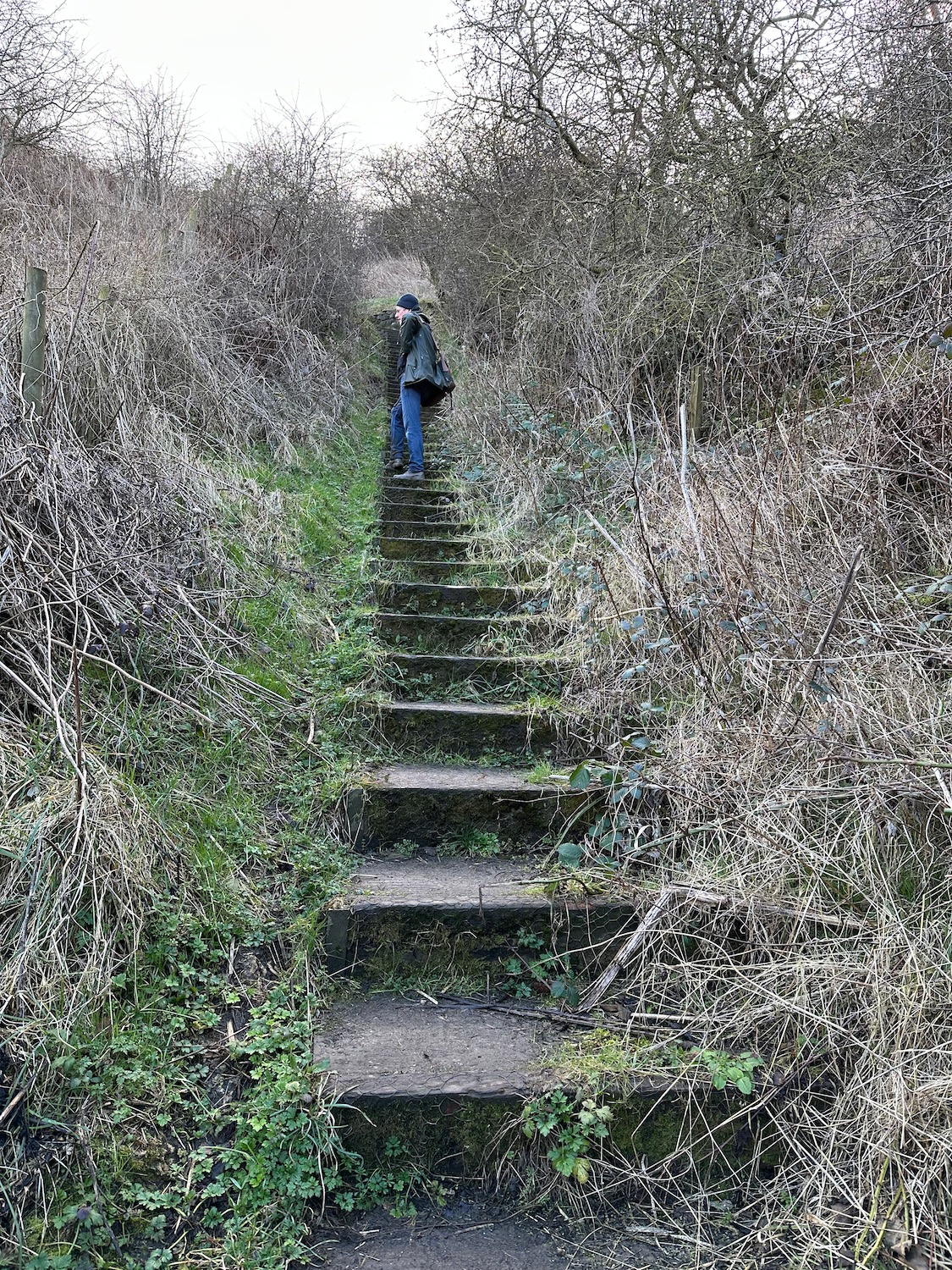
At Blackhall Rocks the path turns inland again to cross yet another gill – Blue House Gill. A set of steep steps takes us up the other side of the valley. And from here it’s a straight run to Crimdon Dean carpark where our car waits patiently.
Distance:10 miles
 Joining the Dots
That was a nice walk over the various gills. Glad the coal slag has been removed for wild flowers etc. The Horden viaduct is very impressive and I liked the steel butterfly wings,bird and stone shelter. Yes where did those small slabs of marble for hopscotch come from!xx
I’m glad you remember them and it’s not my memory playing tricks on me. x
So evocative. Almost walking with you. Beautifully written as usual. I remember the hopscotch stones too. They had to be smooth to slide well to number 3 and 4!
Yes – there is a place near me that sells memorial stones of all different kinds, including marble – all on show outside. Everytime I cycle past I zoom right back to the playground in our primary school 🙃
Fabulous photos! Love viaducts. Clever Romans. Wonderful countryside.
Thank you!